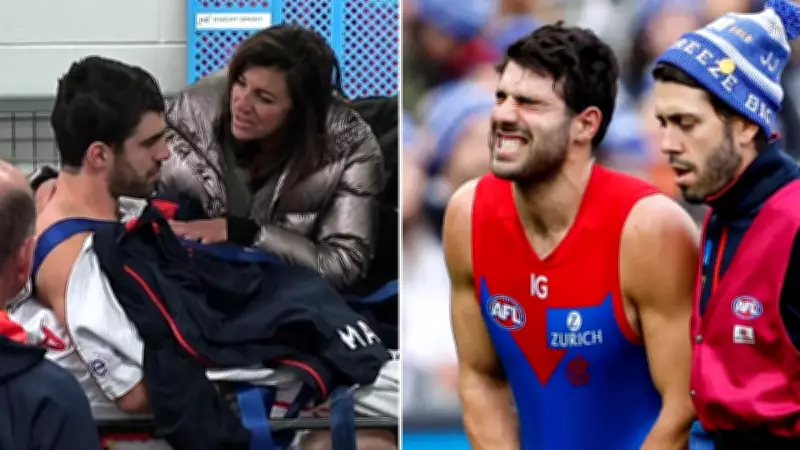
AFL Concludes 681-Day Investigation into Christian Petracca's Lacerated Spleen Incident
After an exhaustive 681-day inquiry, the Australian Football League has finally completed its investigation into the critical failings that occurred when former Melbourne midfielder Christian Petracca suffered a lacerated spleen during a match. The 2021 Norm Smith medallist, who now stars for the Gold Coast Suns, sustained the devastating injury during the King's Birthday clash with Collingwood in 2024, which prematurely ended his season.
Despite initially being cleared to return to the field during the game, the severity of Petracca's condition later became apparent, necessitating his admission to the intensive care unit at the Alfred Hospital for several days. This mishandling of the injury deeply frustrated Petracca, ultimately leading him to request trades at the end of both the 2024 and 2025 seasons, with his move to the Gold Coast Suns finally materializing.
Four Key Findings and Protocol Reforms
The investigation has uncovered four significant findings that will now be integrated into the AFL's official protocols for managing serious player injuries:

- Enhanced Pre-Match Briefings: The AFL will implement more comprehensive pre-match briefings that include detailed plans for match-day workers and medical staff. These briefings will specifically outline local emergency hospitals and establish clear communication channels for urgent situations.
- Standardized Processes Across All States and Venues: Currently, emergency procedures vary between different states and venues. The AFL will now align these processes to ensure consistency nationwide. "That staggered me when I found out," noted The Agenda Setters' Tom Morris regarding these discrepancies.
- Mandatory Bi-Annual Emergency Care Training: Club doctors, physiotherapists, and head trainers will be required to complete emergency care courses every six months to maintain and update their skills in handling critical injuries.
- Tightened Audit Process for Emergency Incidents: The AFL will introduce automatic reviews for all emergency match-day incidents, mirroring practices in the public health system. "Until now, they've just cherry-picked which ones they want to review," Morris added. "Now, every single emergency that happens on the football field will be reviewed."
According to Morris, emergencies will be defined as situations requiring care beyond the football field, including hospital admissions for concussions, rib injuries, ACL tears, and similar critical conditions.
Delayed Response and Broader Implications
While the findings represent what former player Nick Riewoldt describes as "common sense" outcomes, questions remain about the investigation's prolonged duration. "It took so long because the AFL is a slow-moving beast," Morris explained, suggesting that bureaucratic inefficiencies within the organization contributed to the delay.
Morris further indicated that former AFL Players' Association CEO Paul Marsh's departure may have been influenced by frustration with the AFL's sluggish processes. The investigation's timing has also raised concerns about whether improved protocols could have better handled other incidents, such as Carlton's Elijah Holland situation, highlighting the broader need for systemic change in player safety management.