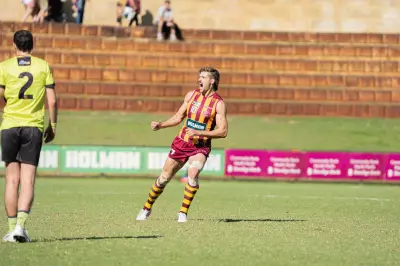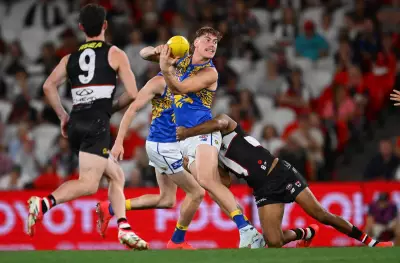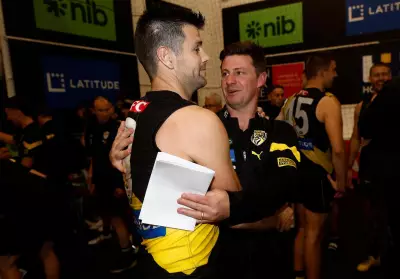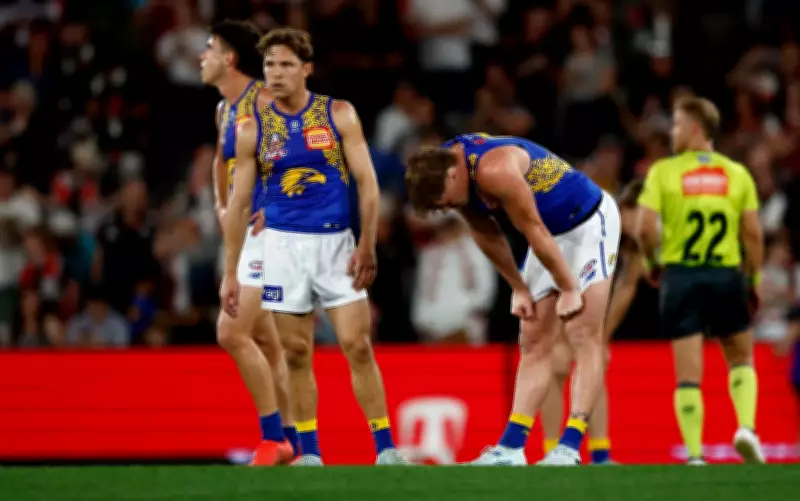
The West Coast Eagles' recent string of heavy defeats has raised serious questions about the club's direction, with critics arguing that constant thrashings are the real sign that nothing has changed despite talk of improvement. The team's performances have been consistently poor, leading to growing frustration among fans and analysts alike.
A Season of Disappointment
After a promising start to the season, the Eagles have slumped to a series of demoralizing losses. The most recent defeat, a 74-point thrashing at the hands of the Sydney Swans, has been described as a new low. This follows earlier heavy losses to Geelong and Port Adelaide, where the margin exceeded 60 points on each occasion.
The team's inability to compete with top-tier sides has exposed deep-seated issues within the playing group and coaching staff. Despite public statements from players and officials about progress and learning, the results on the field tell a different story.

Lack of Defensive Structure
One of the most glaring problems has been the Eagles' defensive fragility. They have conceded over 100 points in five of their last seven games, a statistic that highlights a lack of cohesion and discipline. Opponents have found it easy to score freely, often slicing through the midfield and backline with minimal resistance.
Coach Adam Simpson has been under increasing pressure to turn things around. However, his tactical adjustments have failed to stem the tide. The team's defensive structures appear disjointed, and individual errors have been costly.
Midfield Dominance Missing
The midfield, once a strength of the club, has been outplayed consistently. The absence of key players due to injury has been a factor, but even when fit, the group has struggled to win contested possessions and clearances. This has placed enormous pressure on the backline, which has been exposed repeatedly.
Young players like Reuben Ginbey and Elijah Hewett have shown promise, but they lack the experience to lead the midfield against seasoned opponents. The reliance on veterans such as Tim Kelly and Andrew Gaff has not yielded the desired results, with both players struggling for form.
Talk vs. Reality
Throughout the season, Eagles players and officials have spoken about improvements in training and a positive attitude. However, these claims ring hollow when matched against the reality of heavy defeats. The gap between rhetoric and performance is widening, leaving supporters disillusioned.
Chief executive Trevor Nisbett recently stated that the club is on the right track, but the evidence suggests otherwise. The Eagles are currently second-last on the ladder, with only North Melbourne below them. Their percentage is the worst in the competition, a clear indicator of the scale of their struggles.
What Needs to Change?
Experts believe that a fundamental shift in approach is required. This includes a review of the game plan, player development pathways, and possibly changes to the coaching staff. The club must also address its recruitment strategy, focusing on acquiring players who can make an immediate impact.
Simpson has acknowledged the need for improvement but insists that the group is united. However, actions speak louder than words. The Eagles must show on the field that they are capable of competing, starting with their next match against Fremantle.
Fan Frustration
The loyal West Coast fan base has been patient, but patience is wearing thin. Social media is filled with calls for change, and attendance at home games has declined. The once-proud club is in danger of becoming irrelevant if the current trajectory continues.
Former players have also weighed in, with some suggesting that the club has lost its identity. The Eagles need to rediscover the hardness and discipline that defined their premiership-winning teams.
In conclusion, the constant thrashings are a clear sign that nothing has changed at West Coast. The talk of improvement is just that—talk. Until the team starts delivering on the field, the doubts will persist.