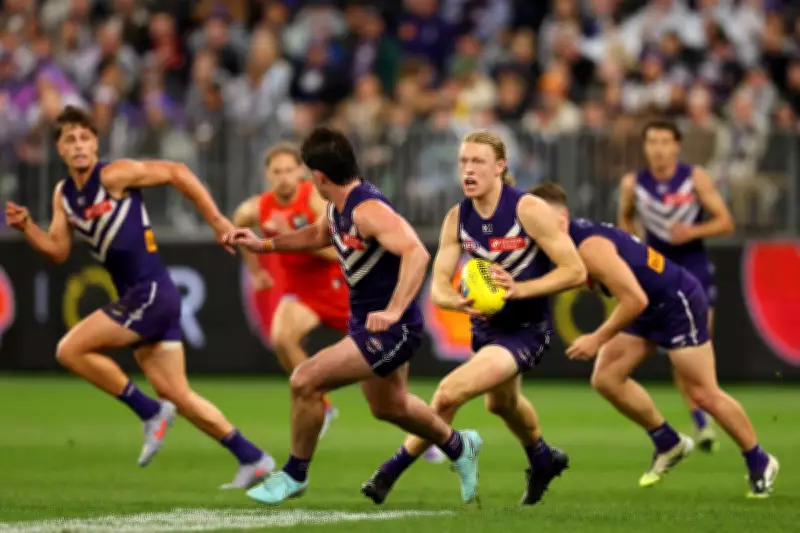
Fremantle Dockers Coach Justin Longmuir Addresses Speed in AFL Game Plan
Fremantle Dockers coach Justin Longmuir has provided a detailed explanation of where speed fits into his game plan, responding to ongoing criticism about the team's conservative playing style. In an exclusive interview on The West Sport Show, Longmuir defended the Dockers' approach, highlighting the importance of balance and strategic execution in the fast-paced world of Australian Football League.
The Debate Over Fremantle's Slow Ball Movement
According to Champion Data statistics, Fremantle has consistently ranked as one of the slowest teams in the AFL during Longmuir's tenure. Over five of his six years as coach, the Dockers have been the league's slowest in overall speed, and they have held the bottom spot for speed in disposing of the ball since his first season. This has led to widespread criticism from analysts and fans who argue that the modern game demands quicker decision-making and faster play.
Longmuir, however, pushes back against this simplistic view. "We want to balance our game out, of course," he stated. "There are definitely times when we can get the ball out of our hands a little bit quicker, see it, hit it, and get the ball moving. But we need balance." He pointed out that despite being labeled the slowest ball movement team early last season, Fremantle scored highly from turnovers in their back half, ranking first or second in scores per turnover until round 10.

Longmuir's Strategic Insights and Examples
Longmuir elaborated on the complexities of ball movement, emphasizing that factors like team defence and contest wins play crucial roles. He used Fremantle's Round 24 match against the Western Bulldogs as a case study. In the first quarter, slow ball movement and long kicks down the line resulted in a deficit, but a second-quarter surge with faster play led to a seven-goal onslaught. Longmuir argued that this shift was not just about speed but about improved contest performance and defensive positioning.
"It's a pretty simplistic way of looking at the game if you just look at ball movement," he explained. "Where you win the ball back plays a big part in how you move the ball. In the first quarter, we were winning the ball back deep in our defence, making it hard to score. In the second quarter, our contest was better, allowing us to move the ball more effectively."
Recent Improvements and Future Prospects
Despite the slow rankings, Fremantle has shown signs of evolution. Last season, the team catapulted to second place in disposals towards goals, a significant jump from 14th in 2022 and 2023. Key players like Jordan Clark, who earned All-Australian honors, and Murphy Reid, the Rising Star winner, have contributed to this more direct approach. New recruit Shai Bolton and the return of a fit Hayden Young are expected to further transform the group's dynamics.
Longmuir remains optimistic about adding more variety to their play. "We want to add a little bit more slow play and be able to mark the ball a bit more," he said. "I think it will help when momentum is against us. But we're also looking to capitalize on turnovers closer to goal, like top teams such as Brisbane and Geelong do."
Statistical Breakdown and Outlook
Champion Data reveals that Fremantle won 68% of quarters when their speed matched or exceeded the AFL average, compared to only 50% in slower-paced quarters. This underscores the potential benefits of incorporating more speed into their strategy. As the new season approaches, all eyes will be on whether Longmuir can blend his conservative strengths with faster elements to boost Fremantle's performance.
With players like Caleb Serong and Andrew Brayshaw increasing their metres gained, and recruits like Judd McVee joining the squad, the Dockers are poised for a potentially transformative year. The question remains: Will Fremantle embrace a quicker style, or will they stick to their methodical roots? Only time will tell as the AFL season unfolds.