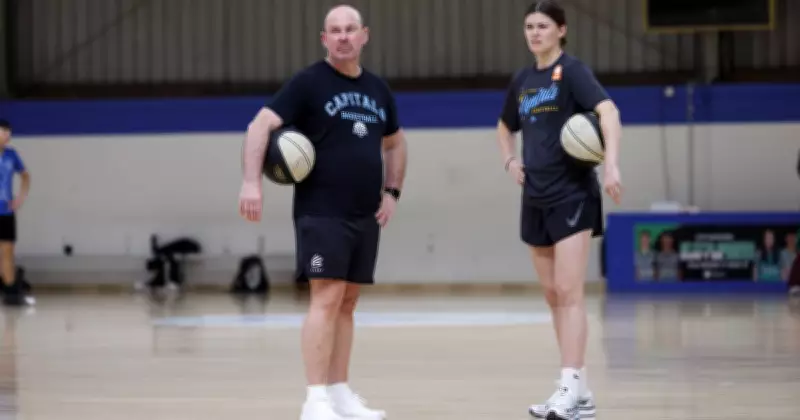
Canberra Capitals Lock in Coach Paul Goriss with Two-Year Deal
The Canberra Capitals have made a significant move in the women's basketball landscape by securing coach Paul Goriss with a two-year contract extension. This strategic re-signing coup comes just as the free-agent market prepares to intensify, providing stability for the club's rebuilding efforts.
Goriss, who previously guided the Capitals to back-to-back championships in the 2018-19 and 2019-20 seasons, has committed to the program until at least the conclusion of the 2027-28 WNBL season. His return to Canberra two years ago marked the beginning of a steady reconstruction phase for the proud franchise.
Building Towards Championship Contention
Under Goriss's leadership, the Capitals narrowly missed a playoffs return this season, achieving their best result in several years though falling short of a top-four finish. The club's management has expressed strong confidence in his vision and direction.

"We are excited to have coach Goriss continue to lead our program for the next two seasons," said Capitals general manager Christy Collier-Hill. "We believe in his vision and leadership as we pursue our 10th WNBL championship. He has laid an incredible foundation over the past two seasons, and we look forward to building upon it."
Goriss echoed this enthusiasm, stating: "I'm excited and grateful for this contract extension. Canberra is where I want to be coaching—this is home for me. Our goal is to be a top-four team every year and compete for championships. That's what everyone associated with this club wants."
WNBL Faces Growing Competition and Player Retention Challenges
Despite the positive news for Canberra, Goriss has issued a stark warning about broader threats facing the Women's National Basketball League. The coach highlighted several factors that could impact the competition's future viability and quality.
"It is a real challenge for the league and basketball here right now," Goriss cautioned. "The WNBA's collective bargaining agreement negotiations could lead to significant pay increases for players overseas, making it harder for Australian teams to retain talent."
The timing of the WNBA season, which concludes just before the Australian pre-season begins, has raised concerns about player burnout. Approximately ten WNBA players participated in the WNBL this season, including Opals representative Jade Melbourne, who acknowledged the physical toll of competing in both leagues.
Multiple Leagues Compete for Elite Talent
Goriss identified several emerging competitions that could further challenge the WNBL's ability to attract and retain marquee players:
- The 3v3 competition Unrivaled
- The high-profile Project B launching in November
- The expanding Chinese domestic competition, which recently attracted Opals star Sara Blicavs
"With the WNBA adding more teams and extending their season, and with other leagues offering competitive alternatives, we need to seriously consider how we maintain our quality and appeal," Goriss explained.
League Officials Discuss Potential Solutions
WNBL general managers have been meeting regularly to address these challenges, though the uncertainty surrounding the WNBA's CBA negotiations complicates planning. The agreement was originally scheduled for completion in October, but disputes over revenue sharing have delayed finalization.
"We've had discussions about what losing players to the WNBA might look like moving forward," Goriss revealed. "Without a clear timeframe for the CBA arrangement, we're limited to developing contingency plans and considering various scenarios."
Melbourne, who plays for the Washington Mystics in the WNBA, acknowledged the uncertainty surrounding her future in the Australian competition. Following Canberra's recent victory over Geelong Venom, she reflected: "Obviously we don't know what's going to happen—only time will tell. If this is my last time in a Caps jersey for a while, I want to thank everyone involved."

The Canberra Capitals' decision to extend Paul Goriss's contract represents a significant commitment to continuity and long-term planning. However, his warnings about the WNBL's broader challenges highlight the complex environment facing women's professional basketball in Australia as it navigates increasing international competition and player mobility concerns.