Australia's T20 World Cup Exit: A Stunning Failure and Selection Controversy
Australia's fate at the Twenty20 World Cup has prompted a wave of reactions, ranging from shock to outright criticism, following their unprecedented early exit. For the first time since 2009 in either a 50-over or 20-over World Cup, Australia will not advance from the group stage, a result that has left fans and experts alike bewildered.
Washed-Out Hopes and a Soft Underbelly Exposed
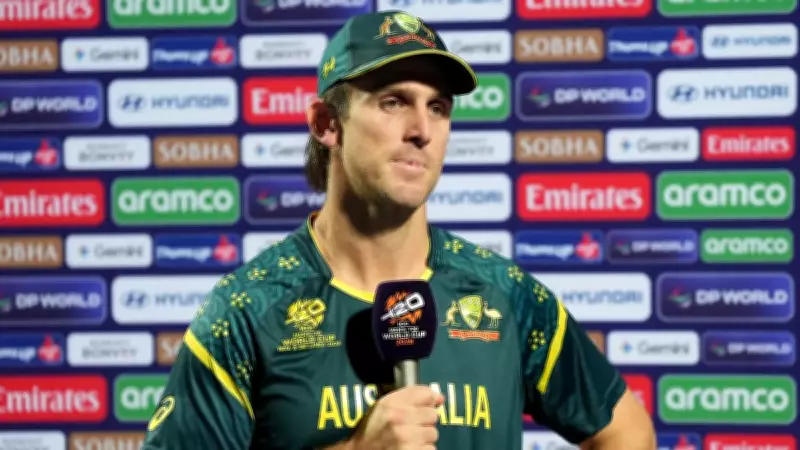
Losses to Sri Lanka and Zimbabwe, with only a win over Ireland in between, left captain Mitch Marsh and his squad relying on Ireland to defeat Zimbabwe to keep their hopes alive. This was contingent on Australia beating Oman in their final group game. However, the Ireland-Zimbabwe match was washed out, sealing Australia's ignominious early exit without them even taking the field for their last match.
Pace great Glenn McGrath highlighted the team's vulnerabilities, noting the absence of key bowlers Pat Cummins, Josh Hazlewood, and Mitchell Starc. "All of a sudden, the aura of that Australian team is no longer there when other teams play it ... unfortunately, not surprising," McGrath said during a podcast discussion with fellow retired quicks Jason Gillespie and Damien Fleming.

Mind-Blowing Selection Decisions Under Fire
The selection process has come under intense scrutiny. With Cummins and Hazlewood injured and Starc retired from T20 internationals, Gillespie pointed to "please explain" queries for selectors. Key decisions have baffled observers:
- Steve Smith: Left out of the initial squad, called up last week, flown to Sri Lanka—and not playing a single game.
- Matt Renshaw: Australia's highest run-scorer at the cup, top-scored in the loss to Zimbabwe, yet dropped for the Sri Lanka fixture. Gillespie called this "a mind-blowing decision ... that makes absolutely no sense."
- Cameron Green and Cooper Connolly: Continued faith in these players despite poor returns. Gillespie noted they are "just not repaying the absolute faith that has been given." Green has bowled only seven deliveries in three matches, raising questions about his role.
McGrath added, "If he's not bowling, then what the selectors are saying is that he's a better player than Steve Smith. If he's not bowling, I just can't see how he justifies a spot in that side."
Statistical Struggles and Disjointed Preparation
Australia's performance metrics tell a grim story. After three games, only three bowlers have taken multiple wickets: Nathan Ellis and Adam Zampa with four each, and Marcus Stoinis with three. In batting, Renshaw leads with 102 runs at an average of 51, followed by Travis Head with 79 at 26.33.
Captain Marsh missed the first two matches due to a testicular injury, while Tim David returned from a hamstring issue only for the Zimbabwe game. Glenn Maxwell has managed just 63 runs in three innings. Many players, including David, Maxwell, and Ellis, missed warm-up games in Pakistan due to injuries, and others arrived late after the BBL finals.
This disjointed preparation was evident in pre-tournament defeats in Pakistan by 22, 90, and 111 runs—the latter two being Australia's largest losses in T20 internationals. Before the cup, Marsh dismissed concerns, saying, "Absolutely no stress there from our end." After the loss to Sri Lanka, he admitted, "It's a devastated group."
Looking Ahead: Rebuilding for 2028
With Australia set to co-host the 2028 T20 World Cup with New Zealand, significant rebuilding lies ahead. Only three players in the current squad—Cameron Green, Cooper Connolly, and Xavier Bartlett—will be under 30 when that tournament arrives. This early exit serves as a stark wake-up call for Australian cricket, highlighting the need for strategic changes in selection and preparation to restore their once-formidable aura on the global stage.