NRL's Las Vegas Expansion Confronts Harsh US Market Realities
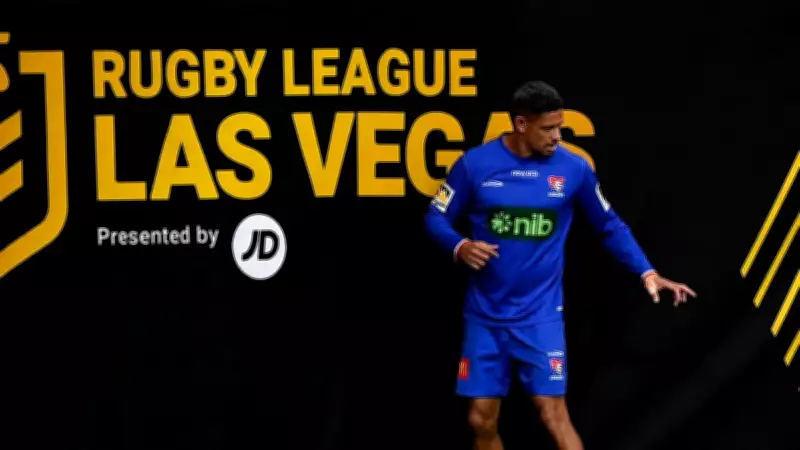
Recent celebrations over the NRL's venture into Las Vegas have been tempered by a sobering analysis of television viewership data. While Australian audiences showed increased interest, with viewership up seven per cent compared to last year's event, the story in the United States tells a different tale. The NRL's official website boasted that the league's global expansion is accelerating, but this optimism clashes with the reality of its reception on American screens.
US TV Demotion and Plummeting Ratings
Behind the scenes, it was quietly reported that the NRL double-header and a Super League match were moved from the primary US channel, Fox Sports 1, to the secondary pay-TV channel, Fox Sports 2. This relegation occurred as college basketball took priority on both Fox Sports 1 and the network's free-to-air channel. According to US sports TV analyst Manny Soloway, this shift has proven costly for the NRL's visibility in the American market.
Soloway, known as the 'SportsOnTVguy' on social media, highlighted a dramatic drop in viewership. "Last year, they had a game on Fox from Las Vegas that averaged 370,000 viewers. This year, they had three games on Fox Sports 2 that averaged miserable viewership (12K, 6K, 2K)," he stated, underscoring the challenge of gaining traction in a competitive sports landscape.

Leadership Claims and Market Challenges
Amidst this, Rugby League Commission chair Peter V'landys has been vocal about the NRL's pioneering efforts, often contrasting them with other codes like the AFL. However, he quietly admitted to the Sydney Morning Herald that establishing the NRL in the US would take longer than initially anticipated. This acknowledgment comes as betting markets in the US show little interest in the sport, with V'landys noting that American bookmakers are wary of the NRL's different commercial model.
An American NRL fan in Las Vegas echoed these concerns, telling the SMH that he didn't know a single person familiar with the sport. He predicted that without free-to-air coverage, interest would remain minimal, a view that seems prophetic given the recent ratings.
Australian Success Versus American Indifference
NRL CEO Andrew Abdo hailed this year's Vegas round as "a takeover," praising the integration of rugby league communities and the showcase in Las Vegas, which he called the sport and entertainment capital of America. Yet, the core question persists: is this a sustainable expansion or merely a short-term gimmick?
In 2024, US viewership numbers were stark. An average of just 61,000 people watched Manly's win against South Sydney, and only 44,000 tuned in for the Sydney Roosters' clash with Brisbane. By comparison, the college basketball game on Fox Sports 1 leading into the NRL matches drew 162,000 viewers. When that game went into overtime, pushing the NRL to the secondary channel, over 100,000 viewers turned off once the switch occurred.
Positive Metrics from Australian Perspective
Despite the US struggles, the NRL highlighted several positive metrics from the Australian broadcast. The Allegiant Stadium triple-header generated record numbers on Fox Sports and Kayo:
- The Knights v Cowboys fixture was the second-most watched exclusive Fox Sports/Kayo match of all time, trailing only the 2024 Vegas opener.
- It achieved the highest-ever audience for both Newcastle and North Queensland on these platforms.
- The Bulldogs v Dragons game was the most-watched match of all time between the two sides, including finals.
- It ranked as the fourth most-watched Round 1 fixture of all time and set records for regular season viewership involving the Bulldogs and Dragons.
- The Super League fixture between Leeds and Hull KR became the most-watched Super League game on Fox Sports/Kayo ever.
These achievements underscore the NRL's strong domestic appeal but highlight the disparity with its international ambitions. As the league continues to push for global growth, the Las Vegas experiment serves as a critical case study in navigating foreign markets and audience engagement.