Steven Bradbury's Unforgettable Olympic Victory and Ongoing Legacy
Australian speed skater Steven Bradbury secured a history-making gold medal at the 2002 Winter Olympic Games in Salt Lake City, retiring as a content champion. However, the story did not conclude there. The unique circumstances of his triumph transformed the relatively unknown athlete into a household name and even inspired a popular phrase for describing unexpected success: "Doing a Bradbury."
The Race That Defined a Career
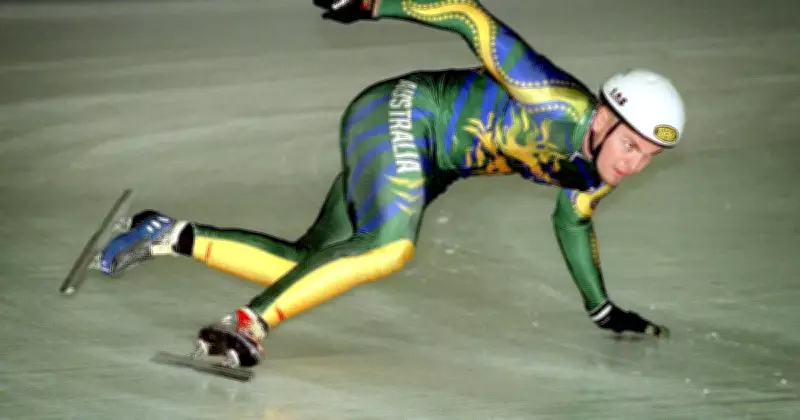
Bradbury clinched victory in the 1000-metre short course speed-skating final when his competitors dramatically collided and tumbled to the ice in a chaotic heap. He crossed the finish line first, emerging as the last man standing. This momentous achievement marked the first gold medal ever won by an Australian athlete at the Winter Olympics, with aerial skier Alisa Camplin adding another gold just days later.
"For me, winning gold was the end of a long road - Salt Lake City was my fourth Olympics for Australia, and realistically I had better chances of a win in the first three," Bradbury reveals. "I got a medal in the relay team in my second Olympics, which was Australia's first winter Olympics medal - a historic moment in Australian sport but not one that many people remember."

Bradbury was a key member of the Australian team that earned Australia's inaugural Winter Olympic medal, a bronze, in Lillehammer. His accolades also include being part of the world championship relay winning team in 1991, securing a relay bronze at the 1993 world titles, and attaining a silver medal in the 1994 world championships.
Strategy, Luck, and Years of Dedication
Salt Lake City represented his fourth Winter Olympics. "For me, winning gold was the ultimate way to finish," he states. "Most athletes don't get to finish on a high like that, especially with how lucky I was - you know, 'the luckiest individual Olympic gold medallist in sporting history'. I get it, I get that some people think I only won because I was lucky, but generally those people haven't achieved too much in their lives."
"And most people understand that you don't wind up at the top level of anything, let alone the Olympics, let alone the Olympic final, because you got lucky."
Bradbury emphasises the immense dedication behind his success: "I trained five hours a day, six days a week, for 14 years to put myself in that position. I had to skate my way through the heats and the quarters to get to the semifinal, and in the final, the rest of the world fell over in front of me. Lucky? 100 per cent. But no one else was there to pick up the pieces."
Staying clear of the pack and anticipating a potential fall was a deliberate component of his race strategy. "There was experience and judgement built into the strategy; knowing your own limitations. I wasn't as strong as those other guys on that night," he explains.
"I could have gone out and mixed it up with them in the first half but there was no point in that because when it came to the end of the race, they were going to be ahead of me."
"I was tired from having skated the heats and the quarters and the semis in the previous hour-and-a-half and I didn't quite back up the way that I used to. So my coach and I played a different strategy, and that meant eating a little bit of humble pie."
"My best chance to get a medal, which was most likely going to be a bronze, was through other people's mistakes, and there was a very strong chance that was going to happen because the other four skaters in that final were prepared to go through each other to win."
"My coach and I knew that, everyone in the sport knew it. I had guys from other countries coming into the change rooms before the final just to make sure that I knew what I was doing and was going to stay out of the way."
"No one thought I would get better than a bronze, but I did. It was the most incredible way to finish. Win, lose or draw, that was the finish line."

The transition from an obscure athlete training at Iceworld in Acacia Ridge, located in the western suburbs of Brisbane, to becoming one of the most recognisable figures in the nation overnight was undoubtedly shocking. "To go from an unknown athlete in Australia training at Iceworld in Acacia Ridge in the western suburbs of Brisbane, to probably the most recognisable person in the country the next day, was a shock to the system, that's for sure, but it was also the ultimate way to finish something that I'd been doing for 20 years," Bradbury reflects.
Enduring Resonance and 2026 Winter Olympics Role
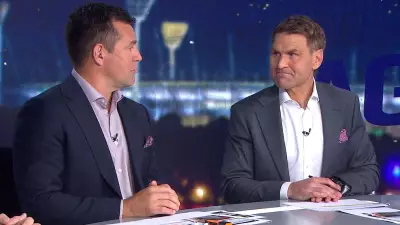
Bradbury's narrative continues to captivate audiences more than two decades later. He remains a highly sought-after public speaker and will serve as a commentator for Channel Nine during the 2026 Winter Olympic Games in Milano Cortina, Italy, commencing this weekend.
"I still tell my story at conferences and charity events, and the average person is able to relate to my story more than that of a superstar athlete like Ian Thorpe or Valentino Rossi," he notes. "My story says to the average bloke, well, if I'm prepared to give all of myself to something for a long time, maybe one day I'll get lucky too."
"I'm privileged to be part of the Winter Olympics coverage again this year. Being able to use my knowledge and experience in my sport and share that with the Australian public through the television screen is something I would do for free."
Advocacy for Australian Winter Athletes
Bradbury is known for his straightforward approach and believes greater support should be extended to Australian athletes competing at the Winter Olympics, as they consistently exceed expectations on the global stage.
"You've got a bunch of Aussie athletes that are training, most of them in complete anonymity, for a four-year block - then the Olympics come around and people take note and go, 'OK, who have we got as a medal contender?' From the athlete's perspective it's like 'Oh great, people are finally interested in something I've dedicated my whole life to'," he remarks.
"The Winter Olympics doesn't get quite the same build-up as the summer games do - justifiably, because one has a much bigger team, and many more medal chances - but once it starts on the TV the whole country still tunes in and the ratings are very similar."
"And let me tell you, this time, we will have a medal contender every single day of the Olympics."
Australia is dispatching a team of 53 athletes to Italy, representing the nation's second-largest winter team ever assembled. Bradbury highlights several gold medal prospects, including defending champion Jakara Anthony in women's moguls, Matt Graham in moguls, Bree Walker in mono bobsleigh, Scotty James in snowboard halfpipe, and Danielle Scott alongside Laura Peel in aerial freestyle skiing.
"The list of potential medal-winners at the back of that is pretty long, too," he adds.
Personal Journey and Reflections
Bradbury received the key to the City of Brisbane in 2002 and was honoured with a Medal of the Order of Australia in 2007 for his contributions to Australian sport. These accolades are remarkable for a individual who began his journey in Camden, requiring drives to Canterbury and Blacktown to access ice rinks.
"My dad [John Bradbury] was a national champion a couple of times in the '60s. It was something the Bradbury family did. When I was around 13 he saw that I had potential, and he pushed me pretty hard to get me fit, and I hated him for it at the time," Bradbury recounts.
"Then I made it onto the national team when I was 15 and I realised 'I can do this, I'm going to see if I can be the best in the world'."
"When you're in the bubble of your sport, it doesn't really matter what's happening in the rest of the world. That's part of the attraction of being an athlete; you're all in. You're invested. You've got your set routine, and you're always thinking about what you can do to improve."
"Something I struggled with was being able to skate my best at the Olympics or world titles. I broke a world record in training when it didn't mean anything."
"The highs are really high and the lows are really low, but the highs are what keep you coming back."
The Olympic Winter Games Milano Cortina 2026, scheduled from February 7 to 23, will be broadcast live and free on the 9Network, with streaming available on 9Now and Stan Sport.