Australia's biotechnology sector is rapidly converging with the explosive rise of artificial intelligence, and Perth-based Syngenis Laboratories is positioning itself at the centre of this revolution. The company has developed an AI-powered discovery platform named Syngenis Discovery, designed to dramatically accelerate the search for next-generation therapies and diagnostic molecules. By doing so, Syngenis aims to overcome one of biotechnology's biggest bottlenecks: identifying viable treatments from billions of potential molecular combinations.
Traditional drug discovery challenges
Conventional drug discovery can take months or even years of laboratory testing, modelling, sequence refinement, and toxicity analysis. Researchers often screen thousands of molecules before identifying viable candidates. Much of the process remains fragmented across multiple software systems and relies on manual interpretation. However, Syngenis Discovery intends to compress that workflow into just hours.
Development of the platform is being led by James Hill, formerly chief technology officer of ASX-listed medical technology company Singular Health and now Syngenis' AI strategist. Hill stated, "There are billions upon billions of potential sequence combinations. No human research team can realistically explore that search space manually. AI allows us to evaluate molecular behaviour at a scale that simply was not commercially practical even a few years ago."

Focus on oligonucleotide therapeutics
One of the biggest opportunities for Syngenis lies in the fast-growing world of RNA and DNA-based medicines known as oligonucleotide therapeutics. These are short synthetic genetic sequences designed to interact with cells at a molecular level, enabling scientists to switch off harmful genes or target diseases with far greater precision. The explosive success of mRNA vaccines during the COVID-19 pandemic triggered a global surge in investment in RNA medicine, opening the door to potential new treatments targeting cancer, neurological disorders, inflammatory diseases, rare conditions, and inherited genetic illnesses.
Syngenis Discovery allows researchers to upload massive genetic and protein datasets from major global databases such as the US-based National Center for Biotechnology Information (NCBI) and UniProt, alongside their own commercial or academic research data. To put the scale of these archives in perspective, NCBI's GenBank database alone currently holds more than 6.27 billion nucleotide sequence records spanning over 53.9 trillion base pairs. UniProt, meanwhile, contains reference data on approximately 246 million proteins, illustrating why AI is essential for therapy discovery.
How the platform works
Once the data is uploaded, Syngenis' platform unleashes a suite of specialised AI models simultaneously, each engineered to tackle a different stage of the molecular discovery process—from sequence optimisation and structural prediction through to toxicity screening and binding analysis. By combining established principles of molecular chemistry with advanced machine learning, the system can rapidly generate and analyse enormous libraries of potential molecules at a scale far beyond that of traditional laboratory testing.
Although the technology has not been designed to replace day-to-day lab work, management says it can narrow the search space before costly wet-lab validation begins, reducing development timelines, lowering failure rates, and improving the probability of clinical success.

Timing and business divisions
The timing of these new developments could hardly be better for Syngenis as it works towards a public float on the ASX later in the year to expand its AI-driven biotechnology platform and clinical manufacturing ambitions. The company has built its business around three core divisions: manufacturing, discovery, and diagnostics. Its manufacturing arm already generates revenue through a research laboratory servicing about 40 customers across Australia and New Zealand, while its AI-supported discovery division is developing diagnostic technologies targeting diseases such as Alzheimer’s and Parkinson’s. The diagnostics division, meanwhile, is focused on rolling out rapid point-of-care tests while building the sales and distribution channels needed to eventually launch the company’s own diagnostic products into the market.
Expert leadership
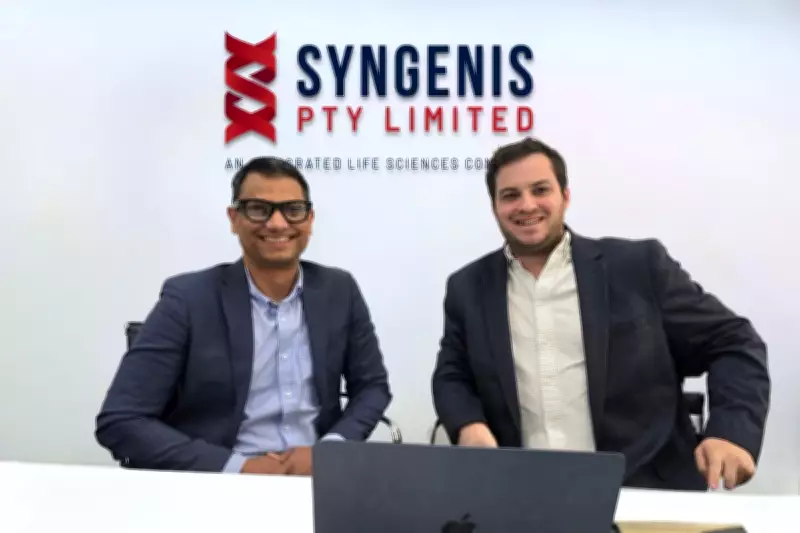
Syngenis has assembled a heavyweight mix of biotechnology, AI, and commercialisation expertise, led by internationally recognised nucleic acid therapeutics specialist Professor Rakesh Veedu, former Singular Health CTO James Hill, and managing director Thomas Hanly, who has built a track record commercialising science-driven healthcare technologies into scalable investment opportunities.
Syngenis Laboratories founder, chief technology officer, and head of nucleic acid therapeutics at Murdoch University, Professor Rakesh Veedu, said: "The new Syngenis Discovery platform is launching with an initial goal of assisting our customers by reducing the time taken in the initial discovery process to develop promising therapeutic and diagnostic candidates and presenting them for Syngenis to manufacture. This first version has the potential to save researchers months of work and hundreds of thousands of dollars by identifying nearly optimised sequences prior to manufacture."
In addition to oligonucleotides, Syngenis Discovery is also focused on aptamer discovery. Because of their precision, scalability, and manufacturing advantages, many researchers now view aptamers as a potential next-generation alternative to traditional antibody technologies.
Managing director Thomas Hanly commented: "We are entering a period where biotechnology and artificial intelligence are converging in a very meaningful way. Companies that can integrate advanced computation with deep molecular science will have a significant advantage in both discovery speed and commercialisation potential."
For Syngenis, the vision extends far beyond building another software platform. From its Perth base, the company says it is positioning itself at the intersection of biology, chemistry, and artificial intelligence, aiming to put Australia in the front ranks of next-generation biotechnology and accelerate the discovery of therapies and diagnostics. The AI revolution in drug discovery may be the next major advancement, and Syngenis is working to ensure that when that history is written, Australia will not be a footnote.