Hackers have revealed how they easily compromised a series of high-profile Instagram accounts, including those of former US President Barack Obama and beauty giant Sephora, by tricking Meta's artificial intelligence support chatbot into resetting passwords. The breach allowed them to publish lewd photos and inflammatory messages before Meta addressed the vulnerability.
The Breach
Meta, the US$1.52 trillion company that owns Instagram, Facebook, and other major social media platforms, confirmed it has patched the issue after the security flaw was exposed online. Among the compromised accounts were Barack Obama's White House Instagram account, an official Sephora page, and the profile of US Space Force chief John Bentivegna.
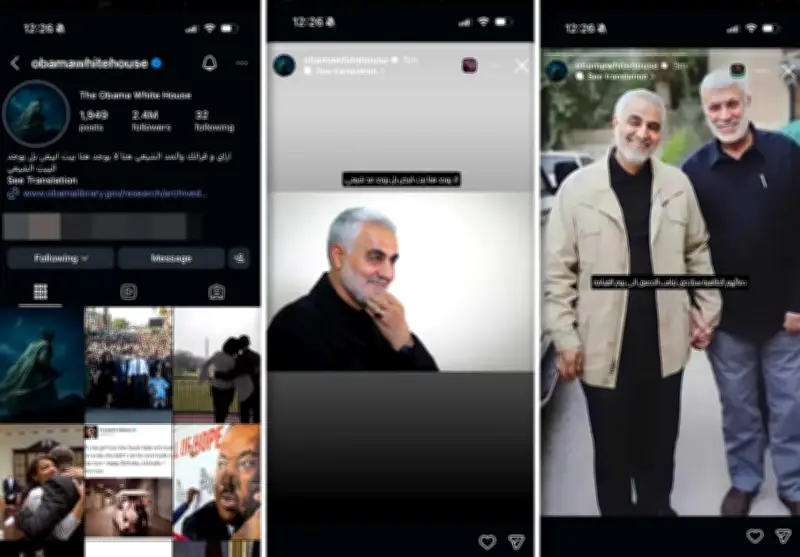
According to TMZ, hackers posted stories and images on Obama's old account, including a caption in Arabic translated as “The White House is under Shiites’ control.” The last legitimate post on that account dated back to January 20, 2017, the day Donald Trump's first term began.

On the Sephora Collection account, hackers posted graphic nudity to its 1.8 million followers and changed the bio to “nudes sex sex sex nudes.”
How the Hack Worked
Videos and images circulated online demonstrated how easily infiltrators took over accounts by asking Meta's AI chatbot to link the pages to a new email address. The chatbot complied, sending a verification email to the proposed address, which allowed hackers to reset the target account's password.
“They basically offloaded tech support to an AI chatbot,” a reporter for 404 Media explained in a video detailing the exploit. Many ordinary users also reported being hacked over the weekend.
Security researcher Jane Wong noted on X that her Instagram password “got changed without my knowledge, and I was getting different password reset attempts throughout yesterday.” She called it “quite concerning.”
Meta spokesperson Andy Stone responded to Wong's post, stating: “This issue has been resolved and we are securing impacted accounts.”
Expert Analysis
Toby Walsh, a Scientia Professor of AI at the University of New South Wales, told news.com.au that the incident highlighted the dual nature of AI in hacking. “First, Meta has inadequate security on Instagram, and it should not be so easy to hack (by humans or by AI). By removing humans from their security service, they’ve opened up the possibility of being attacked. Second, AI tools are now capable of performing such cyber attacks with minimal expertise or oversight.”
One X user, Andre, described how hackers used photos from target accounts to bypass facial recognition protections. “They grab a photo from the target’s profile, run it through an AI video generator to make an animation of the person’s face moving around, upload that to Meta’s AI as proof. And Meta’s AI just accepts it because it can’t tell the difference between a real selfie and an AI-generated video of someone’s face. The whole thing highlighted how stupid it is to automate account security without any human in the loop. One AI fooling another AI while there’s literally no person anywhere to catch it.”
Gergely Orosz, a writer for industry publication The Pragmatic Engineer, reported on X that Instagram's trust and safety team had been “absolutely gutted the last few weeks.” He claimed up to 60 percent of the team was gone “between lay-offs and forced reassignments to data labelling.”
“It’s wild how Meta – a company going all-in on AI – somehow missed the memo on how AI can generate images and videos that renders ‘take a selfie of yourself’ verifications utterly useless,” Orosz wrote. “So now Instagram accounts hacked at scale. 2FA also fully bypassed – by Meta’s own design.”