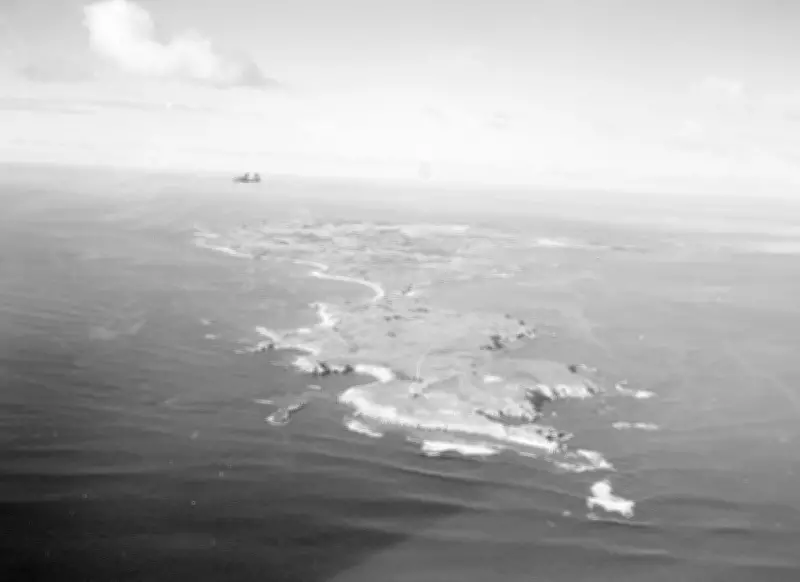
A fascinating memoir by L.C. Timperley, who resided on Rottnest Island (Wadjemup) from 1883 to 1890, provides a unique perspective on the island's colonial past. Today's visitors can use this account as a "shadow map" to uncover layers of history that enrich their experience of the island's pristine beaches, flora, and fauna.
Life on Rottnest in the Late 19th Century
At the age of four, Lewis Clayton Timperley sailed with his family from Geraldton to Fremantle aboard the SS Ferret. His father, William Henry Timperley, had been promoted from inspector of police to superintendent of Rottnest Island. The family and their belongings were then transferred to the island on the Wilwatch. Growing up in his father's house, which adjoined the island's government stores and stockyards, young Lewis had a front-row seat to observe the colony's administrative machinery and the stark differences between the lives of prisoners and the elite. His father was not only in charge of the "native prison" but also the European Boys' Reformatory, as well as the island's salt and farming industries.
The Quod: From Prison to Tourist Accommodation
The most prominent example of Rottnest's history is the Quod, built in the 1860s as the Aboriginal prison complex. The Rottnest Island Aboriginal Establishment had been in operation since 1838. Timperley described the prison as "an octagonal building strongly built of stone, capable of accommodating in its cells up to 200 natives as occasion demanded." The superintendent's offices were in front of the gaol, with warders' quarters on either side. The Quod was later repurposed for tourist accommodation before closing in 2018. Today, it is undergoing conservation work as part of the Wadjemup Project, which aims to formally acknowledge and reconcile the island's Aboriginal prison history through truth-telling, healing ceremonies, and memorialisation of the Quod and the Wadjemup Aboriginal Burial Ground.

Prisoner Life and Routines
Timperley's memoir starkly recounts how Aboriginal prisoners were identified by numbered discs tied around their necks, and their lives were regimented by a bell sounding atop Heliograph Hill. Knowledge of this history adds important layers to a visit to Rottnest. Standing on the jetty at Thomson Bay, visitors can imagine prisoners arriving "chained together" to prevent escape overboard. Timperley wrote that the natives, "usually thoroughly uncivilised and clad in the scantiest of filthy rags – highly nervous and apprehensive as to what would happen next – and with long hair and beards matted together with lime, charcoal and grease, presented an awesome sight on landing at the small jetty in front of the pilot boat shed in Thomson Bay."
Walking along Garden Lake, one can recall the former nearby gardens that supplied vegetables for the prison inmates and the superintendent's house. Timperley noted that figs, yellow peaches, and grapes were produced there, and each warder had a garden allotment for his own household. Gardens were also maintained by the pilot and his crew.
Corroborees and Cultural Expression
Timperley observed prisoners' corroborees, which were "usually held during week-end evenings, but every evening members of one or more tribes would have a singsong until they were counted into their cells for the night." When a large corroboree was staged, "it was possible to see as many different varieties of corroborees as there were tribes in the prison." Participants painted designs on their bodies with lime, manufactured spider web headdresses from rushes, sticks, and wool from their blankets, and carried sticks scraped into balls of shavings. Men danced around small fires to the music of a "vocal orchestra," and their stamping feet "could be heard all over the settlement."

Daily Routine and Leisure
On weekdays, the prison routine comprised a 7am to 5pm workday fueled by bread, tea, vegetable soup, and stew. According to Timperley, prisoners on this diet "grew sleek and contented." On Saturday afternoons, half-holidays were taken, and some prisoners were allowed to play cricket with warders and other inhabitants. On Sundays after breakfast, all prisoners were given uncooked meat and their ration of bread, and allowed to roam the island away from the settlement until 4pm, when every man had to be back in the gaol. Fishing and smoking clay pipes were also indulged in, and during summer, "natives brought in snakes they had killed and received their reward of half a stick of tobacco for each snake produced."
Changes Over Time
By the time Timperley wrote his memoir in 1934, many changes had taken place. Phillip Rock, once a solid stone mass with hardy shrubs, had become a crumbling, eroded remnant. The wattle-lined Lovers Walk disappeared, and a pine plantation was cleared during World War I for a prisoners of war compound. Government House was subdivided into flats. Rottnest's history extends far deeper, with rising sea levels separating it from the mainland around 6500 to 7000 years ago. Timperley's memoir offers a rare first-hand account of a small slice of that history, and its matter-of-fact telling of details makes it disproportionately significant.