Albany's Whaling Women: Portraits Unveil Untold Stories in Historic Exhibition
Jo Wassell vividly recalls a moment that has remained etched in her memory since her first visit to Albany's Historic Whaling Station—a sensation many visitors will instantly recognise. "I remember audibly gasping when I walked around the corner and saw that huge whale skeleton," she says. "I knew they were big, but ..." Her words trail off into silence, a fitting prelude to the delicate tenderness and profound historical weight she uncovered over subsequent months, culminating in a powerful series of portraits.
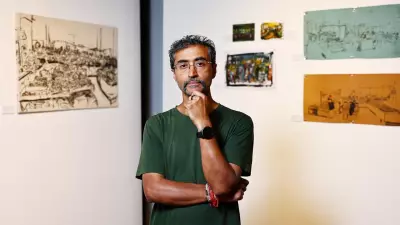
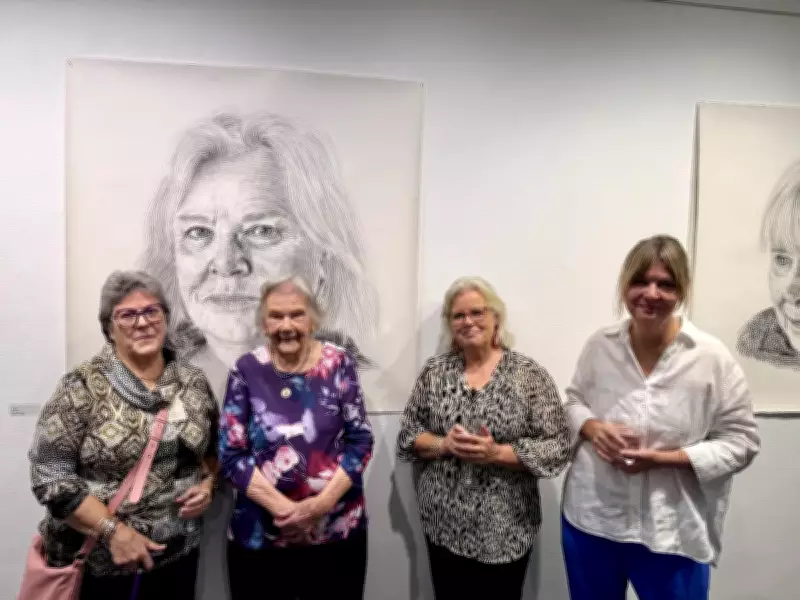
As the first of three artists-in-residence during Albany's bicentenary year, Jo Wassell, a local artist, embarked on a special program at the Historic Whaling Station to commemorate the anniversary. The outcome of her residency is Women in Whaling, an exhibition showcasing five large charcoal portraits of women whose lives were deeply intertwined with the station before its closure in 1978. These striking images are complemented by smaller monochrome drawings that capture places, possessions, and memories frozen in time.
The Legacy of Cheynes Beach Whaling Company
The Cheynes Beach Whaling Company was established in 1952 at Frenchman Bay, initially focusing on humpback whales before shifting to sperm whales. For nearly three decades, it served as the economic and social anchor of Albany's community. However, operations ceased abruptly—"so suddenly, without warning," as Jo describes—leaving the town in a state of shock.

While the tales of the men who manned the steam-powered whale chasers, ending 178 years of regional whaling, have been well-documented, the narratives of the women who waited anxiously each night for their safe return have often been overlooked. Racquel Cavallaro, the gallery co-ordinator who invited Jo to undertake the residency, acknowledges this gap in the historical record. "The stories of the whalers and the whaling industry were told," she explains, "but the stories of the women were missing—and these stories needed to be told in order to have a complete story."
Uncovering Human Stories Through Art
One poignant story Racquel shares is of a woman who waited on the end of the jetty every night for her husband's return, often braving cold and rain. "I can picture her," Racquel says simply. "These stories are important because they are the stories of our humanity." Jo Wassell sought out this humanity not only in archives but also in intimate settings like kitchens and living rooms, where she sat with her subjects, listening intently and translating their experiences into evocative charcoal lines.
Jo's background in the disability sector may have honed her ability to perceive the person behind the face. She agrees that drawing is her preferred medium due to its intimacy and immediacy: "You're literally just putting charcoal on paper." A particular memory that resonates with Jo involves Marian Reeby, whose husband worked on a whale-chaser vessel. Marian described scanning the harbour as the boats returned, able to identify the men by their silhouettes and gaits. On one occasion, when the fleet came back with news of a death on watch, Marian, reading the familiar shapes against the twilight, knew her husband was safe.
This kind of embodied knowledge, often submerged beneath official records, is what Jo's artwork strives to capture. When the women saw their portraits for the first time at the exhibition's opening, some were moved to tears. "It can be quite daunting, seeing very big portraits of yourself," Jo admits. "But they dealt with it so gracefully. They were inspiring."
Reflecting on the Past and Embracing the Future
Racquel Cavallaro's curatorial approach for the bicentenary is encapsulated in the motto "Reflect, Respect, Reactivate"—connecting with the past, celebrating the present, and embracing the future. Women in Whaling successfully fulfills all three objectives, enabling a new generation to engage with stories from a past whose representatives are still very much present. For the families of the five women depicted, seeing a mother or grandmother portrayed with such empathy and skill by Jo Wassell is nothing short of a revelation.

The exhibition, supported by the City of Albany, is on display at the Historic Whaling Station gallery until Sunday, May 31, 2026, open daily from 9am to 5pm. It stands as a testament to the resilience and untold contributions of women in Albany's whaling history, offering a poignant reminder of the community's shared heritage.