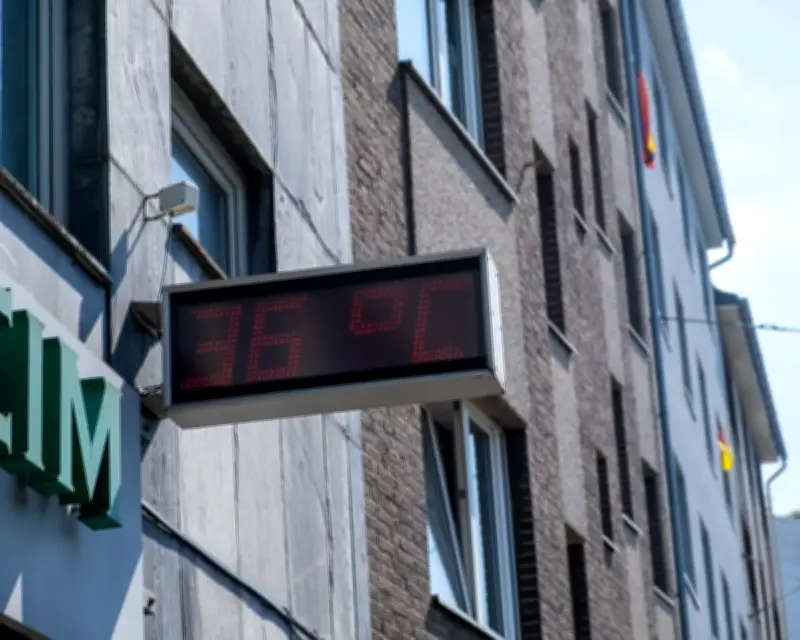
Extreme heat is scorching parts of Europe this week, with temperatures expected to exceed 40°C in several countries, while a typhoon off the coast of the Philippines is intensifying and threatening to bring destructive winds and heavy rainfall.
Europe Braces for Record-Breaking Heat
Meteorologists warn that a heatwave building across southern and central Europe could break records. Spain, France, Italy, and Germany are expected to see temperatures soar above 40°C in some regions. In Spain, the city of Seville could reach 44°C, while Paris may hit 39°C. The extreme heat is caused by a high-pressure system drawing hot air from North Africa.
Health authorities have issued red alerts in several countries, urging people to stay hydrated and avoid outdoor activities during peak hours. In Italy, the health ministry has activated a heat emergency plan for 12 cities, including Rome, Florence, and Bologna. The elderly and those with pre-existing conditions are most at risk.

Typhoon Kiko Intensifies Near Philippines
Meanwhile, in the Pacific, Typhoon Kiko has strengthened into a category 3 storm, with maximum sustained winds of 185 km/h. The storm is currently located east of the Philippines and is expected to approach the country's eastern coast within the next 48 hours. The Philippine Atmospheric, Geophysical and Astronomical Services Administration (PAGASA) has warned that the typhoon could bring heavy rain, strong winds, and storm surges of up to 3 meters.
According to PAGASA, the typhoon is moving westward at 20 km/h and may intensify further before making landfall. Provinces in the Bicol region and Eastern Visayas are likely to be affected. Evacuation orders have been issued for low-lying and coastal areas, with local authorities preparing emergency shelters and relief goods.
Climate Change Links
Scientists say that both events are consistent with the effects of climate change. Extreme heatwaves in Europe have become more frequent and intense, while typhoons in the Pacific are gaining strength due to warmer ocean temperatures. According to the World Meteorological Organization, 2025 was the hottest year on record, and 2026 is on track to be similarly extreme.
“The combination of a European heatwave and a powerful typhoon in the same week highlights the global nature of climate-related disasters,” said Dr. Maria Santos, a climate scientist at the University of the Philippines. “We must adapt to these new realities and reduce greenhouse gas emissions to mitigate future impacts.”