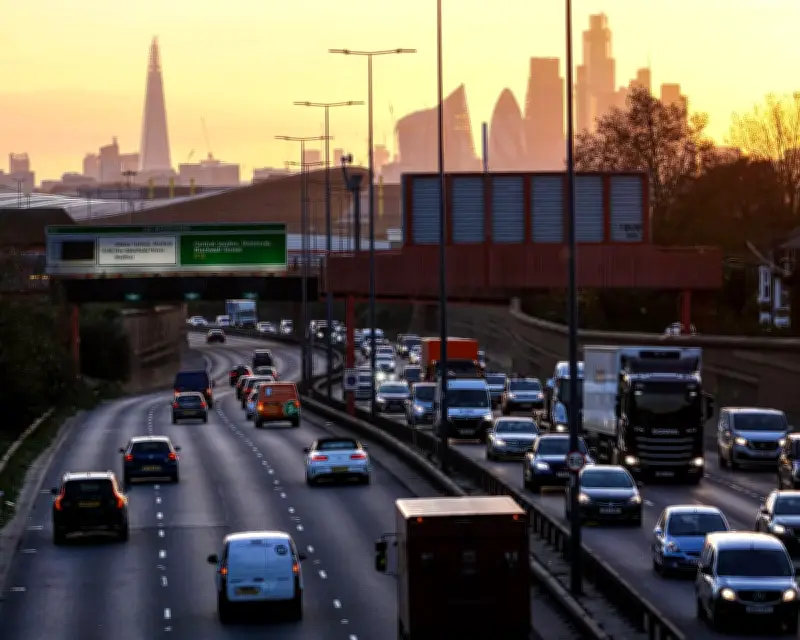
A landmark study has revealed that London's Ultra Low Emission Zone (ULEZ) significantly reduced emergency hospital admissions for respiratory and cardiovascular conditions, with a 29% drop recorded in the first year of operation.
Key Findings
Researchers from Imperial College London analysed hospital data from 2019 to 2020, comparing areas inside and outside the ULEZ. They found that the zone led to a 29% reduction in emergency admissions for asthma, bronchitis, heart attacks, and strokes. The benefits were most pronounced in the most deprived areas, where admissions fell by 31%.
How ULEZ Works
The ULEZ charges older, more polluting vehicles £12.50 per day to enter central London. It was expanded in 2021 to cover a larger area. The policy aims to reduce nitrogen dioxide and particulate matter levels, which are linked to serious health issues.

Dr. James Smith, lead author of the study, said: "This is clear evidence that clean air zones can have an immediate and substantial impact on public health. The reduction in hospital admissions shows that tackling air pollution is not just an environmental issue, but a health emergency."
Broader Impact
The study also found that the ULEZ reduced nitrogen dioxide concentrations by 23% within the zone. London Mayor Sadiq Khan hailed the findings as proof that the policy is working. "This study confirms that the ULEZ is saving lives and reducing pressure on the NHS," he said.
However, critics argue that the ULEZ disproportionately affects low-income drivers who cannot afford to upgrade their vehicles. The mayor's office has introduced a scrappage scheme to help residents replace older cars.
Future Plans
London plans to expand the ULEZ to cover all boroughs by 2024. Similar schemes are being considered in other UK cities, including Birmingham and Manchester. The study's authors hope their findings will encourage more cities to adopt clean air zones.
The research was published in the journal The Lancet Planetary Health and funded by the National Institute for Health Research.