US Navy Seizes Iranian Vessel in Strait of Hormuz, Ceasefire Remains Intact but Peace Talks in Jeopardy
A recent US military strike on an Iranian-flagged cargo ship in the Strait of Hormuz does not appear to violate the existing ceasefire agreement between Washington and Tehran, according to a defence expert. However, the incident could severely complicate already delicate diplomatic efforts aimed at resolving ongoing tensions.
Incident Details and Expert Analysis
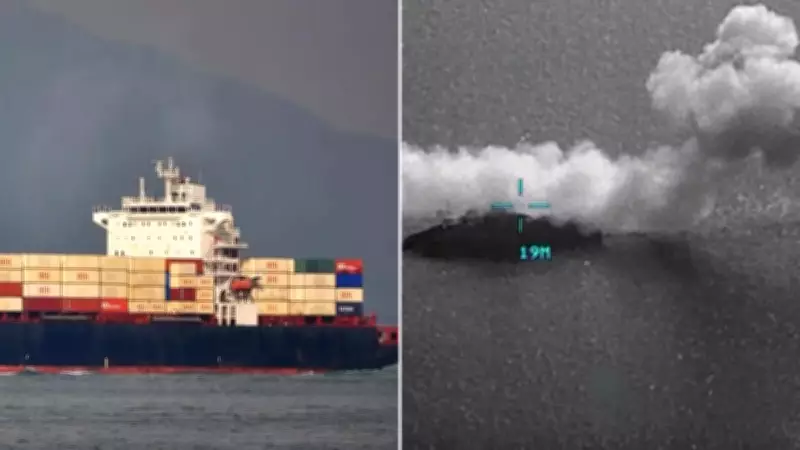
Retired Lieutenant General Richard Newton explained that the US Navy's seizure of the Iranian vessel, named the Tuska, falls within the established rules of the current truce. The USS Spruance, a guided missile destroyer enforcing an American naval blockade, fired on the ship after it attempted to bypass the blockade, disabling its engine room and bringing it to a halt. Marines subsequently boarded and took control of the vessel.
"The USS Spruance, which is there to enforce this economic blockade, struck the engine room, effectively stopping the Tuska in its tracks," Newton stated. "We now control the ship. This action demonstrates that the United States is committed to enforcing the blockade as announced." He emphasised that while the strike does not breach the ceasefire, it could still derail peace negotiations, highlighting the precarious nature of the situation.

Escalation and Impact on Negotiations
This event marks the first known use of force in the blockade, occurring just days before the ceasefire between the two nations is set to expire. Maritime intelligence analyst Michelle Wiese-Bockmann warned that the move represents a significant escalation, noting that Iran has previously attacked around 28 ships. "This incident will imperil the peace talks for sure," she said, adding that the volatile environment makes predictions difficult beyond the next 24 hours.
The blockade, imposed on April 13 after earlier talks failed, has effectively cut off Iran's oil exports, a critical revenue stream for the regime. Wiese-Bockmann pointed out, "The revenue lifeline to the Iranian regime, its oil exports, is under threat due to the US blockade." Dozens of vessels have been forced to turn back as tensions rise in the strategic strait.
Political Context and Future Outlook
US President Donald Trump has intensified pressure on Tehran ahead of the ceasefire deadline, issuing stark warnings about severe consequences if a deal is not reached. Negotiations are expected to resume in Islamabad, though Iran has indicated that no meeting has been formally confirmed. The ceasefire, agreed earlier this month, is due to expire within 48 hours, with growing uncertainty over its sustainability.
As the situation evolves hour by hour, experts caution that the seizure of the Iranian ship, while technically within ceasefire bounds, adds a layer of complexity to an already chaotic diplomatic landscape. The incident underscores the high stakes involved, with both military enforcement and diplomatic channels being tested in one of the world's most critical maritime chokepoints.