Iran and Israel's latest flare-up ended almost as quickly as it began, with experts saying neither side appears eager to return to full-scale war. The two countries agreed to halt attacks after a brief escalation threatened a two-month ceasefire.
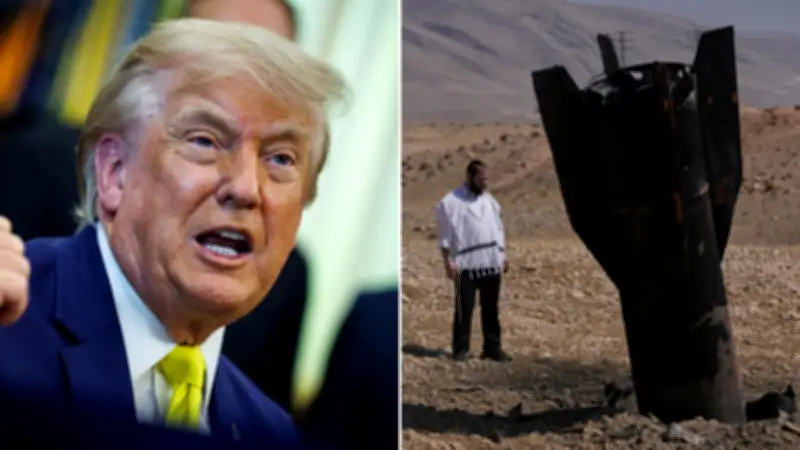
In a post to Truth Social, US President Donald Trump demanded both countries immediately stop shooting while negotiations on a broader peace deal continue. The latest tensions erupted after Iran fired missiles towards Israeli territory late on Sunday in response to Israeli attacks on the outskirts of Beirut. Israel then launched strikes on Iranian targets.
On Monday morning, Iran's top military command announced the end of current attacks on Israel while warning its response would be "more severe and forceful than before" if Israeli attacks continue in the region "including in southern Lebanon". Israeli Prime Minister Benjamin Netanyahu also warned that should Iran "make the mistake of resuming attacks against us, we will respond with full force".

Professor Charles Kupchan, Director of European Studies at the Council on Foreign Relations, said the latest exchange suggested both sides were looking for a way to avoid a prolonged conflict. "One takeaway from this exchange between Iran and Israel is that nobody really wants to go back to war," Kupchan said. "Both sides called it quits after a few rounds. That says to me that everybody's exhausted. Everybody would like to find an off-ramp. Now the question is, can the United States and Iran find enough common ground to make a deal and open the Strait of Hormuz?"
While the ceasefire appears to have held for now, Kupchan said significant obstacles remain to any broader peace agreement. Israel continues military operations in Gaza and southern Lebanon despite the ceasefire with Iran, causing civilian casualties daily. "Israel wants to push back guerrilla fighters and missiles from its borders," Kupchan said. "Iran is much farther away, so it can afford to enforce a ceasefire with Iran, but it's not yet ready to call it quits in either Gaza or in Lebanon. That's a problem because it does jeopardise the peace deal."
US President Donald Trump has demanded both Iran and Israel immediately stop shooting while negotiations on a broader peace deal continue. The continuing operations remain a major sticking point in negotiations involving Tehran and Washington. Iran has refused to sign a peace deal with the United States while Israel continues attacks on Hezbollah in Lebanon.
Trump has maintained he remains the key decision-maker in the conflict, telling the Financial Times: "I call all the shots" in this war. When asked whether that assessment was accurate, Kupchan said Trump's influence over Israel remained significant. "Netanyahu cannot be his poodle; on the other hand, Netanyahu cannot break with Trump. That basically means that if Trump calls Netanyahu and says no more missiles, Netanyahu is going to stop, particularly when it comes to Iran."
However, Kupchan said it remained unclear how much leverage Trump held over Iran. The Iranians, he said, "feel empowered by shutting down the Strait of Hormuz and still being able to launch missiles against their neighbours". Iran's parliamentary speaker and chief negotiator, Mohammad Bagher Ghalibaf, struck a defiant tone, saying the United States was "neither seeking a ceasefire nor seeking dialogue" and that Iran should respond "decisively to defend the rights of the Iranian people".
"We do not want to move forward with commitment or sloganeering, but rather we must seek an engineered victory with Iranian authority and rationality," he said. "The military field, the diplomatic field, the field of public presence, and the field of serving the people are the threads and fibres of a single fabric. If we consider diplomacy to be merely dialogue in closed rooms and diplomatic smiles, we will fail from the very beginning."