Artemis II Mission: A Beacon of Hope in Challenging Times
The recent success of the Artemis II mission has provided a much-needed uplifting moment during these gloomy times, capturing the imagination of people worldwide. This historic 10-day journey saw four astronauts loop around the Moon for the first time since the Apollo era, propelling humanity further into space than ever before. It marks a crucial first step in an ambitious program aimed at returning people to the lunar surface, establishing a base there, and using it as a stepping stone to explore deeper into the solar system.
Australia's Historical Role in Space Exploration
For Australians of a more mature age, the memory of the Apollo 11 mission remains strong to this day. On July 21, 1969, US astronaut Neil Armstrong became the first human to set foot on the Moon, accompanied by Edwin "Buzz" Aldrin and Michael Collins. What was little known at the time but has become more widely recognized is Western Australia's vital role in this historic journey. The NASA space tracking station at Carnarvon served as a crucial link in the worldwide network, enabling constant contact between the crew and Earth.
Due to its strategic location, the Carnarvon station was the last to make contact with the crew before they left Earth's atmosphere, providing the "go" signal that sent the craft's final rocket blasting out of orbit. It was also the only station able to track the returning crew directly for most of the final three hours of re-entry to Earth. The magnitude of this mission is even more impressive when considering the technological and scientific advancements made in the nearly 60 years since that time.

Overcoming Setbacks and Advancing Exploration
Space flights have continued over the decades, but not without significant setbacks and disasters. In January 1986, the space shuttle Challenger exploded shortly after launch, killing seven astronauts, a tragedy witnessed by millions on television. Similarly, in February 2003, the shuttle Columbia broke up minutes before landing, resulting in the loss of all seven astronauts on board. Despite these tragedies, humanity's quest to explore the skies has persisted, evolving into almost routine operations with astronauts living at the International Space Station for prolonged periods and a growing commercial space-flight industry sending people into low Earth orbit.
Artemis II: Recapturing the Magic
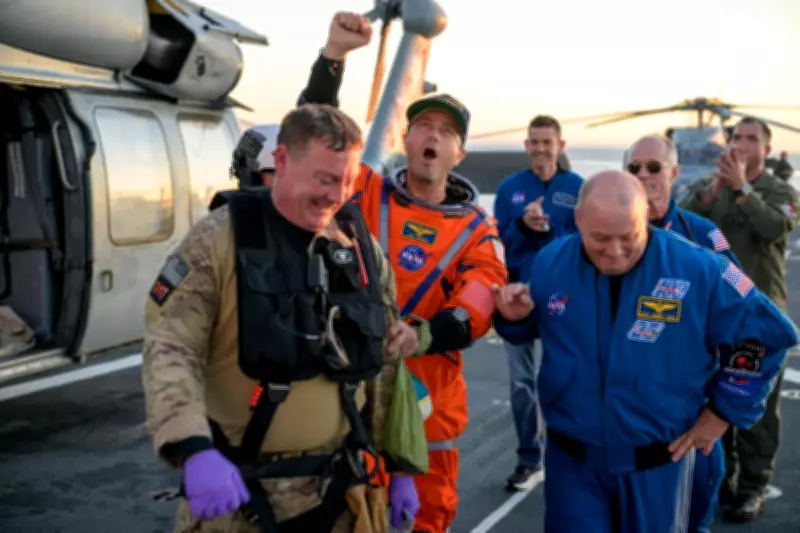
Artemis II has successfully recaptured the magic of the early missions, offering a hopeful narrative in an otherwise challenging era. The mission's success was celebrated globally, with events like the splashdown party at the Columbia Memorial Space Center in Downey, California, where people gathered to watch the crew's recovery. Australia's national science agency, the CSIRO, played a key role in this mission by helping mission control in Houston stay in radio communication with the crew via the Canberra Deep Space Communication Complex and other facilities.
Future Missions and Inspiring Generations
Looking ahead, Artemis III, planned for 2027, will test operations and systems to dock with landers being developed by SpaceX and Blue Origin. Artemis IV, expected in 2028, is set to take humans back to the Moon. These missions are poised to fire the imaginations and ambitions of children around the globe. In Australia, this inspiration may revolve around emulating Katherine Bennell-Pegg, who became the first person to become an astronaut under Australia's space program and was named the 2026 Australian of the Year. Perhaps one day, an Australian flag will be seen on a space suit on the Moon, symbolizing the nation's growing contributions to space exploration.
The Artemis II mission serves as a powerful reminder of human resilience and curiosity, bridging past achievements with future possibilities in an era that desperately needs such uplifting stories.