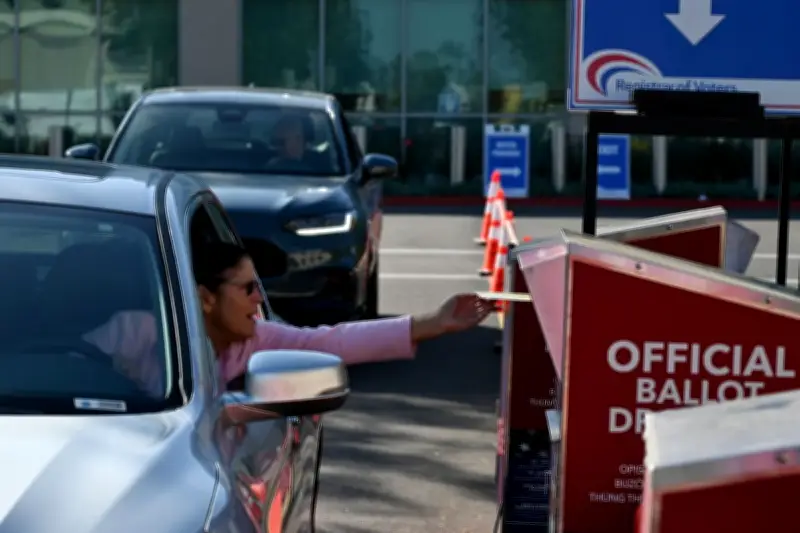
The United States Supreme Court has delivered a significant ruling on mail-in voting, upholding the counting of ballots received after Election Day as long as they are postmarked by that date. The 6-3 decision, handed down on Monday, marks a pivotal moment in the ongoing debate over voting access and election integrity.
Key Details of the Ruling
The case centered on a challenge to a state law in Pennsylvania that allowed mail-in ballots to be counted if they were postmarked by Election Day and received within three days after. Critics argued that this extended window violated federal election law, which sets a single national Election Day. The Supreme Court disagreed, with Chief Justice John Roberts writing for the majority that states have broad authority to set their own voting procedures.
According to the ruling, the Constitution grants states the power to determine the "times, places, and manner" of elections, which includes the counting of ballots. "The federal statute setting Election Day does not restrict states from counting ballots that are cast by that day," Roberts wrote. The decision upholds a lower court order that had allowed the extended counting period.

Impact on Voters and Elections
The ruling directly affects Pennsylvania, a key swing state, but its implications could be felt nationwide. Voting rights advocates praised the decision as a victory for democracy. "This ruling protects the rights of millions of voters who rely on mail-in ballots," said Sarah Johnson, executive director of the Voting Rights Project. "It ensures that no vote is discarded simply because of postal delays."
According to data from the Pennsylvania Department of State, approximately 2.5 million mail-in ballots were cast in the 2024 presidential election, representing nearly 30% of all votes in the state. The decision is expected to have a similar impact in upcoming midterm elections, where mail-in voting remains popular.
Dissenting Opinion
Justice Samuel Alito, writing for the dissent, argued that the majority overstepped its bounds by interpreting federal law too broadly. "The Court has opened the door to widespread confusion and potential fraud," Alito wrote. "Election Day should mean that all ballots are received by that day, not just postmarked." The dissent was joined by Justices Clarence Thomas and Neil Gorsuch.
Broader Context
The ruling comes amid a broader national debate over voting laws. Since 2020, several states have passed restrictive voting laws, while others have expanded access to mail-in voting. The Supreme Court's decision is seen as a reaffirmation of states' rights to manage their own elections, a principle that has been upheld in previous cases.
The case is one of several election-related disputes before the Court this term, including challenges to redistricting maps and voter ID laws. Legal experts say the ruling could set a precedent for future cases involving mail-in voting.