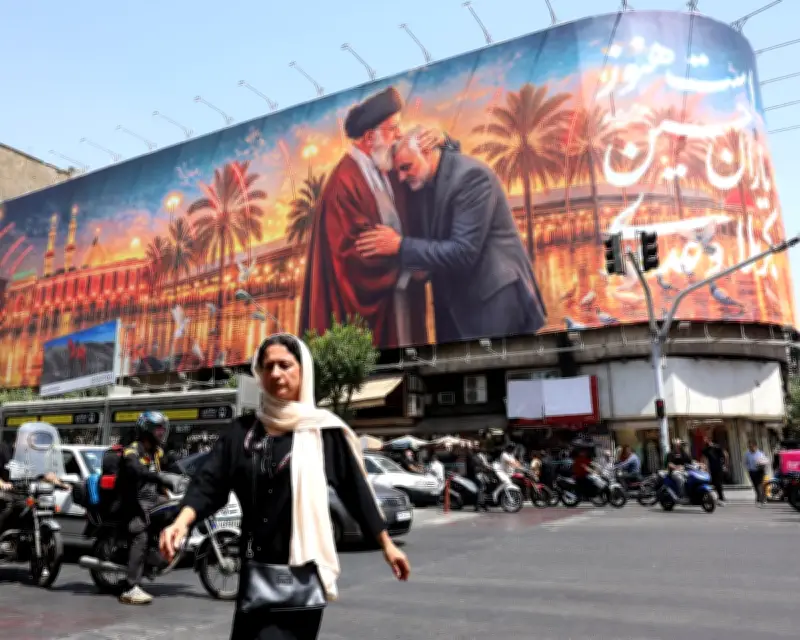
Breakthrough in US-Iran Relations
Former US President Donald Trump and Iran have agreed to hold direct peace talks in Doha, Qatar, next month, according to multiple sources familiar with the negotiations. The talks, scheduled for July, mark a significant shift in relations between the two countries, which have been at odds for decades over Iran's nuclear program and regional influence.
Details of the Negotiations
The agreement to meet was reached after months of back-channel diplomacy mediated by Qatar and other Gulf states. A senior US official confirmed that the talks will focus on a range of issues, including Iran's nuclear activities, ballistic missile development, and support for proxy groups in the Middle East. The official stated, "We are cautiously optimistic that this dialogue can lead to a more stable and secure region."
Iranian officials have also expressed willingness to engage, with Foreign Minister Hossein Amir-Abdollahian noting that Tehran is prepared to negotiate "without preconditions" but will not accept any ultimatums. The talks are expected to be the first direct high-level discussions between Trump and Iran since he withdrew the US from the Joint Comprehensive Plan of Action (JCPOA) in 2018.

Regional and International Reactions
The announcement has been met with mixed reactions globally. European Union foreign policy chief Josep Borrell welcomed the news, calling it a "positive step" toward reducing tensions. However, Israel has expressed concern, with Prime Minister Benjamin Netanyahu warning that Iran cannot be trusted and that any deal must ensure the dismantlement of its nuclear program. Gulf states, particularly Saudi Arabia and the UAE, have cautiously supported the talks, seeing them as a potential path to de-escalation in Yemen and other conflict zones.
Key Issues on the Table
The negotiations are expected to cover several critical areas. First, Iran's uranium enrichment levels, which have exceeded JCPOA limits since 2019, will be a central topic. Second, Iran's development of ballistic missiles capable of carrying nuclear warheads is a major concern for the US and its allies. Third, Iran's support for militias in Iraq, Syria, Lebanon, and Yemen will be discussed as part of broader regional security arrangements.
Economic sanctions imposed by the US will also be on the table. Iran has demanded the lifting of all sanctions as a prerequisite for any agreement, while the US insists on verifiable compliance first. A compromise may involve phased relief linked to specific Iranian actions.
Prospects for Success
Analysts are divided on the likelihood of a breakthrough. Some believe that both sides have incentives to reach a deal: Trump seeks a foreign policy achievement ahead of potential re-election, while Iran wants sanctions relief to revive its struggling economy. Others point to deep mistrust and domestic political constraints on both sides. A former US diplomat commented, "The road to an agreement is fraught with obstacles, but the fact that they are sitting down is a significant development."
The talks in Doha are scheduled to last several days, with the possibility of follow-up meetings if progress is made. The outcome could reshape the geopolitical landscape of the Middle East and influence global energy markets.