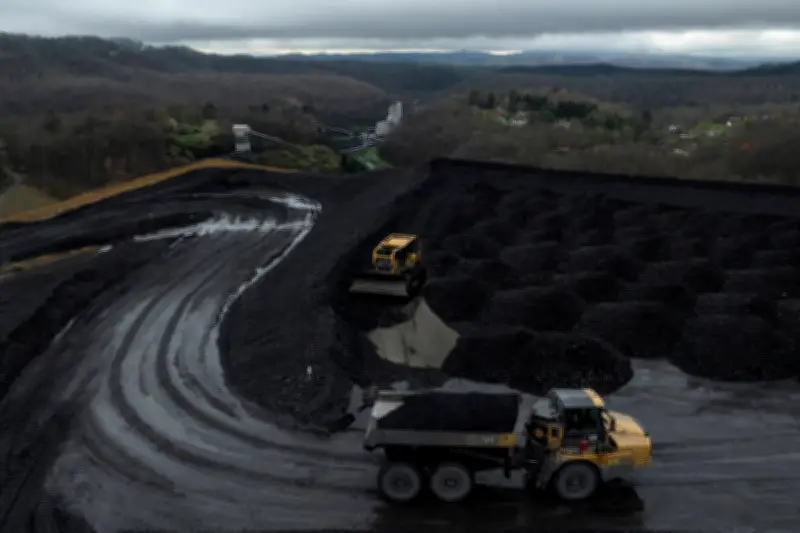
Workers transport and organize mounds of coal on a hilltop near an Arch Coal facility in Beckley, West Virginia, in 2025. Photograph: Adrees Latif/Reuters
Donald Trump is to use a wartime presidential authority to hand $700 million to coal-fired power plants in the United States, the latest move by the president to bolster what he calls “beautiful clean coal” despite it being the dirtiest of fossil fuels.
Trump is using the Defense Production Act, a Cold War-era statute used to accelerate American industrial output in times of national need, to provide grants to more than a dozen existing coal plants across the US, including facilities capable of exporting coal.

The president has long been a champion of reviving the US’s ailing coal industry, with Thursday’s White House event featuring supportive governors and lawmakers from coal-rich states such as Wyoming and West Virginia.
In the past year, the Trump administration has doled out hundreds of millions of dollars to the coal industry, signed orders forcing ratepayers to pay extra for ageing plants to stay open, and dismantled environmental rules that limit toxins from coal leaching into Americans’ shared air and water.
The administration’s attempts to provide a cuddly rebranding to coal have even extended to creating a new mascot with giant eyes, called Coalie, and gushing social media posts that include an image of a lump of coal wearing sunglasses as if it were on the TV show Love Island.
“I have a little standing order in the White House – never use the word ‘coal’,” Trump said in a speech to the United Nations last year. “Only use the words ‘clean, beautiful coal’.”
Regardless of such terminology, coal is not clean. It is the most carbon-dense fossil fuel and therefore a leading cause of the climate crisis when burned. Coal also gives off tiny toxic particles that sicken miners and trigger widespread respiratory and heart health problems across the US – research has estimated that as many as 460,000 deaths in the US between 1999 and 2020 were attributable to air pollution from coal plants alone.
Environmental groups strongly criticized the administration’s latest aid for coal. “It is disgusting and reprehensible that the president of the United States is giving away our taxpayer dollars to deadly and expensive coal plants that will make Americans sicker and drive up electricity prices even more,” said Patrick Drupp, climate policy director of the Sierra Club.
“This handout betrays everything Donald Trump promised and only serves his big coal buddies who stroke his ego and hand him shiny trophies.”
Trump’s attempts to revive the coal industry, while at the same time seeking to stymie the rapid growth of clean energy such as solar and wind, have so far floundered. The number of people working in coal has declined by over 90% in the past century, with more people now working in Waffle Houses across the US than in coal.
US coal production is currently less than half of what it was in 2008, with coal recently declining as both a fuel for electricity and as an input for manufacturing materials such as iron and steel. Cheap, abundant gas has helped displace coal from power grids, with even cheaper renewable energy also now taking off in the US despite the administration’s efforts to kill it off.
“What’s next, a taxpayer bailout to build new phone booths?” said Kit Kennedy, a senior climate campaigner at the Natural Resources Defense Council, of the new round of support for coal. “This is going to mean higher bills and dirtier air. What a waste.”
“Propping up coal billionaires with taxpayer money is one more way for the Trump administration to put polluters first and put the rest of us at risk,” Kennedy added. “The best thing for the air, the climate and our utility bills is to let these plants retire peacefully.”
The coal industry applauded Trump’s new order, arguing that ramped-up coal production will help the US meet a historic spike in electricity demand caused by the surging artificial intelligence sector.

“Coal generation shields consumers from the impacts of volatile energy prices and supply challenges,” said Rich Nolan, chief executive of the National Mining Association, who added that coal offered a “vital piece of a sound energy strategy designed to meet the challenge of today’s AI-driven demand growth in the context of the conflict in the Middle East”.