The Trump administration is stripping Americans of their citizenship at a shocking rate, with an unprecedented expansion of denaturalization efforts that experts warn threaten the very fabric of democratic values.
This month, the Department of Justice filed papers to strip 17 naturalized Americans of their citizenship, part of an aggressive campaign that marks a dramatic escalation from previous administrations. The Biden administration initiated only 64 denaturalization cases over its entire four-year term, while the first Trump administration pursued 168 cases. Now, internal guidance suggests the current administration aims for 100 to 200 cases per month, according to New York Times reporting.
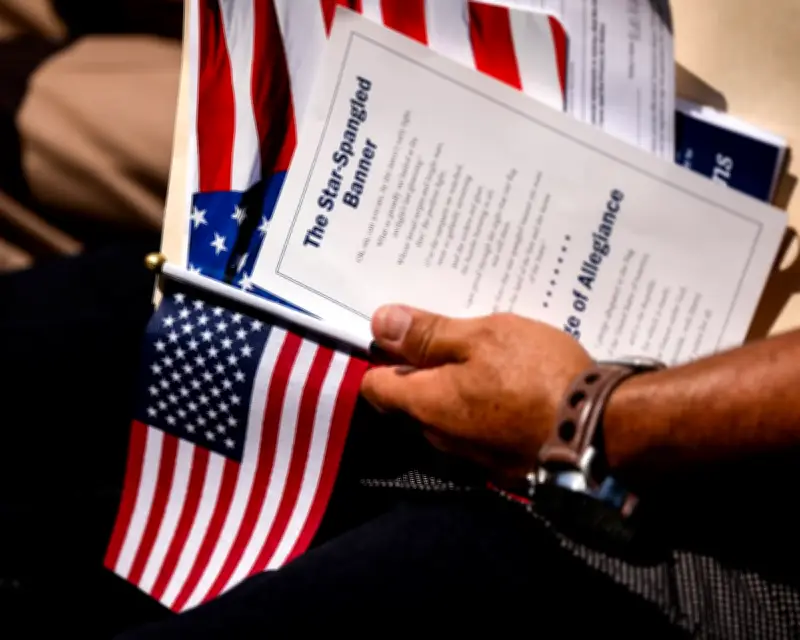
Moustafa Bayoumi, a professor at Brooklyn College and author of award-winning books on Arab and Muslim American life, recalls his own citizenship ceremony in 2011 as a celebration of democratic values. “I entered downtown Brooklyn that day as a resident alien. I left as a newly minted American citizen, equal in the eyes of the law to every other American citizen,” he writes. “Oh, how quaint that time seems now.”

The legal basis for denaturalization has traditionally been narrow, requiring proof of fraud, willful misrepresentation, or concealment of a material fact. However, a memo published last year expanded categories to include any naturalized citizen the Department of Justice “determines to be sufficiently important to pursue,” any citizen deemed “a threat to national security,” and any citizen with “pending criminal charges.” The American Immigration Lawyers Association warns these categories “are not grounded in statute and are ripe for political abuse given their breadth.”
Bayoumi notes that the pace of denaturalization is unprecedented in the post-civil rights era. Between 1990 and 2017, the government filed only 305 denaturalization cases, many involving aging former Nazis. A 1967 Supreme Court decision, Afroyim v Rusk, set a high legal bar for denaturalization, making it a difficult and costly undertaking.
The expanded criteria raise concerns that political speech could be targeted. “The administration is now turning enforcement into a political weapon that will ensnare people with minor infractions and those who express views critical of the current administration, even if they have not been found guilty of any wrongdoing,” the AILA warns.
Critics point to the administration’s broader immigration policies, including the near-total halt of refugee resettlement except for white South Africans, and the appointment of Greg Bovino to lead immigration enforcement. Bovino recently headlined an extreme-right “Remigration Summit” in Portugal, where remigration refers to plans for mass expulsion of non-white immigrants and citizens. At a D-Day commemoration in France, Defense Secretary Pete Hegseth characterized Europe as facing an “invasion” of immigrants, claiming European beaches “are stormed by different, dangerous ideologies.”
Bayoumi argues that these actions reflect a dangerous racial tribalism. “Forget citizenship. What must really be denaturalized is the belief that human value is connected to the color of one’s skin,” he writes. “The fact that I feel compelled to repeat this basic truism is not just a tragedy. It’s also an indication of how much basic human understanding we’re continuously losing under this administration.”
The denaturalization drive is part of a broader anti-immigration agenda, with Project 2025 exploring similar tactics. As the administration pushes the boundaries of executive power, legal experts and civil rights advocates warn that the erosion of citizenship protections undermines the foundational principles of American democracy.