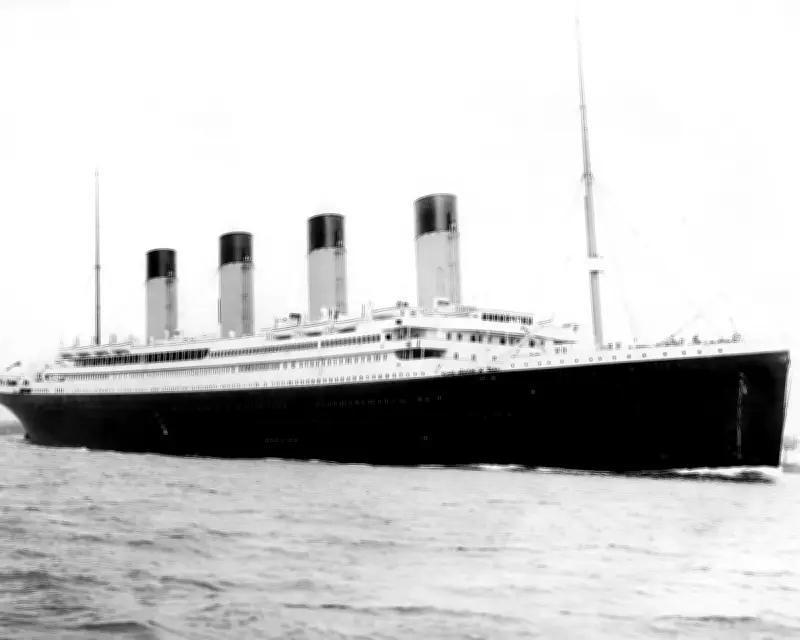
The United States government has formally opposed the planned auction of thousands of artifacts recovered from the wreck of the Titanic, arguing that the sale could jeopardize the integrity of the historic site. In a legal filing submitted to a federal court in Virginia, the Department of Justice asserted that the artifacts should be kept together and preserved for public display rather than sold to private buyers.
Legal Challenge Filed
The government's objection comes as RMS Titanic Inc., the company that owns the salvage rights to the wreck, seeks approval to auction off approximately 5,500 items, including a piece of the ship's hull, personal belongings of passengers, and other relics. The company, which has conducted several expeditions to the wreck site, argues that the auction is necessary to recover costs and fund future research.
However, the US government contends that the artifacts hold significant historical and cultural value and should remain accessible to the public. In court documents, officials emphasized that the Titanic wreck is a maritime memorial and that dispersing the collection would undermine efforts to honor the memory of the more than 1,500 people who died in the 1912 disaster.

Preservation Concerns
The National Oceanic and Atmospheric Administration (NOAA), which oversees the protection of the Titanic wreck site, has also expressed opposition to the auction. According to NOAA, the artifacts are part of an underwater cultural heritage that should be preserved in its entirety. The agency has previously worked with RMS Titanic Inc. to ensure that recovered items are conserved and exhibited, but the proposed sale threatens this collaboration.
“The Titanic is not just a shipwreck; it is a grave site and a piece of world history,” said a NOAA spokesperson. “Allowing these artifacts to be scattered among private collectors would be a disservice to the memory of those who perished and to the public’s right to learn from this tragedy.”
Company's Position
RMS Titanic Inc. has defended the auction, stating that it has invested millions of dollars in salvage operations and that the sale is a legitimate business decision. The company noted that it has previously sold smaller lots of artifacts and that the proceeds would help fund future expeditions to the wreck, which is deteriorating on the ocean floor.
“We have always acted responsibly in our recovery efforts and have made these artifacts available to museums and researchers,” said a company representative. “The auction is a way to continue our work while ensuring that these pieces of history find homes where they will be appreciated.”
Court Decision Pending
The case now rests with the federal court, which will decide whether to grant the government's request to halt the auction. A hearing is scheduled for next month, with both sides expected to present arguments. Legal experts suggest that the outcome could set a precedent for the treatment of artifacts from other historic wrecks.
Meanwhile, historians and preservationists have rallied in support of the government's position, arguing that the Titanic's artifacts belong in a single collection that can be studied and displayed collectively. “These items tell the story of the Titanic and its passengers,” said Dr. Emily Carter, a maritime historian at the University of Southampton. “Breaking up the collection would be like tearing pages out of a history book.”
The auction, originally scheduled for later this year, has been postponed pending the court's ruling. If allowed to proceed, it could generate millions of dollars, but opponents warn that it would come at the cost of cultural heritage.