
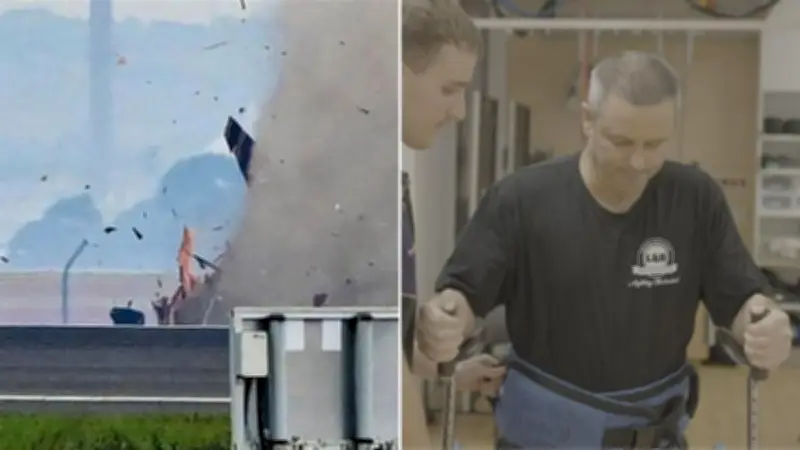
An Australian Transport Safety Bureau investigation into the March 2023 Avalon International Airshow crash has revealed that veteran pilot Glenn Collins began the triple avalanche manoeuvre at an altitude 100 feet lower than the 200 feet used during practice. The manoeuvre involved a loop with three snap rolls at the top.
Altitude Error and Crash Sequence
ATSB Chief Commissioner Angus Mitchell stated that Collins initiated the trick at 100 feet, which was below the safety margin. During the snap rolls at the top of the loop, the aircraft's nose pointed toward the ground more than normal. “It wasn’t climbing during that manoeuvre, which really just meant it ran out of air,” Mitchell said. “There just wasn’t enough altitude to complete that manoeuvre.”
Collins was flying at 300 km/h when he crashed. He suffered a spinal injury and crushed legs, requiring a long rehabilitation, including learning to walk again.

Complications from Live Pyrotechnics
The plane crashed in the middle of a live pyrotechnic set-up designed to create a wall of fire during displays. This complicated emergency response; “the ambulance service also required escorts to ensure safe access to the accident site,” Mitchell said.
While the ATSB found it unlikely that response time affected Collins' injuries, it could “affect survivability in a similar circumstance”.
Safety Recommendations and Implementation
Mitchell attended a workshop with airshow organisers and participants to discuss the findings. Organisers have accepted recommendations and will implement new safety measures, including a hard deck minimum altitude for aerobatic manoeuvres. “Having checks and balances during the manoeuvre itself, going through gates at certain altitudes and confirming you are at the right altitude before you get to that point of no return,” Mitchell said.
The ATSB also recommends improved emergency response protocols, including clear laneways for emergency services to access crash sites quickly.
Pilot's Recovery and Future
Collins acknowledged his injuries could have been worse. “I’m one of the very, very lucky ones where my spinal injury is low, so I will hopefully be able to walk again,” he said. “Many people don’t.” He hopes to return to the cockpit one day.
Mitchell emphasised the importance of airshows but stressed safety: “They are a very important part of our aviation offering, but we want them as safe as possible.”