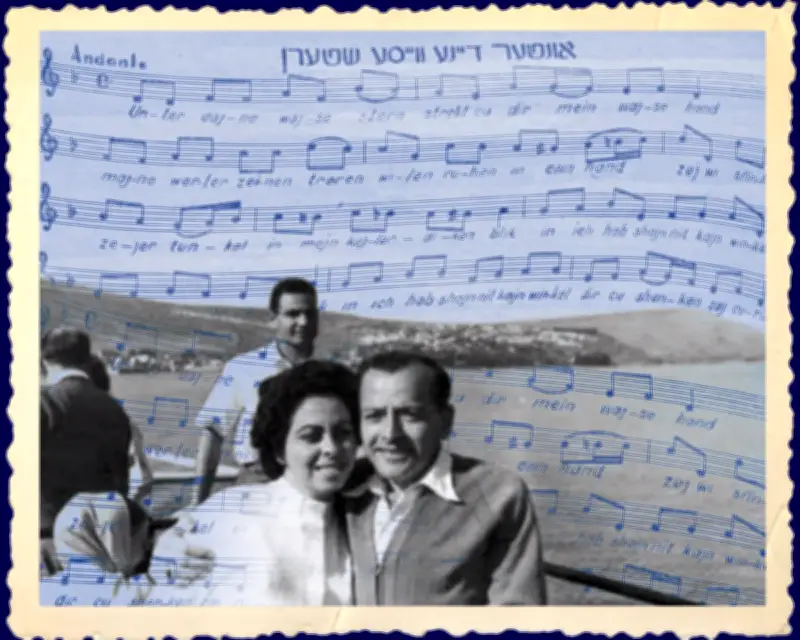
A priceless book of Yiddish songs from the Holocaust lay hidden in a Sydney cupboard for decades, narrowly escaping disposal before its incredible history was uncovered.
The Discovery
After the death of Olga R at age 98 in 2013, her family nearly threw the collection of 20 songs into the recycling bin. However, the unusual cover—featuring a Russian constructivist design with geometric shapes and stark black-and-red palette—prompted Olga's daughter to send a photograph to Dr Joseph Toltz, a Jewish music academic at the University of Sydney. Toltz forwarded the image to the United States Holocaust Memorial Museum, which immediately recognized its cultural value and rarity.
The Songbook's Origins
Printed on fragile acid paper, Mima'amakim (Out of the Depths) contains songs written by ghetto inhabitants, camp prisoners, people in hiding, and partisan fighters between 1939 and 1944. It is one of only five known surviving copies from an original print run of 500. The songbook originated in postwar Bucharest, where survivor Yehuda Eismann documented Nazi war crimes and collected songs from refugees passing through a processing house. He categorized the 20 works into three emotional arcs: Despair, Hope/Safety, and Battle and Victory.

A Survivor's Story
One contributor, Ayzik Flaysher, was 13 when he composed Der Driter Pogrom (The Third Pogrom) after witnessing the murder of his parents and all 10 siblings in Ukraine. He survived by hiding in a self-dug pit in a forest for two years, emerging only at night. His son Fredi recalled that he sang his song every morning, saying he had only two choices: "Sing all the time, or cry and die. He preferred to sing."
Translation and Research
Thirteen years after the discovery, Toltz and Associate Prof Anna Boucher completed the first English translation of Mima'amakim and tracked down descendants of contributors across the Jewish diaspora. The researchers also recorded an interview with the last living contributor, concert pianist Alexander Tamir, who as a boy in the Vilna ghetto submitted a composition that became a widely performed Holocaust remembrance hymn.
Unique Character
Unlike later anthologies, Mima'amakim preserves raw trauma and dark gallows humor, such as mocking camp guards set to upbeat marches or mourning a wife's murder set to tango rhythms. The translation reveals how music helped prisoners build emotional resilience.
Contemporary Relevance
The findings have been shared with the Refugee Advice and Casework Service, as caseworkers note that clients fleeing conflict zones continue to use music to process trauma. Boucher noted that the Jewish community in Sydney, still carrying deep intergenerational trauma, may find healing in these songs. A live performance of the rediscovered songs is planned at the Bondi Pavilion later this year.
Boucher suggests Olga may have kept the book secret due to a possible love affair with Eismann, or simply because survivors often did not realize the significance of their creations. "They just made these things because they felt compelled to, out of a need to be creative in times of utter despair," she said.