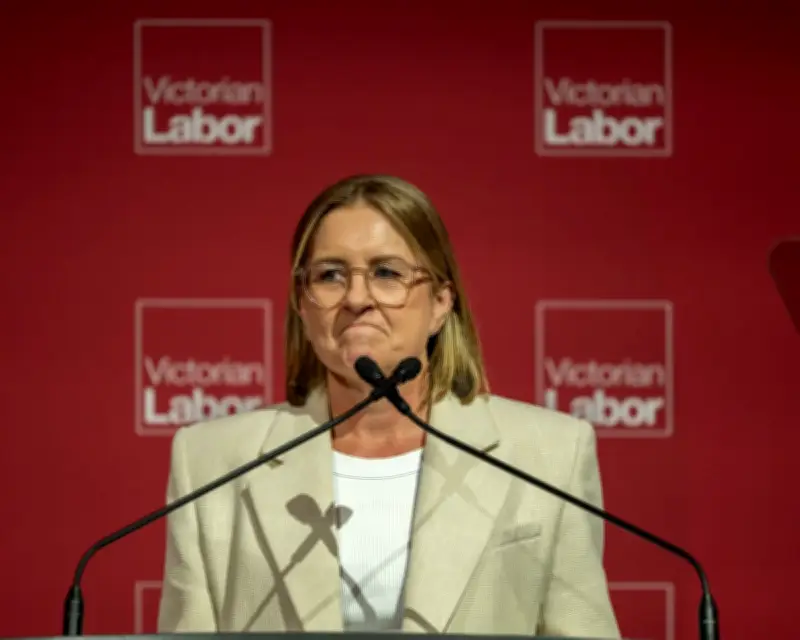
Jacinta Allan's leadership is under scrutiny after she faced three significant political tests this week concerning Victoria's anti-corruption body, political donation laws, and character references written by a newly appointed minister. The way she handled these issues has left some of her colleagues speculating about a possible leadership change just months before the Victorian election.
First Test: Anti-Corruption Reforms
On Monday, Allan responded to a parliamentary inquiry that had recommended sweeping reforms to Victoria's integrity laws six months ago. She agreed to grant the Independent Broad-based Anti-corruption Commission (Ibac) follow-the-dollar powers to investigate the spending of public money by private contractors and subcontractors. Additionally, she supported a broader definition of corrupt conduct, which would make it easier to launch investigations and hold public hearings. However, for some Labor MPs, this response felt too little, too late. Ibac has been seeking these powers for a decade, and the reforms come almost two years after allegations of union corruption on Victorian government projects first emerged, followed by damaging headlines about bikies, drugs, and strippers on construction sites. If Labor wins the November election, the reforms will not be legislated until late 2027. If the opposition wins, it will introduce follow-the-money powers in December but is yet to commit to changing the definition of corruption. Several Labor MPs, speaking anonymously, said the premier should have acted months ago, particularly after a report suggested union corruption could have cost taxpayers up to $15 billion. One MP stated, "It could have cauterised an issue that was causing us to bleed votes."
Second Test: Political Donation Laws
The second test involved Victoria's donation laws. Since the High Court struck down an entire section of the Electoral Act in April, removing the previous cap of $4,970 over a four-year term, there have been no limits or disclosure requirements on political donations. Electoral laws are traditionally negotiated across party lines to avoid accusations of one side rewriting rules for their advantage. However, Allan said Labor was forced to strike a deal with the Greens and crossbench MPs, imposing a $7,500 donation cap per donor over four years, reintroducing disclosure measures, and increasing public funding after negotiations with the Liberal leader, Jess Wilson, and shadow attorney general, James Newbury, stalled. This opened the door to fierce criticism from the opposition, who called the bill "rigged," "dodgy," "shonky," and a "dirty racket" during debate. Deputy Liberal leader David Southwick accused the government of attempting to "steal an election." The Coalition claimed Labor would continue to benefit from union affiliation fees and increased administrative funding, but union fees cannot be used for campaigning, and the Coalition also benefits from increased administrative funding. Despite the bill passing on Friday morning after a marathon debate, the issue persists. Independent candidate Paul Hopper, who successfully challenged the original laws alongside Melissa Lowe, said he has engaged lawyers to challenge the new laws, while the Coalition is also considering legal options. Climate 200 founder Simon Holmes à Court argued that the caps will disproportionately disadvantage challengers. Independent candidates Sophie Torney and Shima Ibuki, who received significant donations from Climate 200 during the limbo period when no donation laws were in place, confirmed they will now have to return those funds or risk breaching the law. Ibuki said, "This leaves my campaign bankrupt, while the major parties are filling their election war chests with taxpayers' money."


Third Test: Minister's Character References
The third test for Allan involved revelations that Luba Grigorovitch, a newly appointed minister, had written 33 character references, some of which she now regrets. These included references for a taxi driver who assaulted female passengers, two men accused of domestic violence, a supporter of former Iranian supreme leader Ayatollah Ali Khamenei, and a man fined for selling counterfeit clothing. The opposition has relentlessly pursued the matter in question time, tried to connect it to Grigorovitch's friendship with former construction union leader John Setka, and called for her to be dumped from cabinet. One Labor MP noted privately that when a Liberal candidate wrote a character reference for a sex offender, he was stripped of his endorsement. They wanted stronger action against Grigorovitch, but the premier said the matter has been addressed after her minister for youth, carers, and volunteers vowed never to write another character reference.
Leadership Concerns
Several MPs said the government was struggling to escape a cycle of damaging headlines. "Week after week after week there's a new drama," one MP said. Another said the premier had promised the cost-of-living focused budget last month would be the "circuit breaker" it needed, but "this just hasn't happened." Combined with poor polling, Allan's weak personal ratings, and rising support for One Nation, some MPs fearful of losing their seats say her leadership is again at risk, despite a seeming lack of a viable candidate that could bring the party's left and right factions together. "It's not too late," one MP said.