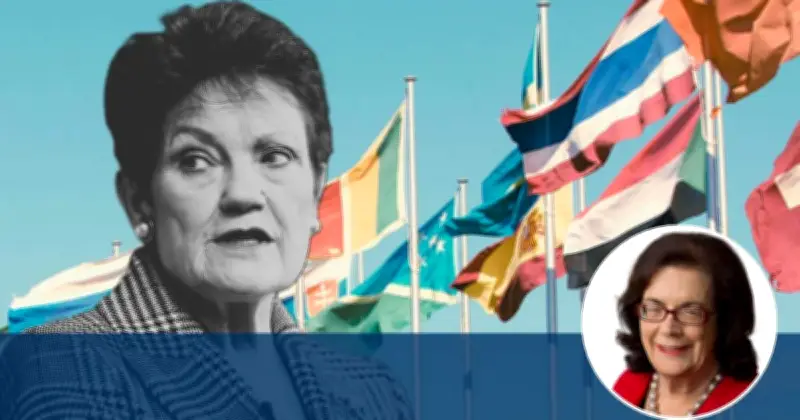
In a compelling analysis, veteran political commentator Michelle Grattan has called for a comprehensive renovation of Australia's multiculturalism policy, arguing that the current framework is outdated and ill-equipped to address contemporary challenges. Writing in The Canberra Times, Grattan asserts that while multiculturalism has been a cornerstone of Australian society, it requires urgent reform to foster social cohesion in an era of heightened global tensions and domestic diversity.
The Case for Reform
Grattan points to recent events, including the rise of far-right extremism and debates over immigration, as evidence that the existing model no longer serves its purpose. She notes that Australia's multicultural policy, first formally adopted in the 1970s, has not kept pace with demographic shifts or the complexities of identity politics. According to Grattan, the policy must move beyond a focus on tolerance and instead actively promote integration and shared values.
She highlights that Australia is one of the most culturally diverse nations in the world, with over 30% of the population born overseas. However, this diversity has not been matched by a robust policy framework that addresses issues such as discrimination, economic participation, and intercommunity dialogue. Grattan warns that without renovation, multiculturalism risks becoming a divisive rather than unifying force.

Key Recommendations
Grattan proposes several concrete measures to revitalize multiculturalism. These include establishing a national dialogue on Australian values, investing in language education to facilitate integration, and creating stronger mechanisms to combat racism and hate speech. She also calls for a more nuanced approach to religious freedom, balancing the rights of minority groups with broader societal norms.
"The challenge is to ensure that multiculturalism is not just about celebrating difference but also about building a common identity," Grattan writes. She emphasizes the need for political leadership to articulate a clear vision of what it means to be Australian in the 21st century. This, she argues, requires moving away from symbolic gestures towards substantive policies that promote equality and belonging.
Political and Social Implications
The call for reform comes amid ongoing debates over immigration levels, refugee policies, and the treatment of Indigenous Australians. Grattan notes that multiculturalism has often been criticized for creating parallel communities and undermining social cohesion. However, she contends that the solution lies not in abandoning the policy but in adapting it to current realities.
She points to successful examples from other countries, such as Canada's emphasis on interculturalism, which encourages interaction between different cultural groups. Australia, she suggests, could learn from such models while tailoring them to its unique context. The renovation of multiculturalism would also require bipartisan support, as the issue has become increasingly politicized.
Conclusion
Grattan concludes that the time for action is now. With growing global uncertainty and domestic pressures, Australia cannot afford to let its multicultural framework stagnate. A renovated policy, she argues, would not only strengthen social cohesion but also enhance Australia's international standing as a successful multicultural society. "We have the opportunity to renew the promise of multiculturalism for a new generation," she writes. "It is a task that demands courage, creativity, and a commitment to the common good."