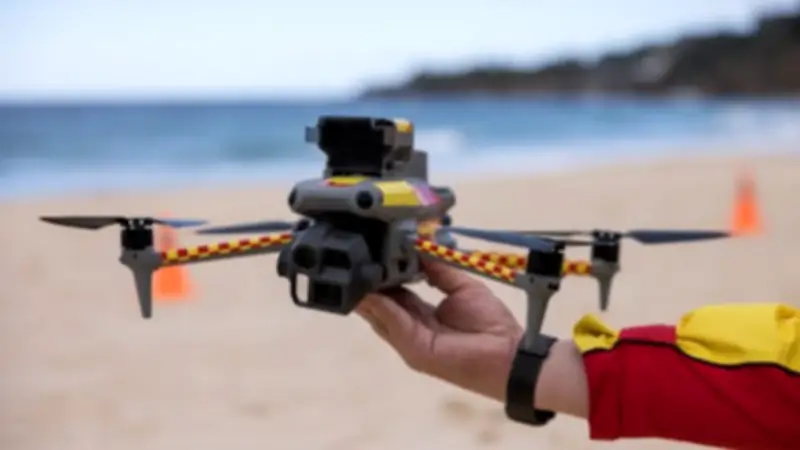
The New South Wales government has announced a $34 million expansion of its shark-spotting drone program, set to provide daily surveillance of around 70 beaches, including every Sydney beach and one for each coastal council. However, experts caution that while drones are a genuine advance in shark detection, they are not foolproof and may not significantly enhance beachgoer safety.
Shark Sightings Likely to Surge
Before drones, authorities relied on infrequent spotter flights over popular beaches, resulting in few shark sightings. Drones have made it much easier to watch the ocean from above for extended periods, increasing the likelihood of spotting a shark. But more sightings do not necessarily mean there are more sharks. As the expanded drone program rolls out, a surge in shark sightings and more beach closures as a precaution are expected.
Detection Does Not Guarantee Protection
Research using drone footage to map shark movements and assess risk has shown the risk to be low. At three Queensland beaches over four years, only 4% of sightings were bull sharks, and no white or tiger sharks were seen at all. Drones mostly spotted small whaler sharks. To date, no published peer-reviewed research shows that drone surveillance reduces shark bites. Lead author of a study on spotter drones noted, "Shark detection didn't mean protection."

Shark bites are extremely rare despite media attention. Last year, there were 23 bites across all Australian waters. The rarity of incidents means no research could realistically gather enough data to prove drone spotting led to a fall in bites, given many other possible explanations and factors. Drone spotting is not flawless; even in good conditions, drone pilots only detect around 40% of sharks swimming under the surface in real time, rising to about 50% after careful post-flight review. Detection is even more challenging in murky water, common after periods of rain.
Drowning a Much Bigger Risk Than Sharks
Deaths due to shark bites in Australia averaged about 3 per year over the last decade. In contrast, 154 people drowned along the Australian coast in just the last year, including 30 deaths due to rip currents—the single biggest beach hazard. In an average year, rip currents cause more deaths than bushfires, floods, cyclones, and sharks combined. The article questions why a spate of shark bites led to major public investment while deaths from rip currents do not attract the same spending. If the goal was to save the most lives at the beach, it might have made sense to tackle drownings due to rip currents first, perhaps by extending and expanding beach lifeguard services.
Evaluation Before Expansion Needed
The scale and cost of the NSW drone spotting program make it a world-first, but it remains an open question whether rapid expansion will boost safety given shark bites are the rarest hazard. The government announced the investment without an evaluation of evidence for the program's effectiveness. While it may not be possible to prove drones reduce bites, they could still be evaluated on demonstrable outcomes: shark detection and species identification, response times, and how often drones assist with other rescues.
The program is likely to lead to more frequent and extended beach closures, which could have unintended consequences such as a fall in beach visitors and a drop in revenue for coastal economies. If closures become the new norm, people may seek out unpatrolled beaches with no flags, lifeguards, or drones—a dangerous outcome, as almost every coastal drowning occurs on unpatrolled beaches or outside lifeguard patrol hours. Until evidence is available, the clearest life-saving value of drones may be elsewhere: in Queensland's trial, drones were also used to spot swimmers caught in rip currents and locate missing persons. Spotting for sharks alone appears to be about reassurance, not true protection.