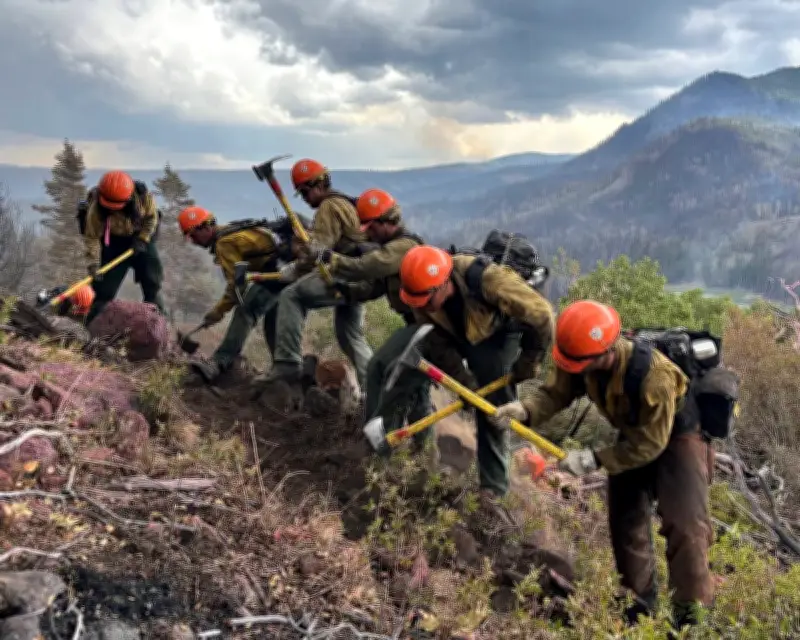
Two firefighters have died while battling separate wildfires in Utah and Colorado, officials confirmed, as extreme heat and dry conditions continue to fuel dangerous blazes across the western United States.
Utah Wildfire Claims One Firefighter
In Utah, a firefighter was killed on Sunday while fighting the Dry Creek Fire in Sanpete County, according to the Utah Division of Forestry, Fire and State Lands. The fire, which started on Saturday, has burned approximately 2,000 acres and is 0% contained. The victim was a member of a local fire department; their name has not been released pending notification of family.
Colorado Wildfire Death
In Colorado, a firefighter died on Monday while battling the Oak Ridge Fire in Fremont County, according to the Fremont County Sheriff's Office. The fire has burned about 1,500 acres and is 10% contained. The victim was a contract firefighter; their identity has not been disclosed.

Extreme Heat Worsens Fire Conditions
The deaths come as a heatwave grips much of the West, with temperatures exceeding 100°F in many areas. The National Weather Service has issued excessive heat warnings for parts of Utah, Colorado, Arizona, and Nevada. The hot, dry conditions are expected to persist for several more days, increasing the risk of new fires and complicating containment efforts.
According to the National Interagency Fire Center, there are currently 58 large active wildfires burning across the United States, with over 1.2 million acres burned so far this year. The agency has reported 22 firefighter deaths in 2026, compared to 18 at this time last year.
Local and Federal Response
Utah Governor Spencer Cox expressed condolences on social media, saying, 'We are heartbroken by the loss of a brave firefighter who gave his life protecting others. Our thoughts are with his family and fellow first responders.'
In Colorado, Governor Jared Polis also offered condolences, stating, 'This tragedy reminds us of the incredible risks our firefighters take every day. We are grateful for their service and sacrifice.'
The U.S. Forest Service and Bureau of Land Management have deployed additional resources to both fires, including hotshot crews, air tankers, and helicopters. Evacuation orders have been issued for some communities near the fires.
Climate Change and Fire Season
Scientists have linked the increasing severity of wildfire seasons to climate change, which has led to hotter temperatures and prolonged drought in the West. A study published last year found that human-caused climate change has doubled the area burned by wildfires in the western United States over the past three decades.
Fire officials urge residents to stay informed about fire conditions and follow evacuation orders. They also remind the public to avoid activities that could spark new fires, such as using fireworks or leaving campfires unattended.