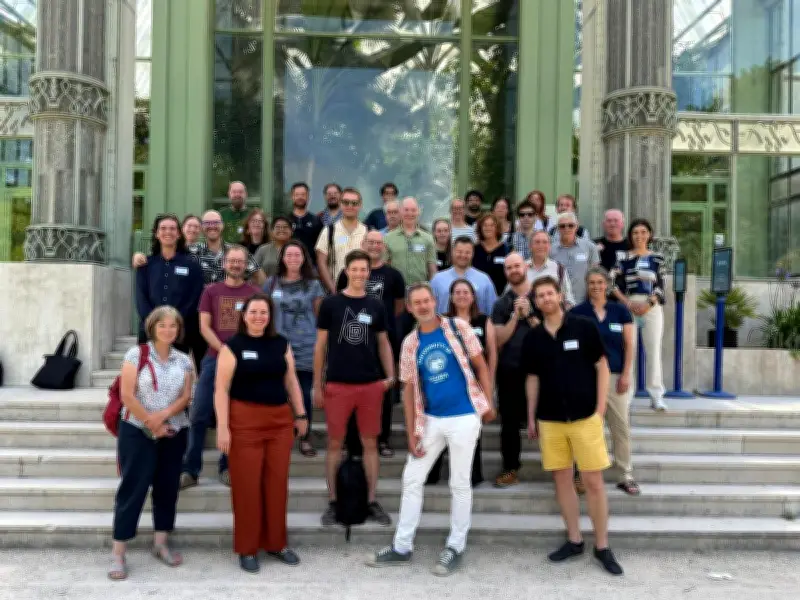
More than 40 international researchers and practitioners convened in Paris last week for a two-day workshop led by Curtin University, aiming to develop strategies to conserve the world's overlooked groundwater ecosystems. The event, part of the Global Research on eDNA in Groundwaters (GReG) project, focused on assessing groundwater health and biodiversity using environmental DNA (eDNA) from water samples.
Groundwater: A Critical but Depleting Resource
Groundwater is the largest unfrozen freshwater reserve globally, supplying drinking water to half the world's population. However, human extraction rates exceed natural replenishment, threatening thousands of subterranean species. The GReG initiative seeks to understand how to sustainably manage this finite resource.
Dr Mattia Saccò from Curtin's School of Molecular and Life Sciences, who leads the Subterranean Research and Groundwater Ecology (SuRGE) Group, spearheaded the workshop alongside chief investigators Dr Michelle Guzik from Adelaide University and Dr Kathryn Korbel from the University of Sydney.

Expert Voices on Groundwater's Importance
“If water is life, then groundwater is its lifeblood — essential, but hidden, it forms the largest reservoir of unfrozen freshwater globally,” Dr Saccò said. “Groundwater ecosystems not only support remarkable diversity but also play a crucial role in sustaining the functioning of the global water cycle. Consequently, the protection of groundwaters as ecosystems, which can be affected by overextraction, warming or pollution, is essential.”
The workshop highlighted that entire forests in Western Australia's Margaret River region are collapsing due to groundwater overextraction for agriculture. Climate change further exacerbates the problem by altering rainfall patterns and reducing groundwater recharge.
Global Data and Biodiversity Hotspots
Researchers at the National Natural History Museum in Paris pooled data from 47 groundwater biodiversity hotspots worldwide, including sites in Europe, Asia, Africa, North America and Australia. Eastern and Central Europe, along with Australia, emerged as the most biodiverse regions, with additional hotspots in Mexico, South Africa and the United States.
Dr Saccò noted that Western Australia's Pilbara and Yilgarn regions are major contributors to global groundwater biodiversity. “Unravelling these biodiversity ranges is essential to not only cataloguing the species inhabiting these ecosystems, but also to understanding the evolutionary patterns of the resident biota and their role in maintaining the ecological integrity of groundwaters and associated ecosystems such as wetlands and forests,” he said.
Economic and Environmental Significance
Groundwater contributes an estimated $6.8 billion annually to Australia's GDP, particularly through the mining industry. “Groundwater is crucial from an operational perspective — water extracted from aquifers is used for industrial purposes such as ore processing, washing and supporting workers and mine infrastructure more generally,” Dr Saccò explained. “Unfortunately, the extraction of mineral resources often involves digging considerably big pits that reach the aquifer and therefore expose the groundwater to the risk of contamination and alteration of the hydrological dynamics. As a result, a water-wise management of the subterranean resources that assures the conservation of the living biota is even more important under these extractive circumstances.”
Despite its economic and ecological importance, groundwater remains overlooked in environmental regulations. Dr Saccò attributes this to an “out of sight, out of mind” mentality. “Groundwaters are too often regarded as a mere water resource and not as a complex and rich ecosystem. Better synergies across all the actors involved — stakeholders, regulators, researchers — will allow for more effective conservation plans,” he said. “We should first manage groundwater resources in a more sustainable way, acknowledging that groundwaters are ecosystems that deliver innumerable services to nature and society. We should also put groundwaters at the centre of global water cycle, in order to effectively build a resilient future for life on Earth.”