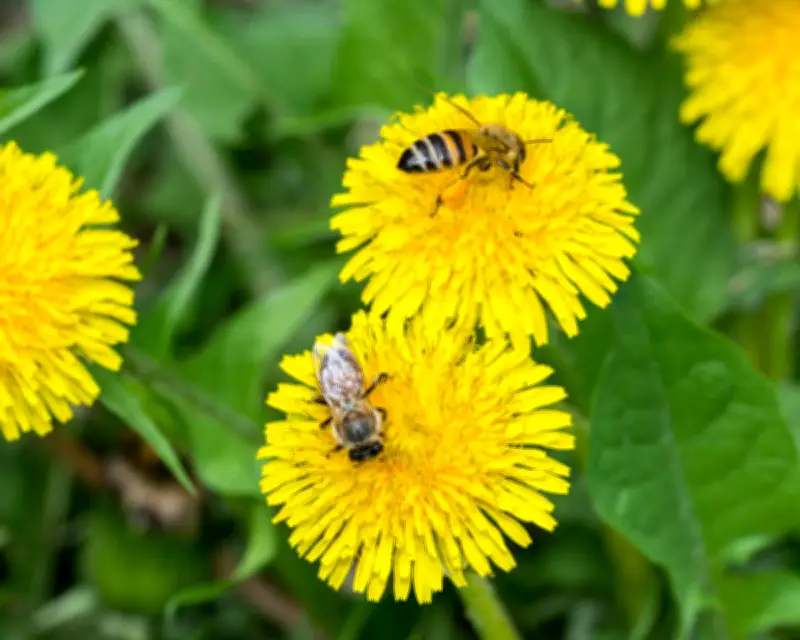
A new study has revealed that honeybees blend food from pollen and larvae to achieve a balanced diet, showcasing their sophisticated nutritional strategies. The research, published in the journal Nature, demonstrates that worker bees mix pollen with secretions from larvae to create a protein-rich food source that is essential for colony health.
How Honeybees Create Their Food
Scientists observed that honeybees collect pollen from flowers and bring it back to the hive. There, they combine it with a substance produced by larvae called royal jelly, which is rich in proteins and vitamins. This mixture is then fed to other larvae and adult bees, ensuring a balanced intake of nutrients.
The study found that the ratio of pollen to larval secretions varies depending on the colony's needs. When protein levels are low, bees increase the proportion of royal jelly, while a surplus of pollen leads to more pollen being used. This flexibility allows the colony to adapt to changing environmental conditions.

Implications for Beekeeping
Lead researcher Dr. Emily Carter from the University of Sussex said, 'This discovery changes our understanding of how bees manage their nutrition. It's not just about collecting pollen; they actively process it to create a balanced diet.' The findings could have implications for beekeeping practices, as artificial feeding may need to replicate this natural blending process.
The research team used advanced imaging techniques to track the movement of nutrients within the hive. They also analyzed the chemical composition of the food mixture, confirming its nutritional balance.
Broader Ecological Significance
Honeybees are crucial pollinators for many crops, and their health is vital for ecosystems and agriculture. Understanding their dietary needs can help in developing better conservation strategies. The study emphasizes the complexity of bee behavior and the importance of preserving natural habitats that provide diverse pollen sources.
Co-author Professor Mark Thompson added, 'Bees are more intelligent than we give them credit for. They have evolved sophisticated ways to ensure their colonies thrive.' The research is part of a larger effort to protect bee populations, which have been declining due to pesticides, habitat loss, and climate change.
As the world faces a biodiversity crisis, studies like this highlight the intricate relationships within nature. By learning how bees blend their food, scientists hope to support their survival and, by extension, our own food security.