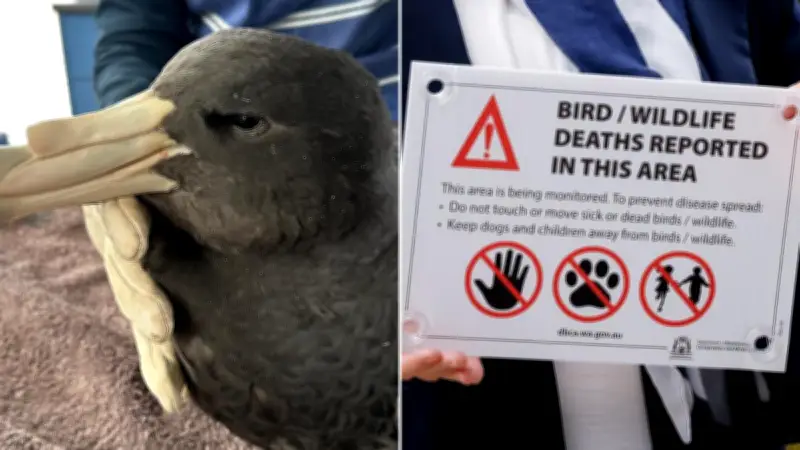
New South Wales has recorded its first confirmed case of H5 bird flu in a migratory giant petrel found dead on one of the state’s beaches. The infected bird was discovered near Hawks Nest on Saturday, with testing by the CSIRO’s Australian Centre for Disease Preparedness confirming it was positive for the highly pathogenic H5 avian influenza virus. This detection marks the first confirmed case of the virus in NSW and brings the total number of confirmed H5N1 detections in migratory seabirds across Australia to six.
Authorities Investigate Another Suspected Case in Western Australia
Authorities are also investigating another suspected case in Western Australia. Despite the discovery, authorities have stressed there is no evidence the virus has spread into commercial poultry flocks, captive birds or domestic wildlife.
NSW Government Activates H5 Bird Flu Response Plan
The NSW Government has activated its H5 Bird Flu Response Plan, including heightened biosecurity advice for poultry producers, expanded surveillance using drones and ground crews, and the deployment of more than 500 trained government staff to support the response. NSW Minister for Agriculture Tara Moriarty said the state had been preparing for a positive detection and was ready to respond. “The NSW Government has been preparing for a positive result for some time and there is a clear plan in place to support industry and the community,” she said.

Moriarty confirmed the case remained isolated. “At this stage the result is limited to a single migratory seabird and has not impacted our poultry sector or domestic wildlife,” she said. “There is no impact on the supply of chicken meat or eggs and I would encourage everyone to purchase these products as they normally would.”
Chief Veterinary Officer Emphasises Surveillance Importance
NSW Chief Veterinary Officer Jo Coombe said the detection highlighted the importance of ongoing surveillance efforts. “This confirmed case of H5N1 avian influenza in a giant petrel was detected as a result of our surveillance activities, which included increased awareness and advice to the public to report sick or dead birds or wildlife,” she said. She said the response showed the state’s biosecurity systems were working as intended. “It demonstrates that our biosecurity system based on the principle of shared responsibility is operating effectively. I thank the broader community, NSW government staff, the veterinary community, wildlife sector and our poultry industries who are all working together to detect cases early and avoid any onward spread.”
Public Advised to Report Sick or Dead Birds
Authorities have advised anyone who finds sick or dead wild birds to avoid handling them, record the location with photos or video where possible, and report the sighting to the Emergency Animal Disease Hotline on 1800 675 888.