The Federal Government has allocated significant funding to support Western Australia's sheep industry as it prepares for the impending ban on live exports. Edith Cowan University and the Chamber of Commerce and Industry are among twelve organisations to share in a $3.7 million grant program designed to develop new markets and diversify the sector.
Federal Funding for Industry Transition
This funding forms part of the enhancing market demand grants program, one of four key streams within the Federal Government's comprehensive $139 million live export transition package. Federal Agriculture Minister Julie Collins emphasised that the investment aims to mitigate the impact of the export ban, scheduled to take effect from 2028.
"We want WA sheep farmers and those associated with the industry to benefit from new markets and the growing sheepmeat export opportunities before us, which is exactly what this funding supports," Minister Collins stated.

Edith Cowan University's Role
Edith Cowan University will utilise its portion of the grant, approximately $1 million with half coming from federal funds, to conduct crucial market research and pilot new value-added products in offshore markets. Dr Geremy Farr-Wharton, a senior entrepreneurship lecturer in the School of Business and Law, will lead this initiative.
"This is a really exciting project to help diversify new Australian sheep products into the Australian and MENA (Middle East and North Africa) markets," Dr Farr-Wharton explained. "The project will work closely with farmers and processors to transform existing business models, pivoting towards taking these new products to market."
He added that these new business cases are intended to support the overall transition of the sector towards a sustainable and thriving future, particularly important for WA which has been significantly affected.
Chamber of Commerce and Industry Initiative
The Chamber of Commerce and Industry has secured funding for a program named Women Leading the Flock, aimed at helping young women develop careers within the sheep industry. This initiative will focus on succession planning and host workshops across the state.
Former CCI chief Chris Rodwell, who was appointed as the live sheep sector's transition advocate in January last year, brings additional expertise to this effort. CCI has declined to comment further on the grant, noting that contracts have not yet been formally signed.
Other Beneficiaries and Industry Context
Other recipients of the taxpayer-funded grants include:
- The Australian Meat Industry Council, which will run a campaign to promote lamb at local butchers.
- The University of Technology Sydney, which will research the potential for meat, offal, and fat in East Asian pet food markets.
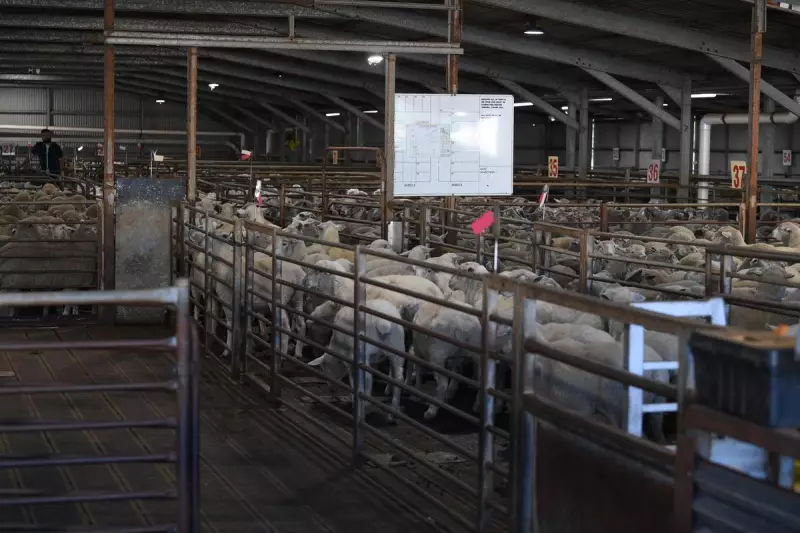
The live sheep export industry has seen a dramatic decline over the past decade. State Government data reveals that exports have roughly halved from almost two million head in 2014 to about one million in 2019, dropping further to 420,000 in 2024. The industry's value has also plummeted from $141 million to $41 million over the same period, with Kuwait, Jordan, and Saudi Arabia remaining the primary markets.
In contrast, exports of processed sheepmeat reached a record $664 million for the year, highlighting a shift in market dynamics. Farmers are now preparing for the complete ban on live exports in less than three years, following the Federal Government's decision in mid-2024 to shut down the trade.
Broader Transition Package Details
The Federal Labor Government announced the $139 million transition package in 2024, with additional programs aimed at supporting shearers, truck drivers, and rural communities. The funding is divided into four distinct programs:

- Enhancing Market Demand Grants Program – $3.7 million allocated to twelve organisations including ECU and CCI.
- Supply Chain Capacity Program – $40 million managed by the WA Government's Department of Primary Industries and Regional Development to strengthen sheep processing and finishing capacity.
- Farm Business Transition Program – $30 million offering grants up to $75,000 to help sheep producers adopt alternative farming systems.
- Livestock Transport Industry Transition Program – $1.5 million providing up to $40,000 for transport businesses to support planning, training, and asset investment.
WA's sheep flock has declined from 12.5 million to 9.4 million head over the past three years. The latest Australian Wool Testing Authority figures show that the amount of fibre tested in the 2024-25 financial year was down 15.6 per cent compared to the previous year, underscoring the challenges facing the industry.
This comprehensive transition package represents a concerted effort to reshape Western Australia's sheep industry, fostering innovation and sustainability in the face of significant regulatory change.