Luxury Australian Expedition Cruise Ship Grounds on Reef Off Papua New Guinea
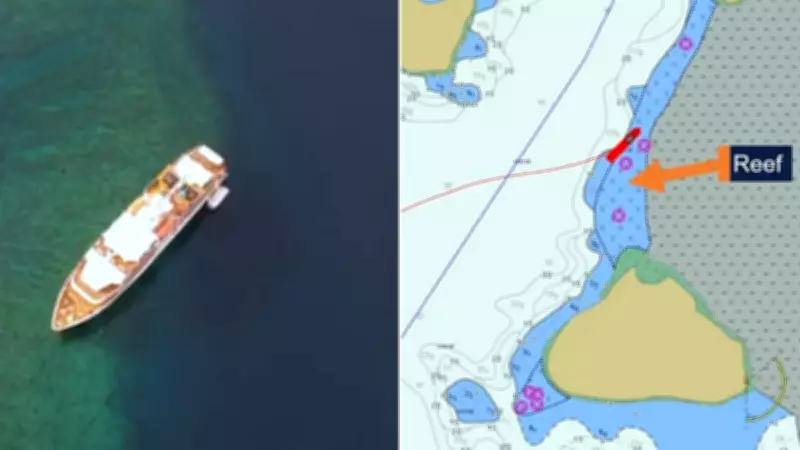
A preliminary investigation by the Australian Transport Safety Bureau (ATSB) has determined that a luxury Australian expedition cruise ship, carrying over 120 people, ran aground on a reef off Papua New Guinea. The incident occurred after the vessel missed a critical turn into a narrow harbour entrance, highlighting a series of navigation failures and challenging conditions.
Details of the Grounding Incident
The Coral Adventurer struck a shallow bank between islands near Dregerhafen, approximately 100km east of Lae, in the early hours of December 27. The ship was sailing overnight from Lababia at the time. According to the ATSB report, a combination of navigation delays, rising speed, and confusion in the dark led to the grounding. The vessel was on a 12-night cruise of Papua New Guinea's north-east coast, with 80 passengers and 44 crew on board.
Chain of Events Leading to the Mishap
The trouble began shortly before 5:15 am as the ship approached a waypoint south of Nussing Island. The chief mate on watch attempted to switch the ship's electronic chart system to the next navigation route for entering Dregerhafen harbour. However, the system failed to load immediately because the route had been modified moments earlier, forcing the officer to perform a new safety check.

In an effort to quickly bring the vessel back on track, the officer switched from autopilot to manual steering. During this correction manoeuvre, the ship slowed, which the chief mate attributed to a strong current. To compensate, the power on the ship's propulsion thrusters was increased, eventually raising the speed to about 8 knots.
Visibility Issues and Loss of Situational Awareness
Poor visibility played a significant role in the incident. The approach occurred in moonless nautical twilight, making land outlines only faintly visible. Additionally, no navigation lights or aids ashore were visible from the ship's position. The chief mate later reported struggling to recognise the surrounding coastline, stating they were concentrating on the electronic navigation system and had lost situational awareness, unable to correctly visually identify the entrance into Dregerhafen.
Impact and Aftermath
The ship's captain entered the bridge at about 5:24 am, shortly before the grounding. About a minute later, the captain warned the chief mate that the vessel appeared to be heading into shallow water. Seconds later, at 5:25 am, the ship struck the reef at 8.5 knots, shuddering before coming to a sudden stop. Fortunately, no injuries were reported among passengers or crew.
Attempts to free the ship at high tide initially failed. Three days after the grounding, all passengers disembarked and were transferred to shore for repatriation to Cairns. Two tugboats were eventually sent to assist, and the vessel was successfully refloated on December 30. Investigators noted that the ship sustained hull indentation and structural damage.
Ongoing Investigation and Safety Review
ATSB chief commissioner Angus Mitchell stated that the investigation is continuing, with efforts focused on collecting and analyzing relevant evidence. The review will include passage planning, overall navigational procedures across the operator's fleet, and the emergency response on the day of the grounding. Mitchell also emphasized that the investigation will examine human elements, such as bridge resource management and how concerns are escalated on board, particularly given the incident unfolded over about a 15-minute window.
Under Australian transport safety law, ATSB investigations are conducted to improve safety and do not assign blame or liability. This incident serves as a reminder of the complexities involved in maritime navigation and the importance of robust safety protocols in expedition cruising.