When someone is having a stroke, getting help quickly can be the difference between life and death. Kelvin Hill, Executive Director of Stroke Programs, Research and Innovation at the Stroke Foundation, puts it simply: even 15 minutes can determine whether someone walks out of hospital or faces severe long-term disability.
Time is Critical
“Time is critical ... every minute counts and ringing the ambulance or understanding the signs and getting to hospital is the most important part of that,” Hill said. For regional Australians, the race against time has always been steeper: the specialist may be hours away. But telehealth has changed outcomes.
Regional Australians at Higher Risk
“We know that regional Australians are 17 per cent more likely (to have a stroke) and have higher risk factors. So getting that specialist care is critical,” Hill said. “The telehealth link is critical, but also as part of that, it’s getting the specialist to actually view in real time the advanced brain imaging now, which helps treatment decisions. It’s the whole package. It’s the specialist interacting with the patient, helping the local clinicians and upskilling them to make the right decision for the patient.”

Allana Crew’s Story
Allana Crew’s story shows exactly why that matters. She was 32, healthy and at home with a four-month-old baby when she suddenly lost the ability to speak properly. At hospital, her symptoms were uncertain enough that Bell’s palsy was considered. But through a telehealth link, a specialist in Melbourne could see her in real time, speak to her husband, assess her symptoms and help guide the local team.
How Telestroke Works
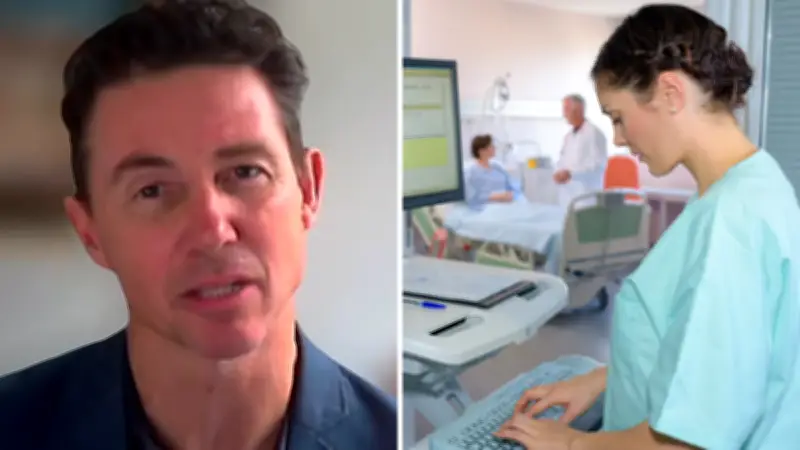
“The benefit of telestroke is that people don’t need to be in a specific building. They can be in their rooms, in their clinics, they can be on the ward and then just quickly go and get on a computer and jump on and have that service to wherever the patient is,” Hill said. As far as the set-up goes for telestroke, mobility is key. “It’s generally on wheels. So it’s essentially a glorified laptop, but it’s generally in a unit that has wheels, that has a screen and a video, and they just wheel that around the ED centres and that can be used wherever they need to be in that part of the hospital,” he said.
Public Awareness Still Crucial
The stroke doctor no longer has to be in the same building as the patient. They can be in Melbourne, in a clinic, on a ward, or at a computer — and still reach a patient in a regional hospital when time is running out. It also makes public awareness critical. Technology can help once someone reaches medical care, but the first step is recognising the signs and calling for help.
The FAST Test
The Stroke Foundation urges Australians to remember the FAST test: F — Face: Check the person’s face. Has their mouth drooped? A — Arms: Can they lift both arms? S — Speech: Is their speech slurred? Do they understand you? T — Time: Time is critical. Call Triple Zero immediately. Allana’s symptoms matched parts of that warning system. Her speech changed and her face had drooped.
Stroke Affects All Ages
The lesson from Hill is no one should wait and see. Stroke is always urgent. “What people don’t recognise is that a quarter of all strokes happen to those under the age of 65. So it’s not as uncommon as you think. Women, particularly around childbearing years, also have some slightly elevated risks of that. So it is important to know the signs of stroke,” he said.