Renewed Push for Australian Fuel Production Gains Momentum Amid Global Instability
A renewed push for Australia to manufacture its own fuel is gathering significant momentum as geopolitical instability and supply disruptions, exacerbated by conflicts in the Middle East, leave the nation urgently seeking better alternatives. While Australia imports the majority of its fuel from Asian refineries, these facilities heavily depend on crude oil sourced from the Middle East. This reliance means that any disruptions in that region swiftly escalate costs and tighten supply, directly impacting prices at petrol pumps across the country. With limited domestic refining capacity and a heavy dependence on imports, global shocks hit Australia more severely and rapidly than many citizens realise.
Government Measures Offer Short-Term Relief but Fail to Address Core Vulnerabilities
In response to the escalating crisis, the federal government has implemented measures to alleviate some pressure. Prime Minister Anthony Albanese announced on Monday a temporary reduction in the fuel excise, effective from April 1. The excise cut from 52.6 cents to 26.3 cents per litre is projected to save motorists approximately $19 on a typical 65-litre tank. "We're making fuel cheaper today because we understand that Australians are under serious pressure," Albanese stated. However, while these actions provide immediate relief, experts caution that they do not tackle Australia's deeper exposure to volatile global fuel markets.
The Argument for Domestic Refining: Untapped Potential and Economic Benefits
This situation has reignited the debate over producing petrol domestically. Australia extracts oil, so why not refine it locally to reduce import dependency? Industry groups argue that the country possesses untapped potential. Samantha McCulloch, chief executive of Australian Energy Producers, emphasised that developing new oil basins could enhance fuel security and support job creation, provided governments act swiftly. "Australia has significant underdeveloped oil resources that, with the right policy settings, could strengthen fuel security and reduce reliance on imports," she explained. Projects like Queensland's Taroom Trough are frequently highlighted as examples of what could be unlocked with accelerated approvals and investment. Located about five hours northwest of Brisbane, this vast underground formation is believed to hold substantial oil and gas resources, with early drilling showing promising results. However, the Taroom Trough remains in the exploration phase and is years away from full-scale production, despite recent efforts by the Queensland government to fast-track development aiming for oil delivery to refineries by 2028.

Challenges to Self-Sufficiency: Limited Reserves and Refining Hurdles
Despite these prospects, Australia faces significant obstacles to achieving fuel self-sufficiency. The nation's crude oil reserves are modest relative to demand, and not all extracted oil can be refined into the most commonly used fuels. Analysis from the Grattan Institute reveals that Australia consumes about 2,238 petajoules of petroleum products annually, including petrol, diesel, and aviation fuel. Even if all known crude oil resources were extracted and refined—an unrealistic scenario—they would only sustain the country for around two years. Additionally, there is a critical mismatch in quality: Australia produces more condensate, suitable for petrol and petrochemicals, but yields far less diesel, which is essential for trucks, mining equipment, and farm machinery. Tony Wood, Energy Director at the Grattan Institute, noted that domestic refining is not feasible. "It would take too long, would require new crude oil resources because we don't have all that much, and it's not possible to make our desired mix of petrol, diesel, and aviation fuel with Australian crude oil," he said.

Refining Capacity and Economic Viability: Major Barriers to Expansion
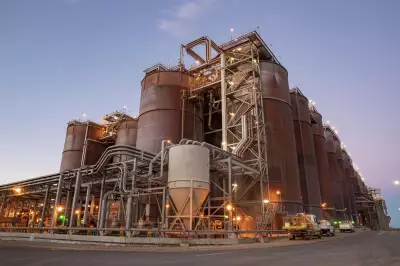
Even if more oil were available, converting it into usable fuel presents another formidable challenge. Australia currently operates only two refineries, both of which would need substantial upgrades to process local crude. To become self-sufficient, experts estimate that the country would likely need to significantly expand or even triple its refining capacity, necessitating multiple new refineries costing between $5 billion and $15 billion each. Existing refineries already receive government subsidies, raising questions about the commercial viability of new facilities. Counterintuitively, producing petrol domestically could lead to higher prices rather than lower ones. Wood pointed out that expanding local refining capacity would be prohibitively expensive, with billions required for construction and challenges in recovering costs over a relatively short operational lifespan. Since local refineries operate on a smaller scale and at higher costs compared to major international plants, these expenses would likely be passed on to consumers.
Strategic Considerations and Long-Term Energy Transitions
Beyond economic factors, there is a broader strategic question: does investing heavily in petrol production make sense as the world shifts toward cleaner energy? Wood advocates that Australia's long-term focus should be on reducing emissions from transport rather than doubling down on fossil fuels. "Our best transition is to low emissions transport energy. Some areas still need more work and the current crisis should make that work more urgent. In the meantime, we should reassess the level of our minimum stockholding obligation," he advised. The risk is that expensive new refineries could become obsolete before they recoup their investments, especially as global efforts to combat climate change intensify.
Alternative Strategies: Building Resilience Through Imports and Storage
Given these challenges, experts suggest that Australia is unlikely to achieve fuel self-sufficiency and should instead concentrate on strengthening the existing system. The priority should be building resilience rather than attempting independence. This involves developing a robust strategy for fuel import, storage, and demand management. Key measures include fortifying import supply chains, increasing fuel reserves, and enhancing storage and distribution infrastructure to withstand future shocks. This approach reflects the reality that Australia's fuel security will depend on effectively managing global connections rather than replacing them. Wood emphasised that the current crisis should sharpen focus on longer-term solutions, including reducing reliance on fossil fuels altogether, as expanding domestic refining would be "expensive and technically not possible."