Following the Money Trail on Labor's Renewable Energy Push
The iconic Watergate catchphrase "follow the money" has long served as a guiding principle for journalists investigating corporate and political motivations. In Western Australia, applying this principle to the State Labor Government's aggressive renewable energy transition uncovers a complex web of financial incentives, hidden costs, and potential consequences for taxpayers and consumers.
The High-Stakes Transition from Coal to Renewables
Western Australia's commitment to phasing out coal generation ahead of what many consider a prudent timeline has created both urgency and opportunity. The push to decarbonise by 2050 has supercharged investment in renewable infrastructure, but this transition comes with significant financial implications that remain largely obscured from public view.
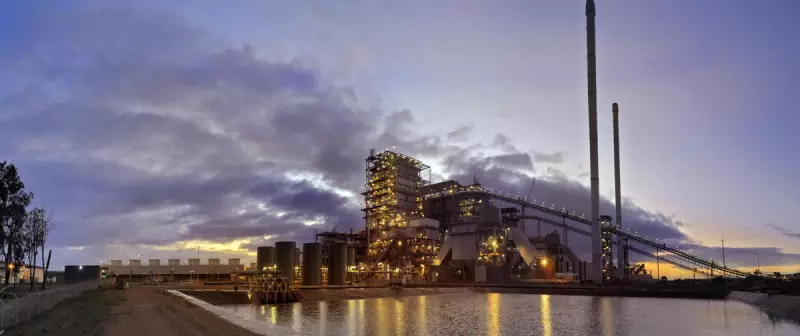
This week's additional bailout for Collie, following the $308 million already injected into Griffin Coal, demonstrates the government's willingness to pay any price to meet its political timetable. Premier Roger Cook's rhetoric has notably shifted from ambitious claims about making WA a "renewable energy powerhouse" to the more modest goal of simply "keeping the lights on."

"If we did not intervene, it would have meant we were switching the lights off in Western Australia," Cook admitted on Wednesday, revealing the precarious state of the state's energy security.
Unveiling the Hidden Subsidy Structure
The renewable energy sector now operates within a framework of extensive government subsidies, though officials rarely acknowledge the full financial burden placed on taxpayers and consumers. While Australian governments have been less than transparent about these incentives designed to attract private investment, corporate disclosures offer revealing insights.
Frontier Energy's recent update to the Australian Stock Exchange regarding its solar and battery project at Waroona, 120 kilometres south of Perth, provides a case study in what drives corporate participation in the renewable energy market. The company's announcement, titled "Record high electricity prices in 2025 point to an urgent requirement for WA generation projects," directly contradicts political promises that renewables would reduce power costs.
Frontier highlighted that wholesale electricity prices and reserve capacity prices in WA's electricity market reached record highs in 2025, describing these as "the two major revenue drivers" for their Waroona project. In response to these elevated prices and forecasted generation shortfalls, the company is accelerating its stage two development plans.
The Reserve Capacity Mechanism: A Costly Intervention
Frontier's disclosure exposed the financial flows from WA's unique Reserve Capacity Mechanism, a system introduced by the Gallop Labor government. This interventionist approach, originally socialist in design, now operates within a distorted renewables market where electricity suppliers receive weekly reserve capacity fees for committing energy availability during peak periods, in addition to revenue from actual power sales.
Frontier's ASX statement included several telling data points:
- The average wholesale energy market price reached a record $88 per megawatt-hour in 2025, representing a 10 per cent increase from 2024
- Energy prices during peak periods (4pm to 10pm) averaged $120 per megawatt-hour
- The Reserve Capacity Price for 2027/28 was $360,700 per megawatt, a staggering 67 per cent increase from 2024 levels
- Frontier secured 88.06 megawatts of capacity credits for the first five years of operations beginning in 2027
For its 88 megawatts of capacity credits, essentially payment for standby availability, Frontier anticipates earning $160 million over five years. However, Frontier represents just one participant in a much larger system.
The Scale of the Financial Impact
The network operator AEMO allocated 6,375.141 megawatts of Peak Certified Reserve Capacity credits to approximately 30 electricity generators last year for the 2027-28 period. At the current rate of $360,700 per megawatt, this could theoretically translate to $2.3 billion annually, though transitional arrangements for longstanding participants might reduce this to approximately $1.77 billion.

Remarkably, no entity, including AEMO, calculates the actual cost of the reserve capacity mechanism two years in advance, creating significant uncertainty about the ultimate financial burden.
Government Admissions and Contradictions
The Cook Government's own energy advisors acknowledge the subsidy nature of these arrangements. In an online Q&A, Energy Policy WA addresses why customers would "subsidise" renewable generators with wholesale energy price guarantees, implicitly admitting the subsidy structure.
Their explanation reveals that profitability modelling indicates wind and solar projects will become insufficiently profitable later this decade as wholesale electricity prices decline following fossil fuel plant exits. The government's solution involves topping up renewable generator revenues to maintain pre-decline levels, creating revenue certainty while theoretically not increasing energy prices.
This system, which began last year and guarantees reserve capacity prices for ten years, effectively locks in current high power prices. While designed to attract investment in renewable transitions, these subsidies may paradoxically work to maintain elevated power prices rather than reducing them as promised.
The Reality of WA's Energy Transition
Frontier CEO Adam Kiley's ASX statement revealed that wholesale electricity prices in the South West Interconnected System increased 11 per cent last year, representing a 33 per cent jump since 2022. Despite substantial Reserve Capacity Mechanism subsidies, WA's energy transition appears stalled.
In 2025, carbon emissions generation accounted for approximately 57 per cent of SWIS electricity supply, with coal contributing 28 per cent and gas 29 per cent. Renewable energy represented about 40 per cent of supply, a mere one per cent increase from 2024 and significantly short of the Federal Government's target of 82 per cent renewable generation by 2030.
Only one new renewable energy facility joined the grid in 2025 – the Cunderdin solar and battery project – marking just the second such development on the SWIS since 2021. With less than four years remaining until the government's promised exit from coal-fired power, this week's extension of Collie coal mining into the 2030s reveals the gap between political rhetoric and practical reality.
The Ultimate Cost to Consumers
The Premier's reversal on subsidising struggling coal operations demonstrates that Labor will require both coal mining and coal-fired power generation beyond 2030 to maintain electricity supply, regardless of cost. The fundamental promise that renewables would reduce power prices has not only failed to materialise but has been replaced by a system where taxpayers and consumers fund mechanisms designed to keep prices high enough to attract further renewable investment.
As Frontier's strategy illustrates – focusing on selling power only during peak hours when prices reach $120 per megawatt-hour compared to the $88 average – the financial incentives are driving behaviour that may not align with consumer interests. The question remains: who is truly following the money, and who will ultimately pay the price for this ambitious but costly energy transition?