The Reserve Bank of Australia (RBA) has decided to hold interest rates steady at its June meeting, as escalating tensions between Iran and Western powers in the Strait of Hormuz pose new risks to the global economy and inflation outlook.
Rate Decision Amid Geopolitical Uncertainty
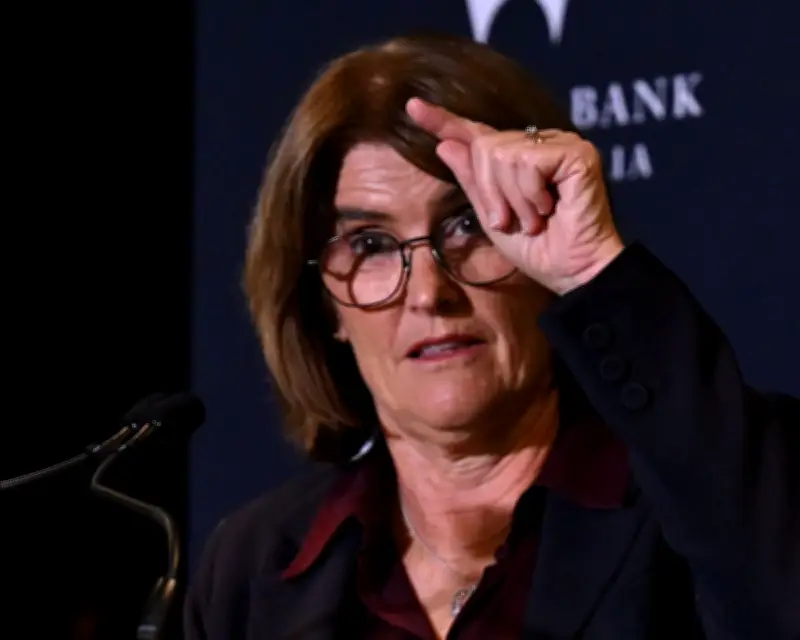
In a widely anticipated move, the RBA board kept the cash rate at 4.35 per cent on Tuesday, marking the seventh consecutive hold. Governor Michele Bullock highlighted that the conflict in the Middle East, particularly the disruption to oil shipments through the Strait of Hormuz, has injected significant uncertainty into the economic outlook.
"The board assessed that holding rates steady allows time to assess the impact of recent geopolitical developments on inflation and economic activity," Bullock said in a statement.

The decision comes as oil prices have surged more than 15 per cent since the start of the year, driven by fears of supply disruptions in the critical waterway. The Strait of Hormuz handles about 20 per cent of the world's oil supply, and any sustained disruption could push inflation higher globally.
Inflation and Economic Growth Concerns
The RBA's decision reflects a delicate balancing act. While domestic inflation has eased from its peak, it remains above the bank's 2-3 per cent target band. The central bank now faces the risk that higher energy costs could reignite price pressures.
"The conflict in the Middle East adds a new layer of complexity to our inflation forecasts," Bullock noted. "We are monitoring the situation closely, and we stand ready to adjust policy if necessary."
Economic growth in Australia has also slowed, with GDP expanding by just 0.8 per cent over the past year. The RBA trimmed its growth forecast for the year ahead, citing weaker consumer spending and global headwinds.
Market Reactions and Expert Analysis
Financial markets reacted calmly to the decision, with the Australian dollar edging lower and bond yields steady. Analysts expect the RBA to remain on hold for the coming months, barring a sharp escalation in the Iran conflict.
"The RBA is in a wait-and-see mode," said Sarah Hunter, chief economist at KPMG Australia. "The biggest risk is a sustained rise in oil prices that feeds into core inflation. If that happens, the RBA may have to consider a rate hike later this year."
However, some economists argue that the RBA may eventually need to cut rates if the conflict leads to a severe global downturn. "The situation is highly uncertain, but the balance of risks is tilting toward weaker growth," said Gareth Aird, head of Australian economics at Commonwealth Bank.
Global Implications and Policy Coordination
The RBA's decision aligns with other central banks that are also grappling with the economic fallout from the Iran crisis. The US Federal Reserve is expected to hold rates steady at its meeting next week, while the European Central Bank has already signalled caution.
Bullock emphasized the importance of international cooperation. "We are in close contact with other central banks and international institutions to monitor developments and coordinate policy responses if needed," she said.
The Australian government has also been active diplomatically, urging restraint from all parties and working to ensure the safe passage of ships through the Strait of Hormuz.
Outlook for Australian Households and Businesses
For Australian households, the rate hold means mortgage repayments will remain unchanged for now, providing some relief amid high living costs. However, petrol prices have already risen, and further increases could strain household budgets.
Businesses, particularly those in energy-intensive industries, are bracing for higher input costs. "We are already seeing the impact on fuel and transport costs," said Innes Willox, chief executive of the Australian Industry Group. "If the conflict persists, it will feed through to higher prices for consumers."
The RBA will next meet in August, with the board closely watching developments in the Middle East and their impact on the Australian economy.