American West Metals has kicked off its West Desert critical minerals campaign in style, intersecting a continuous 77.65-metre interval of visual zinc and copper sulphides in its very first hole at the Utah project.
In a bold move, the hole was stepped out 430 metres to the east of the established West Desert deposit to test a 4-kilometre-long magnetic anomaly that management has long interpreted as a potential large-scale extension to its mineralised system.
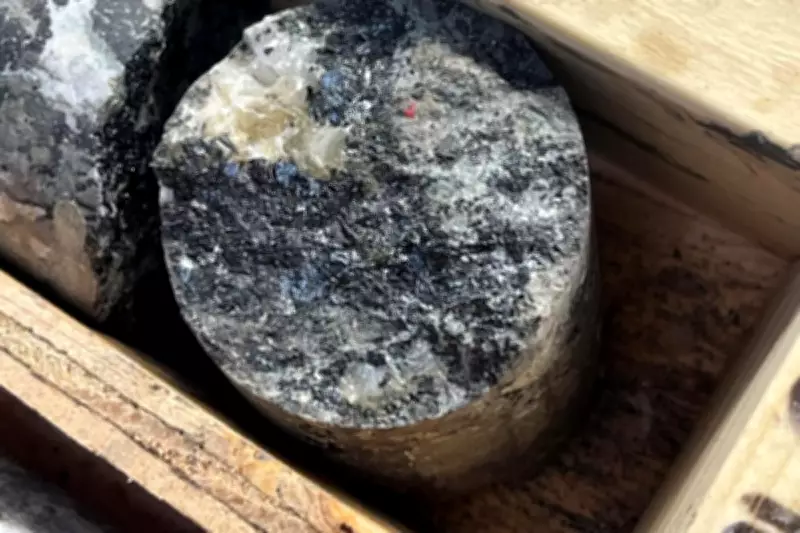
The visual logs from the drill core, which show strong zinc and copper sulphides from 471 metres downhole, suggest the company's geological model is on the money.

American West says its intersection has confirmed the source of the large magnetic anomaly is directly associated with strong zinc, copper and iron-rich skarn mineralisation, which is closely associated with the critical value-adding indium ounces at West Desert.
Hitting the thick pile of sulphides on the first go and at such a distance away from the main deposit is a commendable result in any explorer's book. It establishes a large, high-priority target area for almost 4 kilometres of strike and breathes new life into the project's exploration upside.
The company says the style of mineralisation looks very similar to that seen in the Main Zone of the West Desert deposit, which already hosts a resource of 33.7 million tonnes at 3.83 per cent zinc and 0.15 per cent copper.
The mineralisation at West Desert typically contains high levels of sought-after critical metals, including indium, gallium, germanium and tellurium.
American West says the assays will be a true test for these minerals in the new intersection.
Notably, West Desert already boasts the largest undeveloped indium resource in the United States, with 23.8 million ounces of the silvery white metal grading 20 grams per tonne (g/t) indium.
The drill hole has intersected broad zones of intrusion and skarn hosted visual pyrrhotite overprinted by pyrite and arsenopyrite. The volume and style of this mineralisation suggest the potential for a large epithermal gold event also within the project area.
The project sits 160 kilometres south-west of Salt Lake City in the tier-one mining jurisdiction of Utah, which is also home to the world-class Bingham Canyon copper mine.
The West Desert is interpreted as a mammoth zinc-copper skarn and carbonate-replacement deposit, with mineralisation dominated by sphalerite and chalcopyrite in carbonate lenses.
The company's geoscientists have also identified another intriguing possibility in the core, noting the geology hints at an epithermal and gold-skarn mineralising environment. A portable XRF analyser has backed this up, lighting up gold pathfinder elements, including tungsten, arsenic and bismuth, adding another layer of potential at West Desert.
With the United States continually prioritising domestic mines and stockpiles for critical metals, a prime US source of indium and other key metals could go a long way towards closing critical supply gaps.
Now the initial hole of the campaign is in the bag, the drill bit is already turning on a second hole, this time targeting the Juab Fault, 400 metres to the south-east of the deposit and another known host of high-grade mineralisation.
Having hit a thick intercept of sulphides straight out of the block in its first test of a 4-kilometre-long magnetic feature, American West has provided a solid justification for its geological model. The company says only 10 per cent of this prospective porphyry margin has been drill-tested to date, leaving plenty of room for the drill bit to roam.
With assays from this first hole expected in the coming weeks and a second hole already underway, West Desert could be in for a rerating in no time at all.