In a strategic move within Western Australia's prolific goldfields, Castle Minerals has reclaimed full ownership of its highly prospective Polelle and Wanganui gold projects near the mining hub of Meekatharra. The company has terminated an option agreement with Great Boulder Resources, retaking 100 per cent control of the ground that sits in a region dotted with operating gold mines.
Strategic Positioning in a Gold-Rich District
The decision places Castle Minerals in a commanding position within a well-established gold-producing corridor. The Polelle project is strategically located just 25 kilometres south of Meekatharra and a mere 7 kilometres southeast of Westgold Resource's significant Bluebird gold mine, which boasts a resource of 1.4 million ounces. Adding to the prospectivity, Westgold's 37,000-ounce Albury Heath deposit sits directly adjacent to the eastern boundary of Castle's Polelle tenement.
Critically, the Albury Heath shear structure, a major geological feature known for hosting gold mineralisation, strikes directly through the Polelle project for an impressive 7.5 kilometres. This geological continuity significantly enhances the project's potential for discovery.

High-Grade Hints at Wanganui
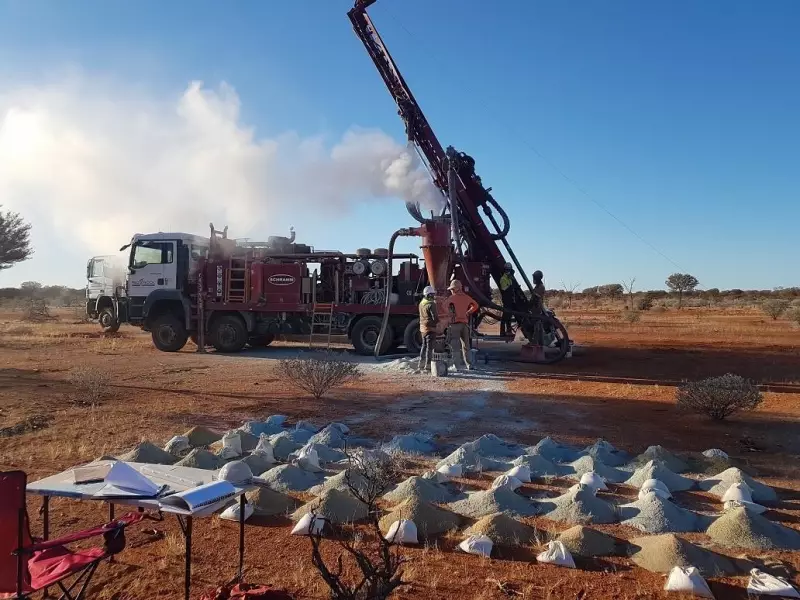
Meanwhile, at the Wanganui project, previous exploration work by Castle is now being viewed in a new light, especially with the gold price soaring past US$5000 an ounce. Shallow reverse circulation (RC) drilling conducted back in 2020, when gold prices were substantially lower, returned encouraging results that point to deeper potential.
The drilling targeted areas beneath the project's North and South open pits and along the dominant three-kilometre-long Main Lode shear zone. The best intercepts from this work were highly promising:
- 3 metres grading 18.66 grams per tonne (g/t) gold from 62 metres depth.
- 8 metres grading 4.10 g/t gold from 66 metres depth.
- 10 metres grading 3.34 g/t gold from 56 metres depth.
Castle notes that these shallow intersections clearly underscore the prospect's potential at greater depths, suggesting the possibility of richer mineralisation lying further below the surface.
Multiple Parallel Targets Identified
The exploration story extends beyond the Main Lode. Castle has also identified and tested additional parallel gold-bearing structures at Wanganui, including the Far East, East, and Far West lodes. These zones have yielded further encouraging intersections, such as 8 metres grading 3.25 g/t gold and 6 metres grading 3.68 g/t gold, indicating a broader mineralised system.
Strategic Review and Shareholder Value Focus
With the option agreement now lapsed, Castle Minerals is firmly back in the driver's seat. The company's chairperson, Steve Zaninovich, stated, "With the GBR option over the Polelle and Wanganui gold projects having lapsed, Castle has made the decision to retain the projects. Our attention now turns to conducting a strategic review of the Projects to decide how best to extract value for shareholders."
This move appears well-timed, coinciding with a robust gold market. The company now controls ground showing shallow, high-grade gold intercepts across multiple shear zones. The compelling geological evidence suggests the best ounces may yet be found deeper within the system.
In a mining district renowned for rewarding persistent and strategic exploration, Castle Minerals is now poised to aggressively advance these projects. The company is gearing up to test the full extent of this emerging gold story, with all eyes on how the strategic review will shape the next phase of drilling and development to unlock value for its investors.