Australian explorer Red Metal Limited has significantly ramped up metallurgical investigations at its promising Sybella rare earths project in northwest Queensland. The company has initiated a crucial phase of large-scale, weak-acid column heap leach tests on coarsely crushed, granite-hosted ore.
Replicating Real-World Conditions for a Major Project
The latest test program is specifically designed to mimic the conditions of an actual heap leach operation. This important step builds on earlier, highly encouraging bottle-roll optimisation studies. Those initial tests successfully extracted rare earths using a low-pH, ambient-temperature sulphuric acid solution.
Results from the ongoing column leach trials are anticipated early in the new year. This data will provide vital information for upcoming mine scoping and economic assessments, moving the project closer to potential development.

Sybella: A Standout Rare Earths Opportunity
The Sybella project is fast emerging as a notable rare earths prospect. It targets the shallow, weathered layer of the expansive Sybella Batholith. This large A-type composite granitoid complex is situated just 20 kilometres from the major mining hub of Mt Isa, within Queensland's prolific Cloncurry district.
The mineralised system is substantial, with the partially weathered granite extending for more than 12 kilometres in length and three kilometres in width. A key advantage, according to Red Metal, is that the bulk of the rare earth mineralisation is found in soluble fluoro-carbonate minerals. This characteristic makes the ore exceptionally well-suited to heap leach extraction, a scenario the company has labelled “metallurgical nirvana”.
Testing and Future Work Program
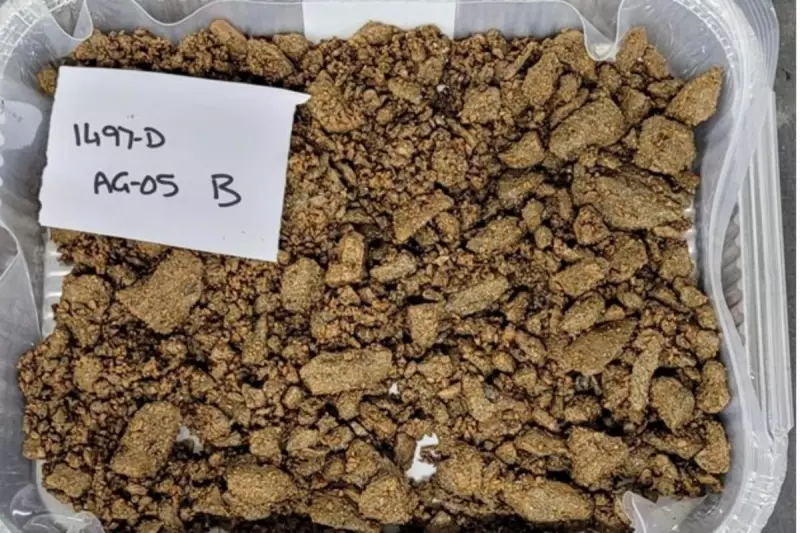
The current column leach tests are based on nine 85-millimetre diamond core samples recently drilled from the project's Kary Zone. In parallel with the leaching studies, Red Metal is advancing complementary work. This includes ion exchange research, detailed comminution testing, and planning for infill drilling campaigns aimed at future resource upgrades.
Red Metal Limited managing director Rob Rutherford expressed the company's enthusiasm: "We are excited to be progressing the large column leaching on coarsely crushed Sybella ores. This important next step best simulates a real-world heap leach setting and aims to repeat the strong rare earth extractions shown in earlier bottle roll testing."
High-Value Basket and Favourable Geology
Previous metallurgical results have highlighted the quality of Sybella's rare earths basket. Approximately 21 per cent of the project’s in-situ value is attributed to high-demand heavy rare earth elements like dysprosium and terbium. Production of these heavy rare earths is limited outside of China, with operations like Browns Range in northern Western Australia being one of the few comparable sites globally.
The company believes Sybella's granite-hosted setting is unusual for rare earths deposits. It boasts a natural pH of about 3.5 and low impurity levels. This combination is viewed as highly favourable for scalable, low-cost heap leach mining of the soft, weathered material located near the surface.
Earlier bottle-roll leach testing on weathered granite from the Kary Zone identified an optimal pH range between 2.0 and 2.5. This sweet spot delivered strong recoveries of high-value magnet rare earth oxides, including neodymium and praseodymium, while maintaining low acid consumption.
Legacy of Mining and Project Scale
The Sybella granite has a history of use, with parts of the batholith historically quarried for dimension stone used in construction and gravestones. Red Metal views this legacy as proof of the granite's favourable mechanical properties and shallow weathering profile—qualities that could support low-cost mining and crushing operations.

The project also benefits from excellent infrastructure, with ready access to power, water, and labour due to its proximity to Mt Isa. Coupled with Sybella's enormous scale—an estimated 4.8 billion tonnes grading 302 parts per million (ppm) neodymium and praseodymium, plus 28ppm dysprosium and terbium—the project has all the hallmarks of a potential long-life, low-cost rare earths operation.
With column leach results on the horizon and pre-feasibility studies targeted for 2026, Red Metal is strategically positioning Sybella as a potential Australian trailblazer in the production of magnet and heavy rare earths.