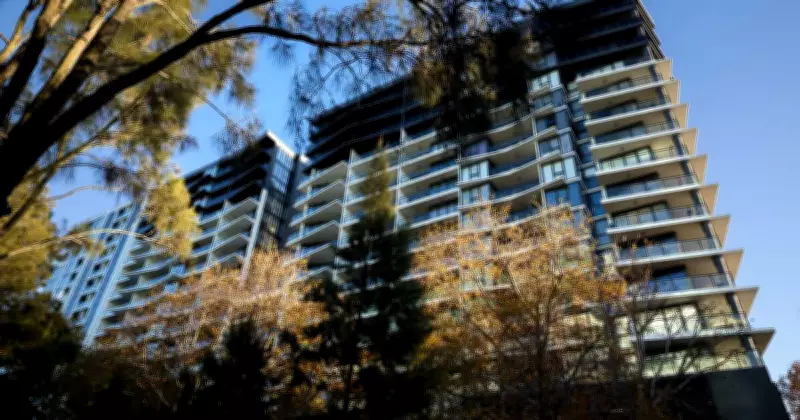
ACT Apartment Construction Surges, But Experts Warn of Future Housing Uncertainty
Recent data reveals a significant spike in new apartment construction across the Australian Capital Territory, yet industry experts are sounding alarms about the sustainability of this boom. While hundreds of apartments are currently in development, concerns linger over whether this momentum can address the broader housing crisis effectively.
Sharp Increase in Construction Starts
Figures released by the Australian Bureau of Statistics indicate that construction commenced on 1,719 apartments in Canberra during the September 2025 quarter. This marks the highest number of apartment starts since 2018, representing a dramatic jump from the 384 commenced in the June quarter. Compared to September 2024, when only 86 new apartments began construction, the increase is particularly striking. The current figures are closer to those from September 2023, which saw 1,044 commencements.
Canberra's relatively high apartment supply has often been credited with mitigating the severity of the housing crisis in the territory, alongside its high average incomes. However, this recent surge may not signal a long-term solution.

Regulatory Changes Prompt Developer Rush
Geordan Murray, the NSW and ACT executive director at the Housing Industry Association, has expressed caution regarding the sustainability of this construction spike. "Our concern is that it might not be indicating a sustained improvement and that it may be developers getting projects underway ahead of some significant regulatory changes," Mr Murray stated.
Two major regulatory shifts are on the horizon. First, the ACT's developer licensing scheme, designed to enhance consumer confidence in apartment builders, will become mandatory in October 2026. This scheme includes a $1,000 application fee and an annual $1,000 fee, with additional per-dwelling charges set for the 2026 financial year.
Second, updates to the national construction code, expected to be published on February 1, will be adopted in the ACT over a six-month period starting May 1. These changes will address water management, car park safety in commercial and apartment buildings, energy efficiency reforms, and condensation mitigation.
"There has been a lot of concern amongst developers and builders about what the implications of these are," Mr Murray noted, suggesting that these concerns might be driving developers to accelerate their projects to avoid future costs and complexities.
Potential Drop in Commencements and Housing Targets
Mr Murray warned that this rush could lead to a significant decline in construction starts later in the year, potentially jeopardising the ACT government's target of 30,000 new homes by 2030. "There is pretty good incentive to [start] earlier, rather than wait for these changes to take effect because they do impose significant costs," he explained.
"The way that this number jumped so significantly is what causes me some concern that it might not be a smooth recovery." He emphasised the need for the industry to maintain focus to meet housing goals.
Contrast with Stand-Alone House Construction
The apartment sector's boom stands in stark contrast to the sluggish performance of stand-alone house construction. Only 198 detached houses were built in the ACT during the September quarter. Mr Murray attributed this disparity to affordability constraints and government housing policies that discourage both homeowners and developers from pursuing house projects.
The ACT government's strategy focuses on increasing housing density within existing residential areas, which naturally favours apartment development over detached homes. While Mr Murray expressed doubts about achieving the 30,000-home target by 2030, he acknowledged that reforms aimed at reaching this goal could benefit the territory in the long run.
"Government are making some reforms and doing a lot of the right things that they needs to be doing to encourage new housing supply," he said, highlighting that initiatives like missing middle reforms and rezoning proposals could significantly boost housing availability.

In summary, while the current surge in apartment construction offers a temporary boost, the underlying challenges of regulatory changes and housing targets suggest an uncertain future for Canberra's housing market.