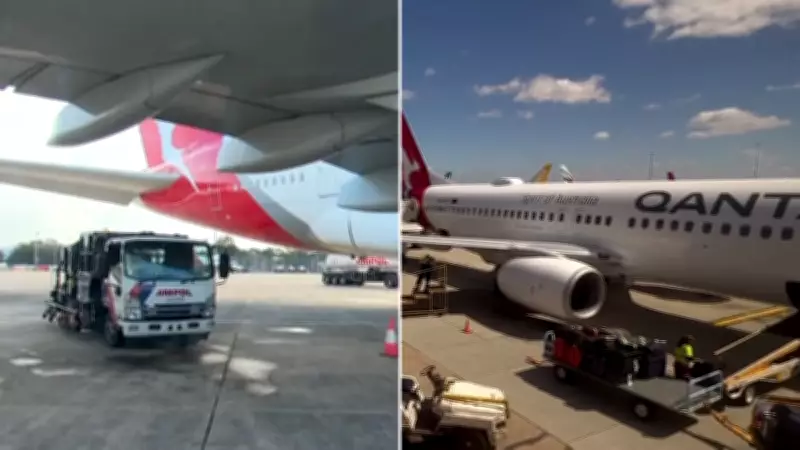
Airlines Slash Flights as Fuel Costs Soar, Yet Travel Experts Offer Reassurance
Australians planning European summer getaways are being advised not to hastily cancel their trips, despite Qantas and Virgin Australia announcing significant flight reductions amid a global fuel crisis. Concerns over travel disruptions have escalated after Qantas confirmed it would cut five per cent of its domestic flights, while Virgin Australia plans to trim one per cent of trips, with some regional routes facing complete elimination.
Qantas has taken proactive measures to mitigate the impact of the ongoing conflict in the Middle East, implementing international network changes, capacity adjustments, and fare increases. The airline forecasts its fuel bill will surge by between $600 million and $800 million in the first half of this year, highlighting the severe financial pressures facing the aviation industry.
Domestic Travel Impact Expected to Be Manageable
Despite the tightening domestic network, travel experts believe the effects at home will likely remain manageable. Flight Centre founder Graham Turner emphasised on Wednesday that travellers should not anticipate a major blowout in domestic travel costs. "Domestically, we don't think the impact will be huge. Sure, airlines are consolidating flights to a certain extent," Turner stated.

He noted that while some routes have been cut, necessitating alternative travel via other cities for regional destinations, fare increases are projected to be modest, potentially rising by only five to ten per cent. Turner explained that both major airlines are somewhat shielded from the worst of fuel price volatility, with consolidation efforts helping to cushion the impact.
International Travel Faces Greater Challenges
The outlook becomes more complex for Australians heading overseas, particularly those eyeing a European summer vacation. The closure of Middle Eastern airspace is delivering a double blow to international travel, forcing airlines to reroute flights while simultaneously reducing available seats. Nevertheless, Turner's advice for travellers is to maintain existing bookings.
For those yet to secure flights, the situation appears more daunting. Options still exist, but Turner stressed that flexibility will be crucial. "If you haven't got flights, certainly have a look. There's not a lot of availability, the prices are reasonably high, but a lot of the Chinese carriers or other carriers flying through Asia, like Singapore Airlines, still have flights available, for example, in June at some reasonable prices," he said.
While demand remains robust, Turner warned that the peak early summer period will likely see travellers feeling the most significant pinch. Flights in May and June are already constrained, with fewer seats and longer flight paths driving up costs compared to previous years. Travellers willing to consider alternative routes through Asia or the United States may still find viable options, even as traditional Middle East pathways remain disrupted.
Virgin Australia Confident in Fuel Hedging Strategy
Australia's second-largest airline has followed Qantas in reducing travel capacity and raising airfares in response to the Middle East conflict. However, Virgin Australia expresses greater confidence in the effectiveness of its fuel hedging, despite facing an increased cost of between $30 million and $40 million in the second half of its financial year.
Qantas recently revealed its second-half fuel bill would rise by $800 million to $3.3 billion. In contrast, Virgin Australia believes fare increases and capacity cuts will help protect earnings, leaving its profit outlook unchanged. The carrier, set to report its fiscal 2026 results in August, still expects second-half underlying earnings to surpass the previous corresponding half, when it reported annual earnings of $664.4 million.
Virgin Australia told the stock exchange that strong customer demand persists in FY26, with higher fuel costs largely mitigated through effective fuel hedging and recent adjustments to airfares and capacity. For the remainder of its fiscal year, Virgin is hedged 92 per cent for Brent crude oil and 71 per cent for refining margins, limiting its exposure to the unhedged portions.

Unlike Qantas, which has hedged 90 per cent of its crude oil costs but remains vulnerable to refining costs, Virgin's strategy provides a buffer. Refining costs have skyrocketed from around $US20 a barrel in February to a peak of approximately $US120, underscoring the volatility in the market.
Fuel represents one of Virgin's highest operational expenses, accounting for 21 per cent of total costs in the first half, with 3.4 million barrels of oil consumed at a cost of about $555 million. To counter increased fuel and other operating costs, such as airport charges, Virgin Australia has adjusted airfares and capacity in the current half.
Domestic capacity will decrease by one per cent in the June quarter but will still be one per cent higher across the half. Concurrently, revenue per available seat kilometre—a key metric reflecting revenue generation per seat—will rise by five per cent across the second half and six per cent in the June quarter.
Looking ahead to the new financial year, Virgin acknowledged ongoing volatility and stated that capacity settings would remain under review. "The group continues to monitor the external environment and retains flexibility to take further actions if required," it added.