Medical experts across Australia are intensifying calls for mandatory sunscreen application time in schools, with hundreds of doctors pressing the federal government to implement a structured policy requiring students to reapply sun protection during the school day. This urgent proposal aims to address the nation's alarming skin cancer rates by embedding sun safety into daily educational routines.
A Five-Minute Lifesaving Measure
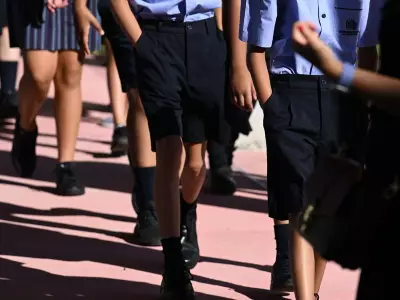
Under the detailed plan, schools would allocate a dedicated five-minute period at the start of lunchtime for students to apply sunscreen. This measure is outlined in an open letter sent to Federal Education Minister Jason Clare and Health Minister Mark Butler, which has garnered signatures from 669 medical professionals. The letter emphatically warns that this policy could "quite literally save lives" by shielding children from dangerous ultraviolet radiation during peak UV hours, when exposure is at its highest.
Extreme Heat Amplifies the Need
The push comes as millions of students return to classrooms this week amid extreme summer heat, with temperatures soaring above 40 degrees Celsius across large parts of the country and some regions forecast to approach the 50-degree mark. Doctors highlight that sunscreen applied before school often loses its effectiveness by lunchtime, leaving children unprotected during outdoor breaks. This gap in protection is particularly concerning given Australia's status as having the highest rates of skin cancer globally, where two in three Australians are expected to be diagnosed during their lifetime.

The Devastating Impact of Skin Cancer
Melanoma remains the most common cancer among Australians aged 15 to 29, with approximately 2,000 people dying from skin cancer each year. The treatment of these cases reportedly costs the national health system more than $1.7 billion annually. Medical experts argue that early-life sun exposure is one of the strongest risk factors for developing skin cancer, and correct sunscreen application can reduce the risk by between 35 and 50 percent.
Current Policies Fall Short
The open letter points out that schools are not currently required to provide dedicated sunscreening time. While many institutions have policies reminding students to reapply sunscreen before lunch, these are not consistently followed and often rely on children to take initiative. Doctors contend this expectation is unrealistic for young children, who lack the developmental capacity to independently engage in long-term risk reduction behaviours. The letter also emphasises that since ultraviolet radiation is classified as a class 1 carcinogen, schools have a clear duty of care to protect students from it during the school day.
Personal Experience Drives Ministerial Support
Education Minister Jason Clare has voiced strong support for the proposal, revealing that his own melanoma diagnosis has made the issue deeply personal. He shared on Sunrise that a few years ago, he spotted a changing mole on his leg, which led to a diagnosis and life-saving surgery. Clare believes his melanoma may have been linked to long periods spent outdoors during school sport and playground activities. While acknowledging improvements in sun safety through measures like "no hat, no play" policies, he stressed that further action is necessary and plans to raise the proposal with state education ministers later this year to assess effective national measures.
Widespread Backing from Parents and Teachers
The call has received robust support from teachers and parents, with many asserting that such a measure is long overdue in Australia's harsh climate. One parent noted the importance of sun safety education, while a schoolteacher expressed wholehearted endorsement of the initiative. Doctors argue that the proposal would incur minimal costs, require just five minutes a day, and could significantly reduce Australia's skin cancer rates for future generations, positioning it as a simple yet powerful public health intervention.