Port Kembla Woman's Body Donation to Educate Future Healthcare Professionals
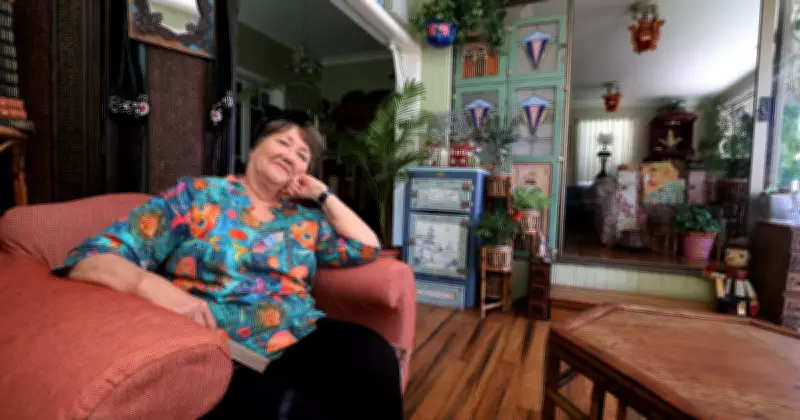
Lorrelle Lee, a resident of Port Kembla, has made a profound decision to donate her body to the University of Wollongong upon her passing. This selfless act will provide invaluable resources for educating future doctors and other healthcare professionals, while also contributing to vital scientific research that could combat illnesses affecting countless individuals.
A Personal Motivation for Giving
The retired theatrical prop maker was inspired to register as a body donor approximately fifteen years ago when her newborn niece required delicate heart surgery. "I thought, 'Gee ... how do they get that skilled? How do they get that practised that they're game to go into a three-centimetre heart?'" Mrs Lee recalled. "Well, they must practise a lot. But you don't want to practise on the living." Her niece, thanks to that surgeon's expertise, has grown into a healthy teenager.
Mrs Lee's commitment extends beyond surgical training. Having lost her husband John to cancer at just 56, and knowing a friend with two grandchildren battling the disease, she hopes her donation might aid researchers working to overcome such illnesses. "A lot of people think, 'I don't want them to cut me up' ... but I think to myself, 'Well, what's your alternative, lady?'" she said. "I don't want to be in the ground and I don't want to be in that furnace."

The Practical and Ethical Framework at UOW
The University of Wollongong operates its body donation program with strict protocols to ensure donor dignity and privacy. Professor Deirdre McGhee, chair of UOW's anatomy committee, emphasized that learning from actual human bodies remains "absolutely vital" for students. "Universally, all the students say it doesn't matter what you have on your iPad, it doesn't matter what videos we make - the real appreciation of the understanding of the human body is the 3D of the structure itself," Professor McGhee explained.
Students gain exposure to anatomical variations and pathologies, observing conditions like heart disease, joint replacements, and fractures firsthand. The COVID-19 pandemic underscored the irreplaceable value of this hands-on learning, despite extensive online resources developed by the university.
UOW's donation program, established in 2006, currently has over 2000 registered donors, with 14 to 20 bodies received annually. When a donor passes away, their family contacts the university, and the body typically moves through a funeral home before arriving at UOW. The embalming process takes six months, followed by anatomical preparation for teaching purposes.
Respectful Handling and Final Commemoration
Donated bodies are used for education over four to eight years, depending on wear. Each anatomical section is tracked with chips to ensure all parts remain accounted for. Families ultimately decide the final disposition, though most donors are cremated with ashes scattered in a remembrance garden.
Every two years, UOW hosts a ceremony of appreciation honoring donors. Family members can view their loved one's name inscribed in a calligraphy leather-bound book and speak with students who benefit from the program. Professor McGhee noted that donors often share a desire to give back to medicine or continue lifelong community service even after death.
Mrs Lee finds comfort in knowing her donation will support enthusiastic medical students. "A whole heap of enthusiastic, dedicated kids trying and trying to become doctors or physios ... bright lights, people talking - I'd rather go that way," she remarked. She has also discovered a friend is a fellow donor, joking, "I always tell her, 'I'll see you in the bottles!'"