The Swimmer Who Could Have Been King of the Jungle
While the legendary figure of Tarzan has captivated audiences for over a century through countless film adaptations, a lesser-known chapter of this story unfolds right here in Newcastle. The tale involves a local hero whose athletic prowess nearly catapulted him to Hollywood stardom, but who chose a different path.
From Surf Champion to Hollywood Prospect
In the late 1920s, during the silent movie era, an American film company scouting Australia for talent identified Jim Cook as a prime candidate to become the world's second screen Tarzan. Cook, a champion swimmer from the Cooks Hill Life Saving and Surf Club, possessed what historian John Mayo OAM describes as a "very powerfully built" physique with the shoulders of a swimmer. He had won the Australian Junior Surf championship in 1926 and held numerous titles, making him an inspiration to many.
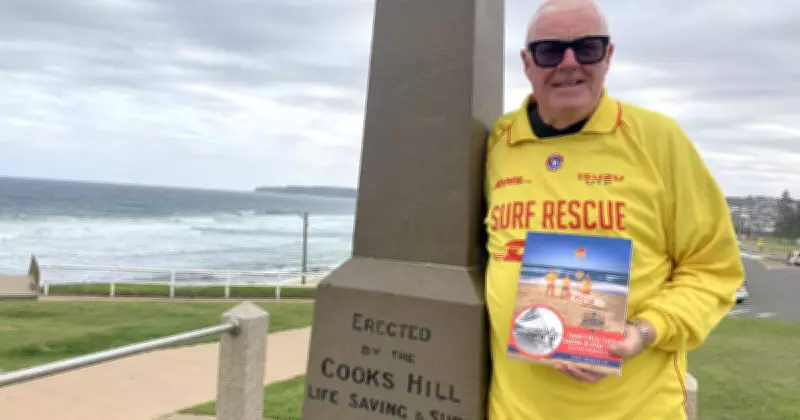
Professor John Ramsland's research, detailed in his 2011 book celebrating the club's centenary, reveals that Cook was "endowed with a magnificent, some say, a 'beautiful' physique". The Hollywood touring company saw him as the ideal replacement for Elmo Lincoln, the original screen Tarzan whose career had waned by the mid-1920s. Despite the opportunity, Cook declined the role for personal reasons, perhaps uncertain about the prospects for a "yodelling swimmer" in feature films.

A Legacy of Real-Life Heroes
This intriguing story connects to a broader narrative of courage and sacrifice embodied by the Cooks Hill Surf Club. The club's history is commemorated through a unique war memorial at Bar Beach, originally unveiled in June 1918. This marble obelisk, funded entirely by club members after World War I, honours nine former lifesavers who died in service.
John Mayo notes that the Newcastle Herald once reported 90 per cent of the pioneering surf club's members initially enlisted to fight, a remarkable testament to their patriotism. The memorial has since been relocated twice, most recently in 2015, and remains a significant piece of local infrastructure. Surrounding it are nine small pillars, each representing one of the fallen soldiers, including Private W. Carratt, whose great niece now sounds the Last Post at annual Anzac Day ceremonies.
The Surfboat Named in Remembrance
Further highlighting this legacy, the club's first surfboat in 1920 was named SCAWDAM, an acronym derived from the initials of the nine honoured members: Smith, Coleman, Carratt, Caldwell, Curley, Antcliff, Wilkinson, Dodd, and Malcolm. This gesture reflects the deep bonds of mateship that flourished among returning soldiers, who helped establish Australia's unique lifesaving movement. Mayo explains that these Diggers were drawn to the camaraderie, discipline, and routine reminiscent of their wartime experiences.
While Jim Cook missed his chance to swing from vines on the silver screen, his story and the club's heritage remind us that real heroism often lies not in fictional adventures, but in the quiet dedication of community pillars. From champion swimmers to wartime volunteers, the Cooks Hill Surf Club continues to celebrate a rich tapestry of local legends whose contributions endure beyond the surf.