

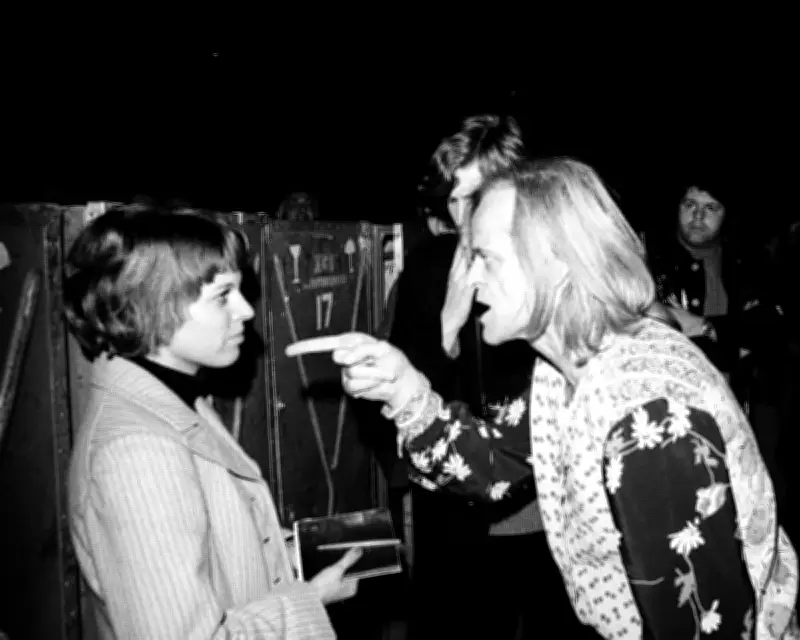
Benjamin Myers's new novel, Jesus Christ Kinski, offers a visceral plunge into the psyche of the legendary actor Klaus Kinski during the tumultuous filming of Werner Herzog's 1972 masterpiece Aguirre, the Wrath of God. The book, published by Bloomsbury, is a fictionalised account that captures Kinski's notorious volatility, his creative brilliance, and his descent into near-madness in the Peruvian jungle.
A Portrait of Chaos and Genius
Myers, known for his award-winning novel The Gallows Pole, employs a stream-of-consciousness style that mirrors Kinski's fractured mental state. The narrative is driven by Kinski's internal monologue, filled with rage, paranoia, and moments of startling clarity. According to the publisher, the novel is based on extensive research into Kinski's diaries and interviews, though Myers takes creative liberties to imagine the actor's inner world.
The story unfolds over the six weeks of principal photography, a period famously marked by Kinski's explosive tantrums, threats to quit, and even a reported incident where he fired a gun at crew members. Myers does not shy away from these episodes, portraying Kinski as both a tormented artist and a deeply flawed human being.

The Herzog-Kinski Dynamic
Central to the novel is the fraught relationship between Kinski and Herzog. Their collaboration was legendary for its intensity; Herzog once claimed he would shoot Kinski if he tried to leave the set. Myers captures this toxic symbiosis, showing how each man pushed the other to extremes. In one passage, Kinski reflects on Herzog's manipulative genius: "He knows exactly which buttons to press. He is the only director who can tame me, and I hate him for it."
The novel also explores Kinski's personal demons, including his troubled childhood and his insatiable sexual appetite. Myers does not romanticise these aspects; instead, he presents them as part of the actor's destructive pattern. The title itself, Jesus Christ Kinski, alludes to Kinski's messianic self-image, a theme that recurs throughout the book.
Critical Reception and Impact
Early reviews have praised Myers's audacious prose. The Guardian called it "a hypnotic, harrowing journey into the heart of darkness that is artistic obsession." The novel has been shortlisted for the Goldsmiths Prize, which celebrates fiction that breaks the mould. However, some critics have questioned the ethics of fictionalising a real person's mental breakdown, especially given Kinski's history of alleged abuse.
Myers defends his approach, stating in an interview: "Kinski was a public figure who wrote extensively about his own life. I am not inventing his demons; I am giving them a voice." The book includes a disclaimer that it is a work of fiction, but it draws heavily on documented events.
A Mirror to Modern Celebrity
Beyond its historical setting, Jesus Christ Kinski resonates with contemporary conversations about celebrity, mental health, and the price of genius. Kinski's meltdown on set foreshadows the public breakdowns of modern stars, from Britney Spears to Kanye West. Myers suggests that the line between artistic passion and self-destruction is perilously thin.
The novel is not an easy read. Its dense, claustrophobic prose mirrors the jungle setting and Kinski's spiralling thoughts. But for those interested in the intersection of art and madness, it offers a compelling, if unsettling, exploration.