

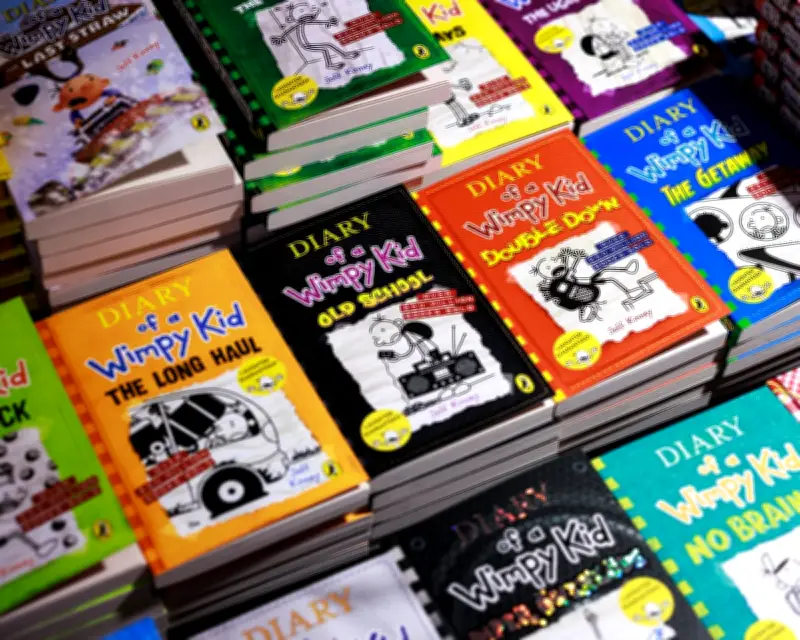
New research has revealed that teenage boys are increasingly stuck reading books intended for primary school children, with the Diary of a Wimpy Kid series among the most popular choices for 13- to 15-year-olds. The study, conducted by the National Literacy Trust, found that nearly one in three boys aged 11 to 16 reads at a level below their expected age, with many choosing texts with a reading age of 7 to 9 years.
Alarming decline in reading engagement
The research, based on a survey of 42,000 children and young people in the UK, shows that reading for pleasure has dropped significantly among teenagers. Only 28% of boys aged 14 to 16 said they enjoyed reading daily, compared to 47% of girls the same age. The gap has widened since the pandemic, with boys' reading enjoyment falling by 15 percentage points since 2019.
According to the National Literacy Trust, the trend is not limited to the UK. Similar patterns have been observed in Australia, the US, and Canada, where educators report that boys are gravitating towards simpler, often humorous books that require less cognitive effort. The Diary of a Wimpy Kid series, written by Jeff Kinney, has a reading age of approximately 8 to 10 years but is frequently read by teenagers.

Impact on academic performance
Educators warn that this reading gap has serious consequences for academic achievement. Dr. Christina Clark, head of research at the National Literacy Trust, said: “When teenage boys are reading books meant for much younger children, they are not developing the vocabulary, comprehension, and critical thinking skills needed for secondary school subjects. This can hold them back in exams and later in life.”
The research also found that boys who read below their age level are twice as likely to fall behind in English and maths by the age of 16. In Australia, the latest NAPLAN results show that one in five boys in Year 9 are reading at or below the minimum standard, compared to one in eight girls.
What is driving the trend?
Experts point to several factors: the rise of digital distractions, lack of male reading role models, and a shortage of age-appropriate books that appeal to boys. Many teenagers report that they find school-assigned reading boring or irrelevant, while popular series like Diary of a Wimpy Kid offer humour and relatable characters, albeit at a lower reading level.
Michael Rosen, the former children's laureate, said: “The problem is not that boys are reading Wimpy Kid; it's that they are not moving on to more challenging material. We need to provide a bridge – books that are engaging but also stretch their reading abilities.”
Call for action
The National Literacy Trust is calling for schools and parents to encourage a wider range of reading materials, including graphic novels, non-fiction, and magazines, that can help boys progress. They also recommend dedicated reading time in schools and access to libraries.
In Australia, the Raising Literacy Australia charity has launched a program targeting boys aged 10 to 14, offering book packs with age-appropriate titles that are both engaging and challenging. Early results show a 20% increase in reading frequency among participants.
The findings underscore a broader concern: without intervention, a generation of boys may leave school with literacy levels that limit their opportunities in work and life.