In contemporary society, there is nothing particularly novel about affluent individuals behaving poorly. What has evolved remarkably is the rapid transformation of this misconduct into narratives of courage, recovery, or self-discovery. This trend is exemplified by figures like Harry and Meghan, who famously demand privacy while simultaneously engaging in lucrative television deals, documentaries, and autobiographical accounts detailing the hardships of their privileged upbringings.
The Beckham Dynasty and Public Fascination
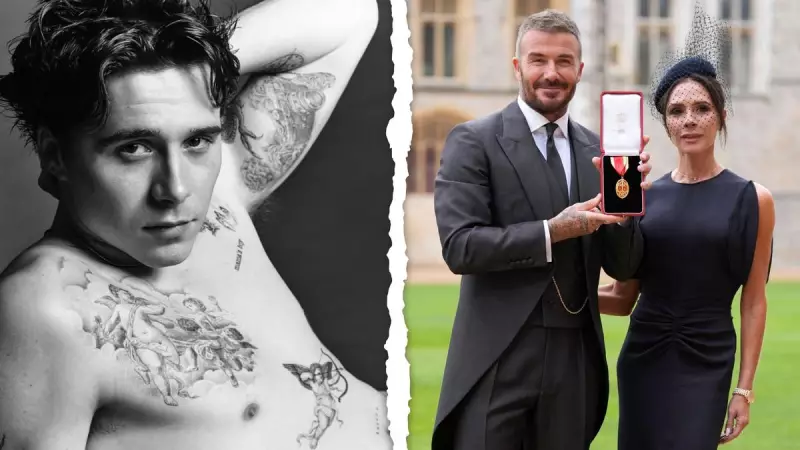
Then we have the Beckham family, a modern form of royalty. David Beckham, celebrated as one of football's greatest players, is married to Victoria Beckham, a pop icon from one of the planet's most successful girl bands. Combine Victoria's flawless fashion sense and meticulously managed public image with David's enduring good looks, and the result is an intense public obsession. This fascination borders on the rabid, capturing global attention for decades.
Brooklyn Beckham's Gilded Existence
Their eldest son, Brooklyn Beckham, has navigated a life utterly removed from common financial anxieties. He has never fretted over rent payments, never stood at a supermarket checkout agonising over which items to return, and never experienced the dread of a final notice bill arriving before payday. His marriage to Nicola Peltz, daughter of a billionaire, further cemented his existence within a similarly sheltered, opulent world, albeit without the same legendary parental backdrop.

Despite this, Brooklyn has opted to publicly distance himself from the very individuals who provided him with every advantage, particularly his mother. This act feels less like a rebellious stance and more like an expression of profound entitlement. The media's fixation on this affluent family drama has been nothing short of extraordinary, dominating headlines for over a week following Brooklyn's provocative Instagram post.
A Cultural Phenomenon Beyond the Beckhams
Even publications like the Wall Street Journal, typically focused on finance and geopolitics, have analysed this familial rift with notable seriousness. This raises a pivotal question: is this narrative truly about Brooklyn Beckham himself, or is he merely a highly visible symbol of a broader cultural transformation? In this shift, personal validation is increasingly prioritised over traditional family loyalty.
The Rise of 'No Contact' and Therapeutic Language
We have witnessed variations of this dynamic across millennial culture for some time. Silicon Valley entrepreneurs who sever ties with their families after achieving early success, influencers announcing 'no contact' with parents via social media, and celebrities openly discussing estrangement often overlook the substantial safety nets that cushion their falls—a luxury unavailable to most.
According to a report highlighted by Adelaide Now, New York-based therapist and family repair coach Marie Morin observes that family estrangement is becoming more prevalent. She describes it as a painful, growing trend where increasing numbers of adult children choose to cut off contact with their parents. Morin attributes this to a generational change in emotional expectations, noting that millennials and Generation Z have developed a new vocabulary centred on mental health, boundaries, trauma, and toxic dynamics.
"Many were told that if someone disrespects you, even if they are related to you, you have the right to protect yourself," Morin explains. She suggests that emotional wellbeing now frequently takes precedence over family loyalty, with adult children more inclined to evaluate whether a relationship makes them feel heard, safe, and valued. When it fails to meet these criteria, silence can appear simpler than enduring conflict.
The Australian Reality: Economic Pressures Trump Ideology
While formal statistics on legal emancipation from parents are scarce in Australia—largely due to its rarity and discreet handling by courts—any existing numbers would likely be low. This is not because familial relationships here are perfect, but because harsh economic realities often override ideological stances.

With rental costs hitting record highs, home ownership becoming increasingly unattainable, and wages failing to match the rising cost of living, most young Australians are not severing parental ties. Instead, they are moving back into the family home, extending their stays, and relying on parents for occasional luxuries like holidays or dining out.
Privilege and the Luxury of Walking Away
This context makes the very public theatrics of ultra-privileged family estrangement seem less indicative of a generational movement and more like a phenomenon feasible only for those who can financially afford to walk away. In the everyday world, family represents not merely an emotional connection but a crucial economic support system.
Ultimately, no amount of therapeutic jargon can obscure the fact that advocating for independence is significantly easier when someone else has already settled the bills. The drama surrounding Brooklyn Beckham and similar affluent figures underscores a stark divide between the realities of the privileged few and the economic constraints faced by the majority.