Mercy Review: A Provocative AI Thriller That Entertains Despite Flaws
Just because technological advancement allows us to do something, it does not necessarily mean we should proceed. The rapid developments in artificial intelligence present fascinating possibilities alongside significant ethical dilemmas we often prefer to avoid. For a glimpse into potential futures, one need only look to science fiction cinema—remember the chilling presence of HAL in 2001: A Space Odyssey?
While Mercy does not reach the iconic heights of Stanley Kubrick's masterpiece, it delivers an engaging fusion of science fiction and police procedural genres. Directed by Timur Bekmambetov, this film also adopts a real-time narrative structure. Similar to classics like High Noon, the movie's action unfolds in a duration that closely matches its storyline, with a looming deadline amplifying suspense throughout.
A Justice System Turned Upside Down
The screenplay by Marco van Belle introduces a deeply provocative concept. Our current criminal justice system is built upon the foundational principle that an accused person is presumed innocent until proven guilty beyond reasonable doubt in a court of law. In the near-future Los Angeles depicted in Mercy, this presumption is completely reversed. Here, the accused is presumed guilty and must personally prove their innocence beyond reasonable doubt.

This radical shift is enforced by a new artificial intelligence justice system, ironically named Mercy, which serves as judge, jury, and when deemed necessary, executioner. While crime rates have dramatically fallen in this dystopian vision, the film compellingly asks: at what ultimate cost to humanity and fairness?
Chris Pratt Faces a Race Against Time
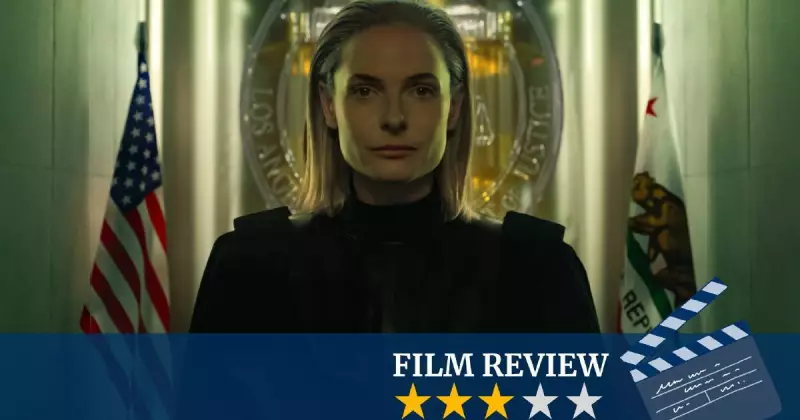
The story centers on Los Angeles police detective Chris Raven, portrayed by Chris Pratt. Once a staunch supporter of the Mercy system who helped convict its first defendant, Chris awakens to find himself as the latest person accused. He is restrained in a chair before a large screen projecting Judge Maddox, played with chilling precision by Rebecca Ferguson.
The implacable, slightly snippy AI judge informs Chris that he has precisely ninety minutes to reduce the calculated probability of his guilt—currently at ninety-eight percent—to a level low enough to indicate reasonable doubt. Failure means instant execution. While undeniably efficient compared to traditional legal processes, the film persistently questions whether this system can ever be truly just.
Forced to act as his own advocate and investigator, Chris receives limited assistance from the system. To build his defense, he can access relevant information from police body cameras, surveillance footage, phone records, emails, and other digital sources, while also communicating with key individuals. However, grappling with shock and grief, he is hardly in an optimal mental state for such a critical task.
Personal Demons and a Murder Mystery
Chris faces a monumental personal hurdle: as a relapsed alcoholic who drank himself into a blackout during the time the murder was committed, he possesses no memory of the events. After protesting his innocence to his devastated teenage daughter Britt, played by Kylie Rogers, who discovered her mother's body, Chris embarks on the most crucial investigation of his life.
As he uncovers clues, the audience learns alongside him, discovering revelations about his character and world that continually shift our sympathies and suspicions. Director Bekmambetov, known for screenlife films like Unfriended, demonstrates his expertise here, though Mercy thankfully expands beyond mere screen action, maintaining visual variety and narrative interest.
A Solid Piece of Entertainment
Pratt delivers a sympathetic, flawed performance, and his investigative methods—including interactions with his police partner Jaq, portrayed by Kali Reis, who acts as his physical proxy on the ground—help sustain engagement. The film eventually incorporates more conventional cop-movie elements, such as gunfights, car chases, and explosions, providing pace changes and several plot twists, some predictable and others genuinely surprising.

Perhaps most intriguing is the evolving dynamic between Chris and the AI judge Maddox. The established rules of their interaction appear to stretch or even break at times, leaving viewers to wonder whether this represents mere screenwriting convenience or suggests the artificial intelligence possesses more flexibility than initially presumed.
While Mercy may not be a groundbreaking cinematic achievement, it stands as a solid, thought-provoking piece of entertainment that successfully blends genre elements to explore timely questions about technology, justice, and human fallibility.