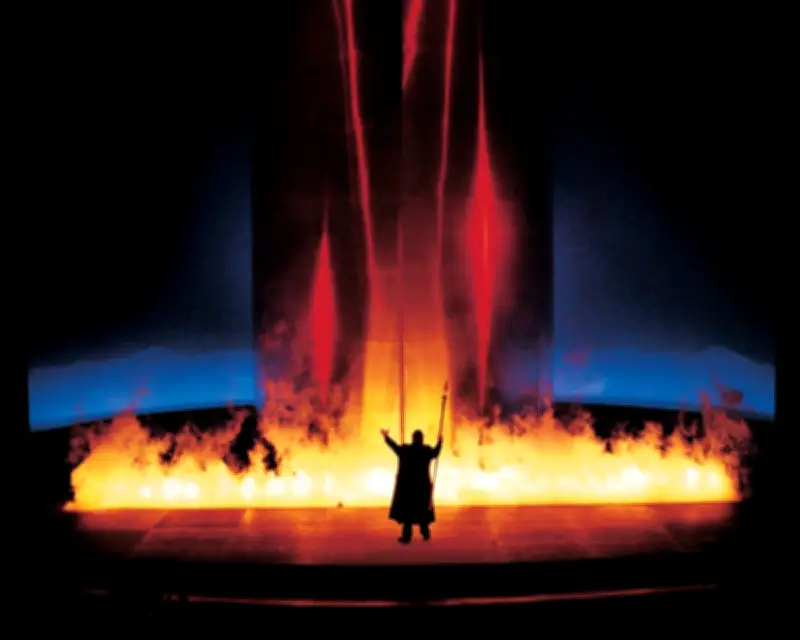
As the Bayreuth Festival celebrates its 150th anniversary, the question arises: what would classical music look like without Richard Wagner? The festival, founded by Wagner himself in 1876 to showcase his monumental Ring cycle, has become a pilgrimage site for opera lovers worldwide. Yet, the legacy of Wagner is inextricably linked to two other giants: Franz Liszt and Johannes Brahms.
Wagner's Revolutionary Vision
Wagner's concept of the Gesamtkunstwerk—a total work of art merging music, poetry, and drama—transformed opera. His use of leitmotifs and chromatic harmony pushed musical boundaries. The Bayreuth Festspielhaus, designed with a sunken orchestra pit and amphitheater seating, was built to realize his vision. Today, the festival remains a bastion of Wagnerian tradition, drawing tens of thousands of visitors each summer.
Liszt: Father-in-Law and Champion
Franz Liszt, Wagner's father-in-law, was a tireless advocate. He conducted premieres of Wagner's works, including Lohengrin in 1850, and transcribed his operas for piano, making them accessible to a wider audience. Liszt's own compositions, such as the symphonic poems, influenced Wagner's orchestral writing. Their relationship was complex—personal and professional—but without Liszt's support, Wagner's rise might have been slower.

Brahms: The Antithesis
Johannes Brahms stood in stark contrast to Wagner. A champion of absolute music, Brahms rejected Wagner's programmatic approach. Their aesthetic rivalry defined late 19th-century music. Brahms's symphonies and chamber works adhered to classical forms, while Wagner pushed toward atonality. Yet, both were indebted to Beethoven. Brahms's First Symphony was famously dubbed "Beethoven's Tenth" by Hans von Bülow. Without Wagner's provocations, Brahms might not have refined his style so sharply.
Impact on Musical History
The Wagner-Liszt-Brahms triangle shaped modern music. Wagner influenced Mahler, Schoenberg, and film scores; Liszt pioneered the piano recital and modern technique; Brahms preserved formal rigor. Their interplay created a rich dialectic. The Bayreuth Festival, now under scrutiny for Wagner's anti-Semitism, remains a cultural touchstone. As it enters its next century, the festival grapples with its past while celebrating art that transcends its creator.
According to music historian Dr. Alex Ross, "Wagner's music is impossible to ignore, but so is the debt he owed to Liszt and the challenge posed by Brahms." The 150th anniversary prompts reflection on how these three titans defined an era.