The Saturday Morning Social Revolution: How Parkrun is Rebuilding Australian Communities
One of Australia's most significant social experiments isn't unfolding in university laboratories, corporate boardrooms, or parliamentary chambers. Instead, it's happening every Saturday morning at 8am in parks across the nation. While Parkrun is commonly described as a free, weekly, five-kilometre running event, this simple definition fails to capture its profound social impact. What has emerged is one of the most accessible and consistent mechanisms through which Australians can gather with complete strangers and ultimately feel like neighbours.
The Woden District Transformation
Several years ago, Canberra's Woden district experienced substantial urban growth, characterised by new residential towers and thousands of new residents. Despite this rapid development, the area lacked a regular, unifying event that could bring the expanding population together. This gap between mere population density and genuine community spirit planted the seed for an innovative idea: if the physical landscape was changing so dramatically, why couldn't the social landscape evolve too through a shared weekly ritual?
Establishing the Woden Town parkrun proved to be a remarkably collaborative endeavour. Long before the first participant crossed the finish line, organisers engaged in extensive planning. This included consultations with government agencies, comprehensive safety assessments, meticulous course design, volunteer training programs, fundraising initiatives, and navigating approval processes. The fascinating aspect of this preparation was how the organisational phase itself became an exercise in community building. Residents were drawn to the concept even before the event materialised, sharing valuable local knowledge. Local businesses and community groups provided crucial, albeit modest, support. A sense of belonging began to form well before the inaugural timing button was ever pressed.

An Unexpected Civic Gathering
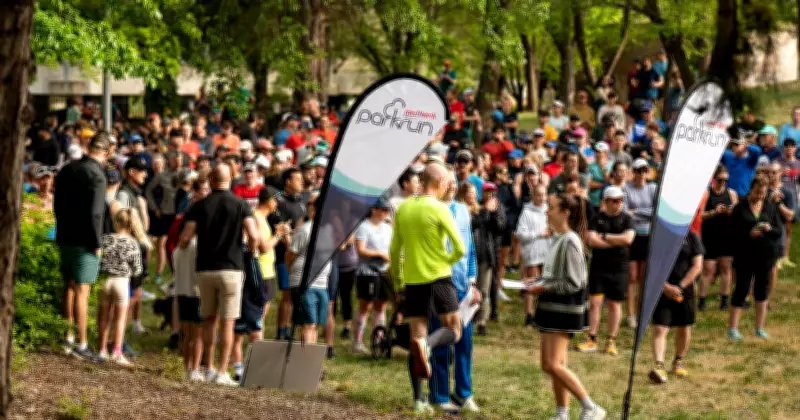
When the Woden Town parkrun finally launched, attendance surpassed all expectations. However, the true story wasn't merely about participant numbers. It was about the remarkable diversity of the crowd: long-term residents who had witnessed decades of urban transformation, new apartment dwellers meeting neighbours for the very first time, parents navigating prams along the course, individuals attempting their inaugural parkrun, and seasoned runners exploring a fresh route. Without formal ceremonies or lengthy speeches, an authentic civic moment spontaneously emerged. For a district sometimes perceived as lacking a central focal point, the palpable energy was undeniable.
Addressing a Broader Social Shift
Stepping back from the immediate enthusiasm, it becomes evident how Parkrun addresses a much wider societal trend. Across Australia, traditional institutions that once fostered community—such as churches, service clubs, and even local sporting associations—are experiencing declining participation rates. Many Australians report feeling increasingly disconnected from civic life, despite living in denser urban environments. Yet every Saturday morning, thousands voluntarily congregate in public spaces, exchange greetings with strangers, offer mutual encouragement, and eagerly return the following week.
Parkrun is achieving something that policymakers have grappled with for years: transforming fragmented neighbourhoods into cohesive, functioning communities. It requires no membership fees, no try-outs, no specialised attire, and has no gatekeepers. Essentially, it represents civic infrastructure cleverly disguised as physical activity. In an era preoccupied with large-scale solutions to loneliness, Parkrun demonstrates what can be accomplished through simple repetition, informality, and genuine welcome.

The Power of Shared Habits
The experience of establishing the Woden Town parkrun reinforced what social capital research has indicated for decades: communities coalesce around shared routines long before they unite around shared beliefs. People don't gather because they already agree on everything; they come together because someone provides a consistent time and place, and they return because the experience feels positive. When this repetition occurs sufficiently, belonging transitions from an abstract concept to a lived reality.
What the Woden Town parkrun now offers extends far beyond a measured five-kilometre course. It serves as a vital gathering point, a weekly pause amidst the hustle of city life, and a moment that quietly declares, "we are doing something together." Residents structure their Saturdays around it, volunteers evolve into community leaders, and newcomers find their social footing. The resulting community is substantially larger and more interconnected than any single individual could have orchestrated.
A Counter-Narrative of Hope
Discussions about Australia often focus on perceived losses—declining trust, eroding social cohesion, and diminished shared public life. However, at 8am every Saturday, a powerful counter-narrative unfolds quietly in parks nationwide. It suggests that Australians retain the capacity to rebuild community through straightforward, repeatable rituals that demand neither ideology nor formal permission, merely a willingness to participate.
The Woden Town parkrun now attracts hundreds of participants each week. While these numbers are encouraging, they are not the primary objective. The fundamental point is that a growing segment of the city now possesses a reliable reason to meet, move, and converse. In an age where communal life can appear fragile, this development feels remarkably hopeful.
If a civic revolution is indeed occurring in Australia, it may be less about running and more about rediscovering what it means to belong. Perhaps all it truly requires is showing up on a Saturday morning, ready to connect.